ISLAMABAD: Pakistan’s Information Minister Attaullah Tarar on Sunday said investigations by the country’s security agencies had uncovered an India-linked digital propaganda network involving an arrested digital marketing service provider connected to the banned Joint Awami Action Committee (JAAC) in Azad Jammu and Kashmir (AJK).
The minister said investigators had gathered evidence showing that social media campaigns promoting anti-Pakistan content and activities related to the banned group were financed from India.
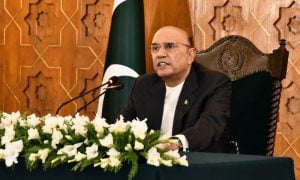
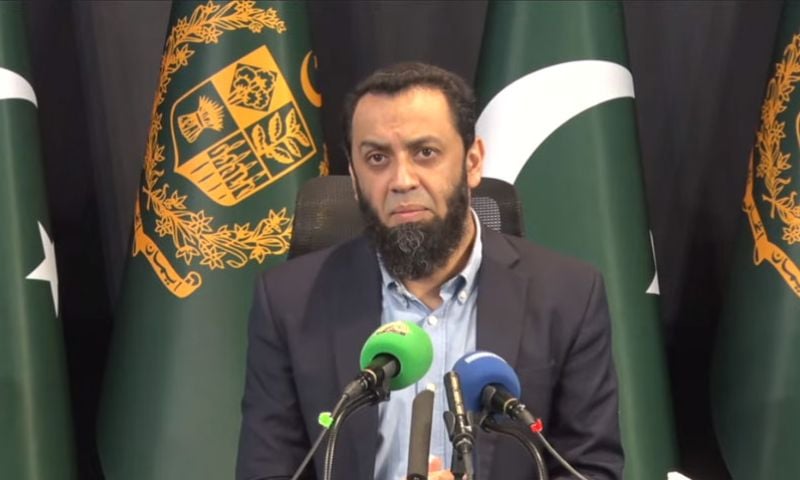
Addressing a press conference in Islamabad, Tarar said the investigation had exposed a coordinated digital disinformation operation aimed at spreading anti-state narratives, targeting Pakistan’s sovereignty, state institutions, the armed forces and the Chief of Army Staff through organised social media campaigns.
#Live: Minister for Information and Broadcasting @TararAttaullah‘s important statement@MoIB_Official #RadioPakistan #News
https://t.co/UFzxv2ynIk— Radio Pakistan (@RadioPakistan) July 26, 2026
Indian funding for JAAC social media campaign
The minister said a person providing digital marketing services had been arrested by Pakistan’s security agencies some time ago and that subsequent investigations revealed links between the JAAC activist’s activities and India.
Tarar said investigators found that payments for promoting and amplifying anti-Pakistan content on social media originated from India through digital payment gateways.
He said the investigation established that social media campaigns related to the Joint Awami Action Committee were financed from across the border.
“All the payments for the Joint Action Committee’s social media content were coming from India, and this has been established through technical data,” Tarar said.
He added that authorities had recovered WhatsApp conversations between the arrested activist and an Indian operator discussing payments, targeted audiences and account details.
The minister said that payments were deliberately transferred in small amounts to avoid detection by financial monitoring systems.
Minister for Information and Broadcasting @TararAttaullah says investigations have exposed the nexus between the banned #JointActionCommittee in Azad Kashmir and #India@MoIB_Official @ForeignOfficePk #RadioPakistan #News https://t.co/GeGH7MJP3K pic.twitter.com/A0cpiYFjDx
— Radio Pakistan (@RadioPakistan) July 26, 2026
Bot network and digital campaigns
Tarar said investigators also uncovered an extensive network of bot farms used to spread misinformation and amplify anti-state content.
He said that the network promoted propaganda targeting Pakistan, its government, state institutions, the armed forces and the Army Chief.
The minister said forensic investigators had also traced the origin of several online accounts to India despite the use of virtual private networks (VPNs).
“When a VPN masks a user’s location, the device itself can still be identified during forensic analysis. That is how these India-based accounts were detected,” he said.
Tarar added that authorities were continuing to examine digital payment gateways used in the operation.
Part of broader conspiracy
The minister said that the arrested activist disclosed during interrogation that a significant portion of the content he received related to the activities of the banned Joint Action Committee in Azad Jammu and Kashmir.
Tarar said that the banned group had sought to undermine the Kashmir cause and weaken relations between the people of Kashmir and Pakistan.
“We had been saying from day one that this JAAC wanted to weaken the relationship between Kashmir and Pakistan,” he said.
He added that investigators believed the banned group’s campaign formed part of a broader conspiracy rather than a campaign representing the rights of Kashmiris.
He questioned why the banned group had not participated in the democratic process if it genuinely represented public interests.
Violence and disinformation
Referring to previous protests in Azad Jammu and Kashmir, Tarar said the banned committee was involved in encouraging violence, blocking roads and creating law and order problems.
He said that demonstrations organised by the banned group had resulted in the deaths of Kashmiri police personnel and disrupted public order.
The minister said authorities now possessed “irrefutable evidence” linking the banned action committee to India.
“There should no longer be any doubt that its links lead to India, and we now have undeniable evidence,” he said.
Tarar displayed examples of social media posts during the press conference, saying they were designed to incite violence, spread misinformation and undermine state institutions.
He said that the campaign relied on artificial intelligence-generated images and recycled videos from other countries that were falsely presented as incidents in Kashmir.
“AI-generated images were used, while old videos and footage from other countries and locations were falsely presented as incidents from Kashmir,” he said.
The minister said that the online campaign also sought to promote sectarianism and deepen divisions within Pakistani society.
Govt to counter disinformation
Tarar said investigations into the arrested activist were continuing and that additional digital evidence had already been recovered.
He said countering misinformation remained the government’s responsibility and pledged that authorities would continue exposing coordinated disinformation campaigns targeting Pakistan.
“No one can weaken Pakistan. Such propaganda and misinformation campaigns will continue to be exposed by the government, the armed forces and our security institutions,” he said.
The minister added that Pakistan remained committed to global peace and said the country’s international standing had strengthened under the leadership of Prime Minister Shehbaz Sharif and Field Marshal Syed Asim Munir.
He expressed confidence that Pakistan would continue its path towards progress and development while safeguarding its national interests and combating digital disinformation campaigns.