Key Points
- IT exports rise 21 per cent to record $4.6 billion
- Mobile spectrum expands from 274 MHz to 880 MHz
- Freelancers contribute over $1.16 billion in exports
ISLAMABAD: Pakistan has more than tripled its available mobile spectrum over the past year as the government seeks to improve internet connectivity and accelerate the growth of the country’s digital economy.
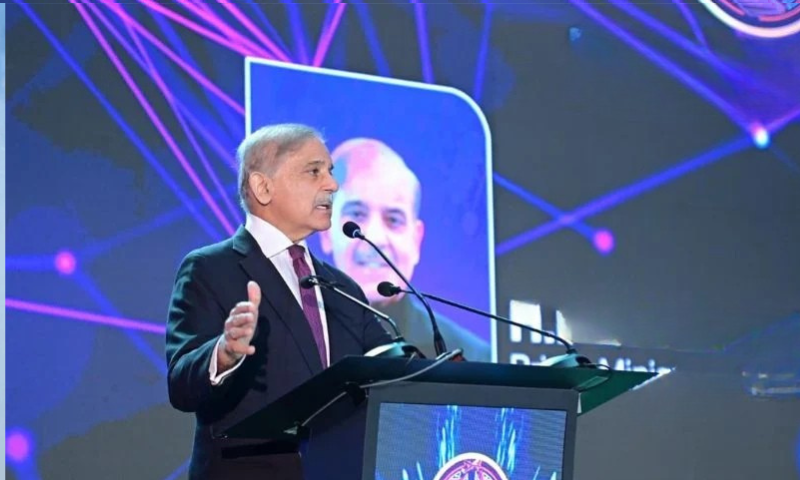
According to a briefing given to Prime Minister Shehbaz Sharif, available mobile spectrum increased from 274 MHz in June 2025 to 880 MHz in June 2026, aimed at improving internet speeds and expanding digital access across the country.
Officials’ presentation to the meeting on the information technology roadmap said the expansion accompanied a record performance by the IT sector, with exports rising 21 per cent year-on-year to $4.6 billion in the fiscal year ended June 2026.

The prime minister, chairing the meeting, said the export growth reflected government efforts to accelerate digital transformation. “Technology-driven exports remained a national priority, he added.
He directed authorities to introduce third-party validation of IT training programmes to ensure they meet international standards and called for continued investment in digital infrastructure.
ALSO READ: Pakistan Invites Meta to Support Digital Economy
According to the briefing, smartphone penetration in the country reached 72 per cent by June 2026, while fixed broadband and fibre-optic connections expanded to 5.1 million households.
Digital Nation Pakistan
Freelancers contributed $1.1647 billion to the country’s IT exports during the last fiscal year, while 130 public services were digitised under the government’s Digital Nation Pakistan initiative.
Officials also updated the prime minister on preparations for the “Connect Pakistan Vision 2030” strategy and the completion of a Software Technology Park in Bagh, in Azad Jammu and Kashmir (AJK).
They said nearly 943,000 IT training certificates had been issued and more than 5,000 advanced training programmes completed during the year.
The meeting was further informed that the Chinese technology company Alibaba is collaborating with several public-sector institutions. They will introduce artificial intelligence solutions across government departments, including the central bank, tax authority, and financial regulators.