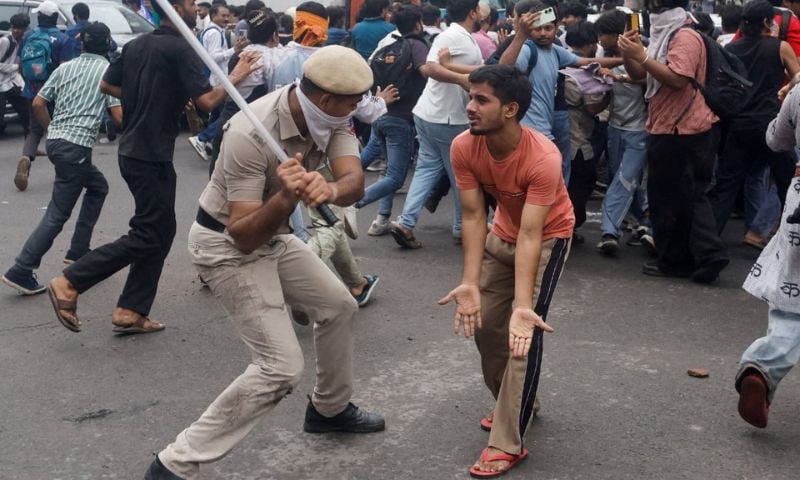
NEW DELHI: Videos showing police using force against young protesters in India’s capital have intensified anger over the government’s handling of a growing student-led movement demanding accountability over exam paper leaks.
According to Al Jazeera, more than 100 students were injured after police cracked down on thousands of demonstrators who marched toward parliament in New Delhi, demanding the resignation of Education Minister Dharmendra Pradhan.
Videos emerge showing police using increasingly violent methods to stop India’s student protest movement in the capital New Delhi.
More than 100 students have reportedly been injured, amid claims some were hit by pellet guns. pic.twitter.com/6kCeVWjVx4
— Naveed Khan (@i_Naveediqbal) July 23, 2026
The protesters are part of the Cockroach Janta Party movement, a youth-led campaign that began as online satire but has turned into one of the most visible challenges to Prime Minister Narendra Modi’s government.
Al Jazeera reported that protesters reached near parliament before police fired tear gas, while blood spots, broken glasses, torn clothes and scattered sandals were seen in parts of central New Delhi after the crackdown.
Fresh violence was also reported later as more than 10,000 protesters gathered at Jantar Mantar, with Reuters reporting that police fired tear gas and used canes to push crowds back.
The movement has been driven by anger over leaks in high-stakes entrance examinations that affect millions of students seeking medical college seats, government jobs and economic security. AP reported that young Indians are turning education anger into a wider campaign for government accountability.
Protest leader Abhijeet Dipke has vowed to continue demonstrations until Pradhan resigns, while activists say police action has only strengthened the movement.
The crackdown has also drawn opposition attention, with Rahul Gandhi and other leaders backing protesters.
For India’s government, the protests now represent more than a student dispute. They have become a test of youth anger, policing and democratic accountability.