KABUL: At least 26 people have been killed and 24 others injured after flash floods swept through several eastern Afghan provinces, the United Nations Office for the Coordination of Humanitarian Affairs (OCHA) said, with widespread destruction leaving thousands in urgent need of humanitarian assistance.
In its latest situation report released on Wednesday, OCHA said the floods struck the provinces of Nuristan, Nangarhar, Baghlan and Laghman following heavy rainfall on July 20, causing fatalities, damaging infrastructure and disrupting essential services.
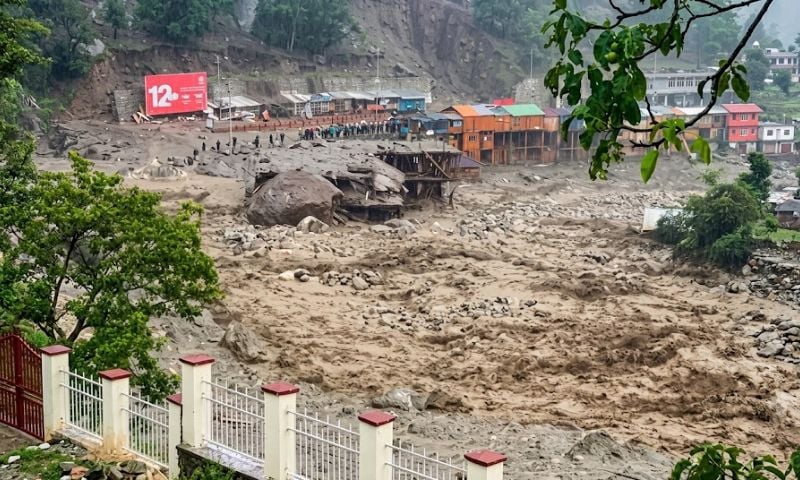
The worst-hit area was Parun, the capital of Nuristan province, where 23 people lost their lives and 15 others were injured. Several people remain missing, with search and rescue operations continuing.
The flooding also affected the Torkham border crossing in Nangarhar province, where three Afghan migrants were killed and nine others were injured after being caught in the floodwaters.
In neighbouring Laghman province, flooding in Alingar district damaged farmland and irrigation systems, although no fatalities have been reported there.
According to OCHA, Parun suffered the most extensive material losses. Damage to the town’s water supply network has left around 1,000 families without access to safe drinking water, creating an urgent public health concern.
Preliminary assessments show that at least 22 homes were completely destroyed, while another 45 sustained partial damage. Five markets and approximately 70 shops were also affected.
Critical infrastructure suffered significant losses, including four bridges, six sections of road, around 400 metres of protective walls and 450 metres of irrigation canals. Nearly 50 acres of agricultural land were also damaged, threatening local livelihoods.
The UN agency added that 25 vehicles, two carpentry workshops equipped with saw machines, a mosque and a private health clinic were either damaged or destroyed.
Taliban authorities have released a higher casualty estimate for Parun, reporting 23 deaths, around 80 injuries and approximately 100 people still missing following the disaster.
OCHA said affected communities urgently require emergency shelter, food assistance, healthcare services, medical supplies, non-food relief items, as well as psychological and social support.
The agency noted that while Parun experienced catastrophic loss of life and widespread destruction, the impact elsewhere varied, with some districts primarily suffering damage to agriculture and irrigation systems.
The latest flooding adds to what has already been an exceptionally difficult year for Afghanistan, which has experienced repeated episodes of heavy rainfall, flash floods, seasonal storms and other climate-related disasters.
Earlier UN assessments found that flooding between mid-March and late April affected more than 73,000 people across all 34 Afghan provinces, with nearly 57,000 requiring urgent humanitarian assistance.
Since the beginning of 2026, more than 10,000 families across Afghanistan have been affected by flooding, further deepening humanitarian needs.
Afghanistan remains one of the world’s most disaster-prone countries, facing recurring floods, droughts and earthquakes. Climate change, fragile infrastructure and limited emergency response capacity continue to increase the country’s vulnerability, particularly in remote mountainous regions where damaged roads and difficult terrain hamper relief operations.
Humanitarian agencies have warned that without sustained assistance, vulnerable communities will continue to face severe risks as extreme weather events become more frequent and intense.