
Key Points
- Burnham elected Labour leader unopposed
- To succeed Keir Starmer as prime minister
ISLAMABAD: Andy Burnham promises economic renewal after becoming the United Kingdom’s next prime minister, since he has already been elected unopposed as the leader of the ruling Labour Party.
His election as the ruling party leader paved the way for a change in the country’s leadership amid economic and political challenges.
Burnham, 56, will formally assume office after meeting King Charles III, who is expected to invite him to form a government under Britain’s constitutional process.
He succeeds Keir Starmer, whose resignation triggered a leadership contest within Labour.
A veteran Labour politician, Burnham previously served in several senior government roles, including health secretary, and has been the mayor of Greater Manchester since 2017.
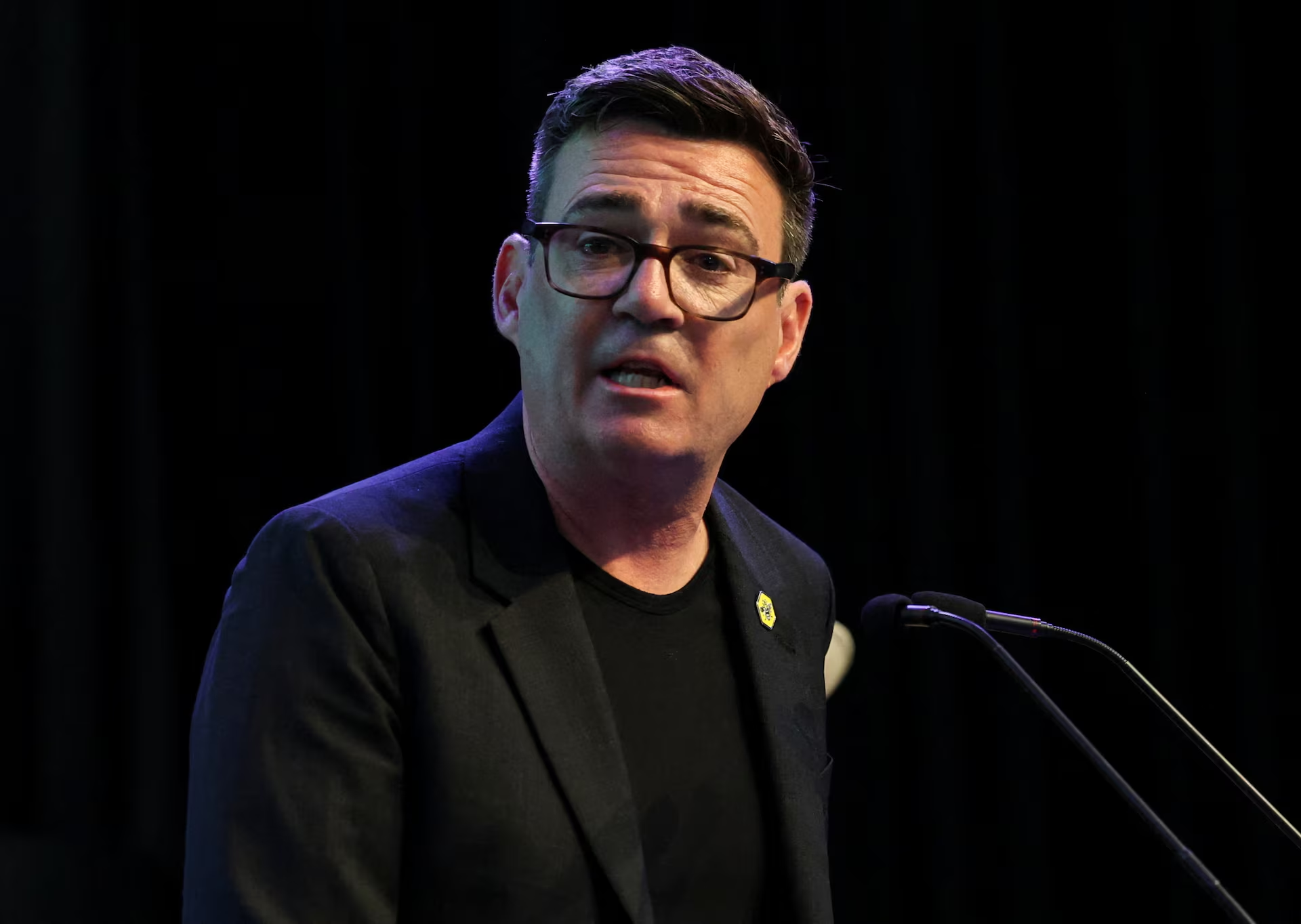
Over the past decade, he has built a national profile by advocating greater regional autonomy, investment outside London and stronger public services.
In his first remarks as leader, Burnham pledged to focus on economic growth, reducing pressure on households grappling with the cost of living, and improving public services.
He also promised to address long-standing regional disparities that have shaped British politics in recent years.
Political analysts view Burnham’s elevation as one of the most significant shifts in British politics since Labour returned to power.
His leadership is expected to place greater emphasis on decentralising decision-making and boosting investment in northern England and other regions that have long argued they receive less economic attention than London and the southeast.
The leadership transition comes as Britain faces a range of domestic challenges, including sluggish economic growth, pressure on the National Health Service (NHS), housing shortages and concerns over living standards.
Burnham has indicated that his government will seek to accelerate economic reforms while maintaining fiscal discipline.
The incoming prime minister is also expected to announce a new Cabinet in the coming days, outlining the priorities that will shape his government’s domestic and foreign policy agenda.
Different approach to economic management
Observers will closely watch whether Burnham adopts a markedly different approach from Starmer on economic management, public sector reform and constitutional issues.
Burnham’s rise to the premiership caps a political career spanning more than two decades.
ALSO READ: UK’s New PM Says ‘Not Prepared’ to Continue with Rwanda Deportation Plan
First elected to Parliament in 2001, he held several ministerial posts under previous Labour governments before moving into regional politics, where he became one of the country’s most recognisable local leaders.
His appointment will make him Britain’s latest prime minister in a period marked by frequent leadership changes, reflecting the political volatility that has characterised much of the country’s post-Brexit era.
Supporters argue that his experience in both national and local government positions him well to address the economic and social challenges confronting the United Kingdom.