


WASHINGTON: The United States and Iran traded fresh military strikes on Wednesday, with Tehran saying it launched missile and drone attacks on US military facilities in Bahrain and Kuwait after Washington struck more than 80 targets across Iran and tightened economic pressure by revoking a key oil sales licence, deepening fears of a wider regional conflict and further straining a fragile ceasefire.
Iran’s Islamic Revolutionary Guard Corps (IRGC) said it had targeted dozens of US military sites in Bahrain and Kuwait in what it described as an initial response to American attacks.
“In an initial response to this aggression, the IRGC Navy and Aerospace Force carried out a joint missile and drone operation, striking 85 key US military facilities” in Bahrain and Kuwait, while also shooting down a US MQ-9 drone, the IRGC said in a statement carried by state broadcaster IRIB.
The United States had earlier launched a new wave of strikes against Iran and revoked a licence allowing Tehran to sell oil after three tankers were hit by projectiles in the Strait of Hormuz, further straining the ceasefire reached last month.
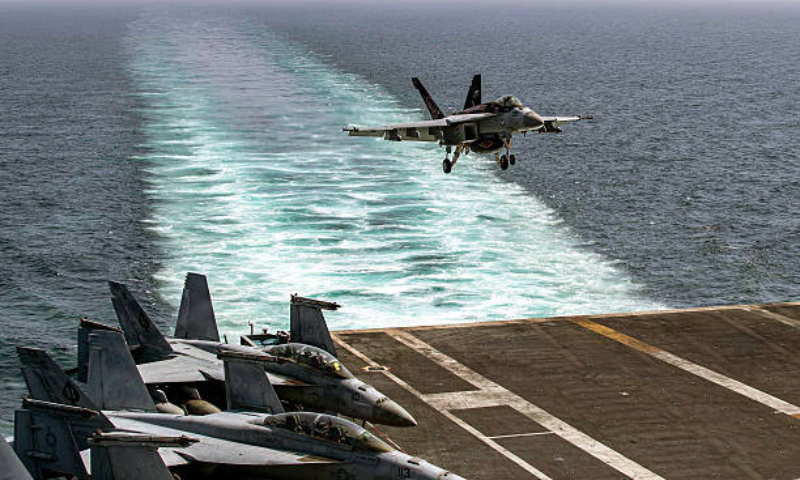
The US Central Command (Centcom) said it struck more than 80 targets to impose what it described as “heavy costs” on Iran, including attacks on over 60 small boats belonging to the Islamic Revolutionary Guard Corps (IRGC) aimed at reducing Tehran’s ability to threaten commercial shipping.
U.S. Central Command forces have begun launching a series of powerful strikes against Iran to impose heavy costs for targeting and attacking commercial shipping crewed by innocent civilians in an international waterway. The U.S. strikes are in response to Iranian attacks on three…
— U.S. Central Command (@CENTCOM) July 7, 2026
“The unwarranted aggression by Iranian forces is a clear and dangerous violation of the ceasefire and undermines freedom of navigation,” Centcom said in a statement.
Iran Reports Explosions in South
Iranian media reported explosions early Wednesday on Kharg Island, the country’s main oil export terminal, as well as on Qeshm Island and in the southern port cities of Sirik and Bandar Abbas.
While no civilian deaths were reported, Iranian state television said several people were injured by shrapnel after an “enemy projectile” struck a commercial pier in Sirik. Fishing piers in Sirik and Bandar Abbas were also reportedly hit, setting several fishing boats ablaze.
Iran’s Press TV confirmed multiple explosions on Kharg Island but did not provide details on the cause, damage or casualties.
Centcom did not mention Kharg Island in its statement, despite the island accounting for approximately 90 per cent of Iran’s crude oil exports.
Iran Vows “Crushing Response”
Iran’s Revolutionary Guards (IRGC) said on Wednesday they had hit dozens of US military facilities in Bahrain and Kuwait in response to American strikes, in a statement carried by state broadcaster IRIB.
“In an initial response to this aggression, the IRGC Navy and Aerospace Force carried out a joint missile and drone operation, striking 85 key US military facilities” in the two countries, while also shooting down an MQ-9 drone, the statement said.
Earlier, Iran’s Khatam al-Anbiya Central Headquarters warned that its armed forces would deliver a “crushing response” to what it described as a “blatant act of aggression” and declared that Tehran would not permit US interference in the management of the Strait of Hormuz.
A US official told Reuters the strikes targeted Iranian air defence systems, coastal surveillance facilities, surface-to-air missile batteries, anti-ship cruise missiles and drone launch sites.
The latest military action threatens the ceasefire reached last month following months of conflict that began with US and Israeli strikes across Iran in February.
US Revokes Oil Sales Licence
In a significant escalation, Washington also withdrew a sanctions waiver that had allowed Iran to sell crude oil and petrochemical products on international markets.
The U.S. Treasury Department’s Office of Foreign Assets Control (OFAC) has amended the general license that temporarily suspended sanctions on Iranian petrochemical products, revoking the authorization effective today.
A 10-day ‘wind-down’ period has been provided, allowing… pic.twitter.com/7YRDlxylp8
— OSINTdefender (@sentdefender) July 7, 2026
The licence, issued by the US Treasury on June 22 and originally valid until August 21, was revoked on Tuesday. Iran has been given until July 17 to wind down related transactions.
Oil prices climbed more than three percent following the announcement.
Iran Condemns Move
Iran’s Foreign Ministry condemned the decision as a violation of the framework agreement that ended the conflict, saying Washington would bear responsibility for the consequences.
The ministry said Tehran would take “any measure necessary” to protect its national interests and security.
Tanker Attacks Raise Regional Concerns
Qatar accused Iran of attacking commercial vessels, including the Qatari liquefied natural gas tanker Al Rekayyat, which reportedly caught fire after being struck by a drone. All crew members were reported safe and were being evacuated.
A Saudi-flagged crude oil supertanker, believed to be the Wedyan, was also damaged off the coast of Oman, according to maritime security sources.
Qatar’s Foreign Ministry summoned Iran’s deputy ambassador and handed over a formal protest.
Iran rejected the accusations and maintained it was honouring its commitments while warning that commercial vessels faced risks if they used routes not coordinated with Tehran.
Negotiations at Risk
The ceasefire was intended to create a 60-day window for negotiating a permanent agreement, but indirect talks held in Qatar last week ended without any breakthrough.
US President Donald Trump reiterated Washington’s willingness to resume military action.
“We’re either going to make a deal or we’re going to finish the job … We can knock down their bridges in one hour, we can knock out their energy supply,” Trump told reporters on Monday.
Iranian Foreign Minister Abbas Araqchi said negotiations on a permanent agreement would “not commence if threats continue” under the terms of the interim ceasefire memorandum.