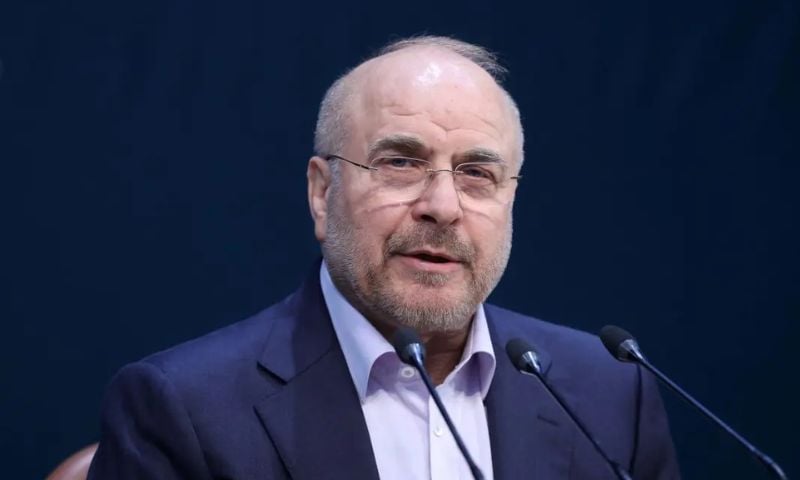
ISLAMABAD: Iranian Parliament Speaker Mohammad Bagher Ghalibaf has declared that the Strait of Hormuz will not revert to its pre-war arrangement, following the breakthrough achieved in recent Pakistan-mediated negotiations aimed at easing tensions in the region.
Speaking aboard his flight after diplomatic talks held in Switzerland, Ghalibaf praised the negotiating teams for securing the removal of the blockade through dialogue rather than military action.
He described the development as a significant achievement that prevented further conflict and disruption.
“The administration of the Strait of Hormuz will never return to the pre-war situation,” Ghalibaf said, signalling what he suggested would be a lasting change in how the strategically vital waterway is managed.
Iran remains sceptical of the US despite recent progress
The senior Iranian official reiterated Tehran’s longstanding scepticism towards Washington, stating that Iran remains cautious in its dealings with the United States despite the latest diplomatic progress.
“We were and remain distrustful of the Americans, and reason dictates that this distrust will continue in the future,” he said.
Ghalibaf argued that resolving the issue through negotiations had averted the human and economic costs associated with military confrontation.
He noted that the blockade was lifted rapidly through diplomatic engagement, which he said demonstrated the effectiveness of dialogue over force.
“If this had been pursued through military means, it would inevitably have led to war and caused significant damage. Instead, the blockade was removed overnight through negotiations,” he added.
The parliamentary speaker further stressed that Iran would continue to oversee and administer the Strait of Hormuz, one of the world’s most important energy transit routes linking the Persian Gulf to international markets.
Ghalibaf also criticised Israel, accusing its government of seeking to undermine ongoing diplomatic efforts.
According to him, Israeli leaders oppose the negotiation process because they view a political settlement as contrary to their interests.
He said an agreement has been reached with the US to release $12bn in frozen Iranian funds. This comes after the US announced a temporary easing of sanctions to allow the sale of Iranian oil and petrochemicals until August 21.
His remarks come amid renewed diplomatic engagement aimed at reducing regional tensions and ensuring the continued flow of global energy supplies through the Strait of Hormuz, a crucial maritime corridor for international oil and gas shipments.