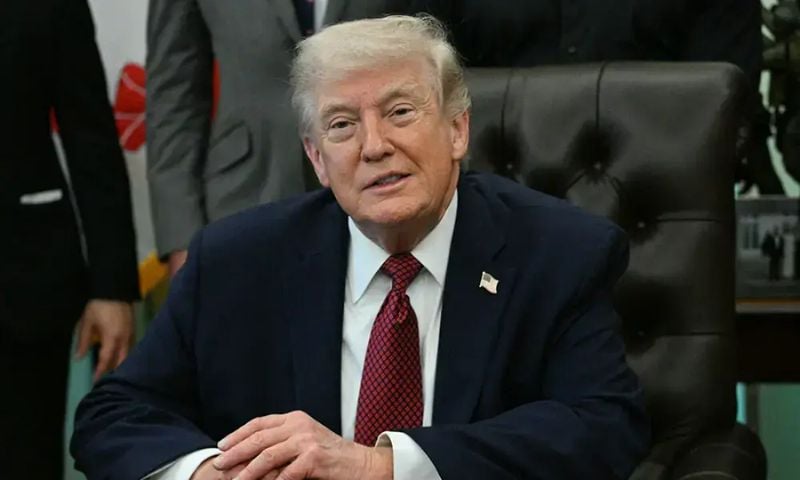



ISLAMABAD: US President Donald Trump has spoken positively about Pakistan’s leadership during a recent interview with Axios, highlighting what he described as strong coordination between the country’s civilian government and military establishment.
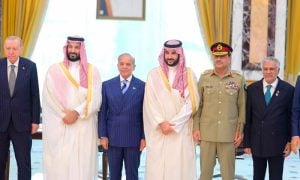
In remarks extracted from the interview, Trump said he had come to know Pakistani leaders better in recent interactions, singling out Field Marshal Asim Munir and Prime Minister Shehbaz Sharif.
“I got to know some that I didn’t know very well in Pakistan. You have the Field Marshal, who’s great, Munir, he’s great. And you have the prime minister, and they just get along great,” Trump said.
Trump on Pakistan:
In Pakistan, you have the Field Marshal, who is great. And you have the prime minister, and they just get along great.
The military guy totally respects the prime minister.
It’s a beautiful thing to see.
Source: Axios pic.twitter.com/s804kYH3qw
— Clash Report (@clashreport) June 19, 2026
He observed that the two offices have close mutual respect. “I figured, well, maybe the military guy would be… he totally respects the prime minister. It’s a beautiful thing to see,” he said.
Trump also suggested that Pakistan played a facilitative role in broader diplomatic engagement, saying the country’s leadership helped provide context and contacts relevant to discussions involving Iran. “They really helped us with this deal,” he said, without providing further detail.
The comments were made during an interview with Axios.
His remarks come amid ongoing regional diplomatic activity involving the United States and Iran, where backchannel communication and third-party facilitation have played an intermittent role in the successful negotiations.
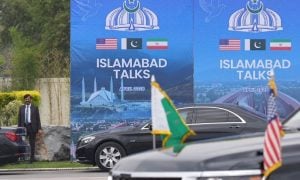
Pakistan hosted high-level talks in Islamabad in April, bringing together senior American and Iranian officials for their most significant direct engagement since 1979.
US Vice President JD Vance attended the talks, but no agreement emerged.
Despite the setback, Pakistan continued its mediation efforts. Face-to-face negotiations paused for weeks, while Islamabad worked with regional and international partners to keep communication channels open.
On March 31, Pakistan and China jointly unveiled a five-point peace initiative aimed at ending the conflict. Beijing’s involvement reflected growing concerns over disruptions to the Strait of Hormuz, a key route for Chinese energy imports.
Meanwhile, Field Marshal Munir travelled to Tehran for a second time in May, accompanied by Interior Minister Mohsin Naqvi, while Iranian Foreign Minister Abbas Araghchi made several visits to Islamabad to maintain momentum in the negotiations.