ISLAMABAD: When Prime Minister Shehbaz Sharif announced on Wednesday that the United States and Iran had electronically signed the “Islamabad Memorandum of Understanding”, it marked the culmination of more than three months of intensive diplomacy that Pakistani officials say repeatedly came close to collapse.
The agreement, signed by US President Donald Trump and Iranian President Masoud Pezeshkian, seeks to end a conflict that has claimed thousands of lives, disrupted global energy markets and threatened to draw the wider Middle East into a prolonged war.
For Pakistan, the accord represents one of its most significant diplomatic achievements in recent years, following months of mediation involving Prime Minister Shehbaz Sharif, Field Marshal Syed Asim Munir, Deputy Prime Minister and Foreign Minister Ishaq Dar, Interior Minister Mohsin Naqvi and a team of diplomats working largely behind the scenes.
Sharif Reveals Behind-the-Scenes Efforts
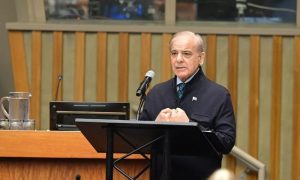
Addressing the National Assembly earlier this week, Sharif offered an unusually detailed account of the mediation process, saying there were several moments when negotiations appeared on the verge of failure.
“There were many moments when it felt like the negotiations would come to a halt,” the prime minister said. “If this journey had not continued, the dream of peace would have been shattered.”
Each time, Sharif told the National Assembly, it was Field Marshal Asim Munir, Pakistan’s army chief, who helped keep the negotiations on track.
“Throughout this period, he was awake all day and night,” Sharif said of Field Marshal Asim Munir, adding that the army chief had “sacrificed day and night to extinguish the flames of war”.
Sharif also praised Dar, Naqvi and their teams for what he described as tireless diplomatic engagement, while acknowledging the support of Qatar, Saudi Arabia, Türkiye, Egypt and China in facilitating dialogue.
Ceasefire Opened the Door
According to Pakistani officials, the breakthrough can be traced back to April 8, when a Pakistan-brokered ceasefire came into effect after urgent contacts between Islamabad, Washington and Tehran.
Officials say Munir held a series of conversations with senior US figures in the hours before a deadline set by President Trump for possible military action against Iran. The ceasefire was narrowly held and was later extended indefinitely at the request of Pakistan’s leadership.
The temporary truce created space for diplomacy and paved the way for direct engagement between the two adversaries.
Islamabad Talks Laid the Groundwork
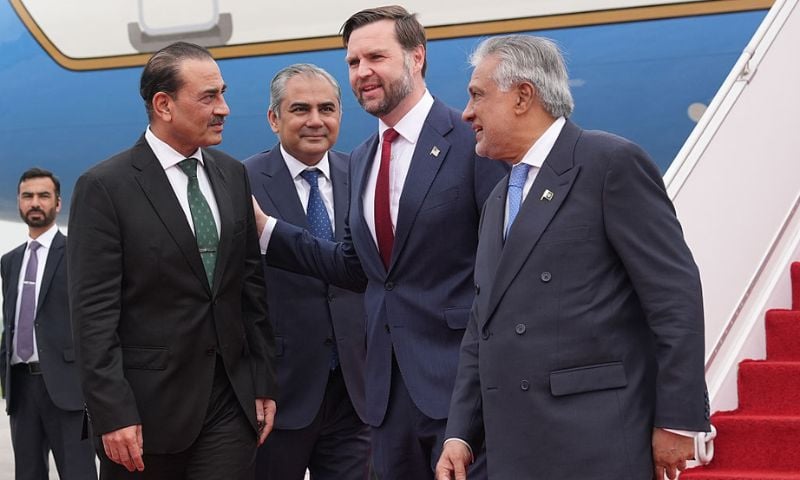
Pakistan hosted high-level talks in Islamabad in April, bringing together senior American and Iranian officials for their most significant direct engagement since 1979.
US Vice President JD Vance attended the talks, but no agreement emerged.
Despite the setback, Pakistan continued its mediation efforts. Face-to-face negotiations paused for weeks, while Islamabad worked with regional and international partners to keep communication channels open.
On March 31, Pakistan and China jointly unveiled a five-point peace initiative aimed at ending the conflict. Beijing’s involvement reflected growing concerns over disruptions to the Strait of Hormuz, a key route for Chinese energy imports.
Meanwhile, Field Marshal Munir travelled to Tehran for a second time in May, accompanied by Interior Minister Mohsin Naqvi, while Iranian Foreign Minister Abbas Araghchi made several visits to Islamabad to maintain momentum in the negotiations.
During one visit, Araghchi said Tehran would continue working with Pakistan’s mediators “until a result is achieved”.
Final Hours of Negotiations
As negotiations entered their decisive phase, Pakistan intensified consultations with regional powers.
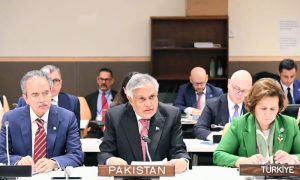
Dar remained in contact with counterparts in Saudi Arabia, Türkiye and Egypt, while Saudi Foreign Minister Faisal bin Farhan Al Saud publicly acknowledged Pakistan’s sustained mediation efforts.
On Saturday, Sharif announced that the United States and Iran had reached a “final, agreed-upon text”, declaring that “peace has never been this close as it is now”.
Yet uncertainty remained.
Iran’s Foreign Ministry said there were no immediate plans for its negotiating team to travel abroad to sign an agreement, while an Israeli strike on Beirut’s southern suburbs triggered sharp criticism from Tehran.
Iranian Parliament Speaker Mohammad Bagher Ghalibaf questioned whether Washington would honour its commitments, but President Masoud Pezeshkian signalled that diplomacy remained possible.
The Signing of the Islamabad Memorandum
The breakthrough finally came on Wednesday.
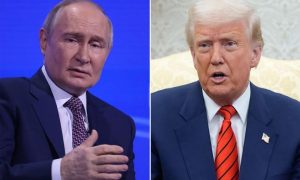
Trump signed the memorandum during a candlelit dinner at the Palace of Versailles following the G7 summit in France.
“Just signed it,” Trump told reporters as he emerged from the palace.
Iranian Foreign Ministry spokesman Esmaeil Baqaei later confirmed that the agreement had been finalised with the signatures of both presidents.
Sharif subsequently announced on X that the “historic Islamabad Memorandum of Understanding” had entered into force with immediate effect.
“The Memorandum has been signed by honourable Presidents of both the countries and also endorsed by me as the mediator,” he wrote.
Under the agreement, Iran will immediately reopen the Strait of Hormuz, while the United States will lift its naval blockade of Iranian ports.
Washington has also agreed to waive oil sanctions on Iran, while a future settlement of Tehran’s nuclear programme could unlock a $300 billion reconstruction fund backed by regional states.
Recognition for Regional Partners
In his statement, Sharif praised Trump for pursuing diplomacy and thanked members of the US negotiating team, including JD Vance, Steve Witkoff and Jared Kushner.
He also paid tribute to Iran’s Supreme Leader Ayatollah Seyyed Mojtaba Hosseini Khamenei, President Pezeshkian and senior Iranian negotiators, including Mohammad Bagher Ghalibaf, Abbas Araghchi and Eskandar Momeni.
The prime minister acknowledged the support of Qatar, Saudi Arabia, Türkiye and Egypt, while reserving special praise for Field Marshal Asim Munir, whose “tireless efforts, selfless dedication and instrumental role”, he said, had been critical to the breakthrough.
What Comes Next?
The agreement is expected to be followed by technical discussions aimed at implementing its provisions and advancing negotiations on Iran’s nuclear programme.
For Pakistan, however, the signing of the Islamabad Memorandum already represents a rare diplomatic success story — one that transformed months of shuttle diplomacy, regional coordination and backchannel negotiations into an agreement designed to end more than 100 days of war.