Key Points
- Chambers welcome tax relief for exporters, salaried workers and businesses
- Industry groups say budget lacks a clear strategy for export-led growth and industrial revival
- Concerns persist over ambitious revenue targets, energy costs and investment levels
ISLAMABAD: Pakistan’s business community offered a mixed response to the federal budget 2026-27, welcoming tax relief measures but arguing that it was insufficient to accelerate exports, attract investment and revive industrial growth.
The country’s largest business bodies broadly acknowledged improvements in macroeconomic stability and several pro-business measures announced by the government.
However, they warned that the budget remains heavily focused on revenue collection rather than long-term economic expansion.
Atif Ikram Sheikh, president of the Federation of Pakistan Chambers of Commerce and Industry (FPCCI), said the government’s third budget reflected continuity in economic policymaking and recognised progress in stabilising the economy.
He cited improvements in economic indicators, including GDP growth of 3.7 per cent, a reduction in the fiscal deficit and lower debt-servicing costs, describing them as evidence that Pakistan had moved towards greater fiscal discipline.
However, Sheikh stressed that economic stabilisation alone was insufficient.
“The federal budget is not merely a statement of revenue and expenditure; it is a critical policy document that must dictate transition from sheer stabilisation to robust economic growth,” he said.
FPCCI welcomed several measures incorporated into the budget, including the abolition of the Capital Value Tax on foreign assets, removal of Federal Excise Duty on international business-class travel, reductions in super tax rates, lower tax rates for salaried workers, continued tax concessions for information technology exports and reduced withholding taxes for the construction sector.
The chamber also praised a new simplified sales tax regime for small retailers and revised tax arrangements for exporters.
Despite these measures, FPCCI expressed concern over weak investment levels, noting that Pakistan’s investment-to-GDP ratio remained below 15 per cent, alongside a decline in domestic savings and a rise in urban poverty.
The chamber also questioned the government’s ambitious revenue targets, including a tax collection goal of Rs 15.2 trillion and a petroleum levy target of Rs 1.7 trillion, warning that additional taxation could place pressure on inflation and business activity.
A similarly cautious view came from Businessmen Group (BMG), whose chairman, Zubair Motiwala, described the budget as “neither good nor bad”.
He criticised the government’s decision not to restore the Final Tax Regime sought by exporters, arguing that converting the reduced withholding tax into a minimum tax would keep exporters within the normal tax system and increase compliance burdens.
He nevertheless welcomed reductions in super tax rates and the complete removal of the levy for companies earning up to Rs 500 million in profits.
Motiwala also argued that the budget failed to address one of industry’s most pressing concerns: high electricity and gas prices.
“Pakistan needs dollars and dollars can only come through exports,” he said, adding that industrial growth was essential for investment, employment and sustainable revenue generation.
The SITE (Sindh Industrial Trading Estate) Association of Industry also expressed guarded support for the budget, describing it as an incremental package rather than the transformative plan manufacturers had hoped for.
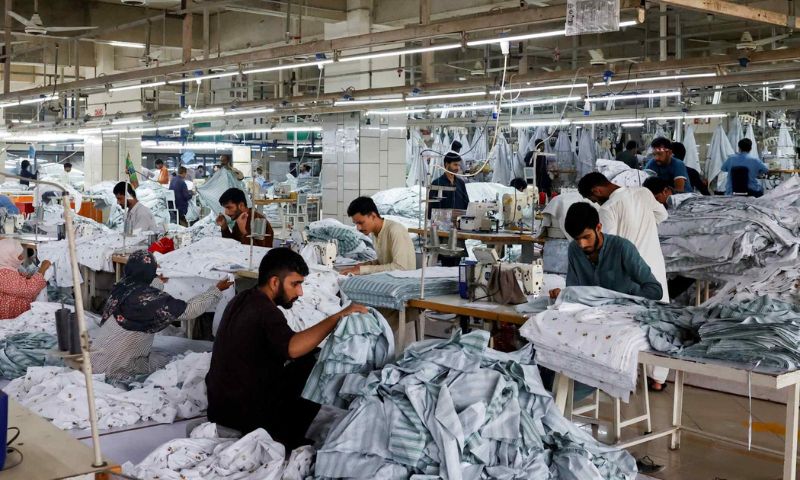
Association President Abdul Rehman Fudda said tariff reforms spread over several years, limited super tax reductions and the absence of measures to lower industrial energy costs would do little to revive factories currently operating below capacity.
Export-oriented industries, including textiles, engineering and chemicals, were particularly disappointed by the government’s decision not to restore the Final Tax Regime, according to the association.
The varied reactions indicate the challenges of maintaining fiscal discipline and simultaneously stimulating private investment, exports and industrial growth.