ISLAMABAD: Pakistan’s agriculture sector navigated a turbulent year with quiet resilience. According to the Pakistan Economic Survey 2025–26, the sector grew by 2.89 per cent in FY 2025-2026, driven primarily by stronger livestock performance and a modest but meaningful recovery in crop production.
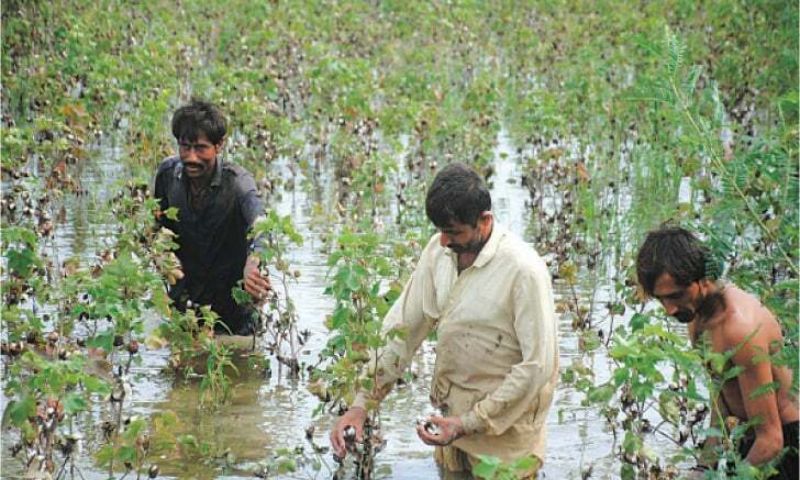
Agriculture’s growth, while modest by historical standards, is particularly significant given the backdrop of monsoon floods in 2025 that tested communities, infrastructure, and farming systems across the country.
Crops: A mixed harvest
The crops sub-sector registered growth of 1.44 per cent, with important crops growing by 0.65 per cent. The headline numbers tell a story of wins and losses.
Sugarcane surged by 6.2 per cent, wheat climbed 4.3 per cent, and rice edged up 2.8 per cent — together providing crucial food and export value for the economy. In absolute terms, wheat production reached 29.61 million tonnes, sugarcane 89.45 million tonnes, and rice 9.99 million tonnes.
However, not all crops fared equally. Cotton production dipped by 0.5 per cent to 7.05 million bales, and maize contracted by 2.7 per cent to 8.79 million tonnes.
Cotton’s decline is particularly worrying for Pakistan’s textile sector — the backbone of its export economy — which relies heavily on domestic raw cotton supply.
A sustained underperformance in cotton could push textile manufacturers to increase imports, adding pressure to Pakistan’s foreign exchange reserves.
Other crops offered a bright spot: pulses surged by an impressive 31.4 per cent, vegetables grew 12.6 per cent, and fruits rose 2.8 per cent — signalling diversification and improved food variety for Pakistani households.
The real engine of growth
The standout performer in agriculture this year was the livestock sector, which grew by 3.75 per cent in FY 2025-2026, up from 2.95 per cent the previous year. Livestock now contributes a remarkable 62.45 per cent to total agriculture value and 14.64 per cent to Pakistan’s entire GDP.
Pakistan is among the world’s top livestock-producing nations, and this sector’s consistent growth provides a critical income lifeline for millions of rural and peri-urban families who rely on dairy farming, poultry, and small ruminants.
Agriculture’s share in GDP
Despite the growth, agriculture’s share in GDP edged slightly downward — from 23.62 per cent in FY 2024-2025 to 23.44 per cent in FY 2025-2026.
This gradual decline reflects a global pattern seen in developing economies: as industry and services grow faster, agriculture’s relative weight shrinks even as its absolute output rises. For Pakistan, managing this transition while protecting rural livelihoods remains a central policy challenge.
Credit, seeds, and fertiliser
Behind every harvest lies a story of inputs. Agriculture credit disbursements grew by 15 per cent during July–March FY 2025-2026, and the Prime Minister’s Youth Business & Agriculture Loan Scheme distributed Rs58 billion by February 2026.
Fertiliser off-take stood at 3.8 million tonnes, while certified seed availability reached 767.9 thousand tonnes during the same period.
Access to quality seeds and affordable fertiliser is one of the most direct levers for improving crop yields in Pakistan.
Closing the gap between seed replacement rates — currently far below recommended levels in many crops — could significantly boost productivity without expanding the cultivated area.
Forestry and fisheries
The forestry sector grew by 2.02 per cent, maintaining a share of 2.26 per cent in agriculture and 0.53 per cent of GDP. Fisheries improved to 1.66 per cent growth from 1.43 per cent last year, contributing 1.29 per cent to agriculture and 0.30 per cent to GDP.
Both sectors remain underdeveloped relative to their potential. Pakistan’s coastline, stretching over 1,000 km, and extensive river systems offer significant untapped fisheries potential.
The looming variable
No agriculture story in Pakistan is complete without the climate dimension. The Survey notes that 2025 ranked as Pakistan’s second warmest year in the past 65 years, with a mean annual temperature of 23.9°C and rainfall 3 per cent below the long-term average.
The Green Climate Fund’s Glaciers to Farms (G2F) programme — with an allocation of $27.5 million — has been approved to address the linkage between glacial melt and downstream farming.
With the Indus River system supplying water to over 80 per cent of Pakistan’s irrigated farmland, shifts in glacial runoff patterns due to warming temperatures pose one of the gravest long-term threats to agricultural productivity.