ISLAMABAD: Pakistan has made significant progress in education, with fewer children out of school and more girls accessing higher education through technology programs. These positive developments have been highlighted in the Economic Survey of Pakistan for 2025-26.
پاکستان میں شرح خواندگی 63 فیصد ہوگئی ، اقتصادی سروے رپورٹ #Budget #economicSurvey pic.twitter.com/YrW3wCXAY7
— Atiq Chaudhary (@Atiqch1) June 11, 2026
Out-of-School Children decline by 10 percentage points
In one of the most encouraging developments, the percentage of Out of School Children (OOSC) in Pakistan has dropped from 38 percent in 2023 to just 28 percent in 2025, a reduction of 10 percentage points in just two years.
The progress spans all four provinces, with Balochistan leading the way:
- Balochistan: 69% → 45% (a massive 24-point reduction)
- Sindh: 47% → 39% (8-point improvement)
- Punjab: 32% → 21% (11-point improvement)
- Khyber Pakhtunkhwa: 30% → 28% (2-point improvement)
The gender gap in out-of-school children has also narrowed, with female OOSC dropping from 42% to 31% and male OOSC from 35% to 25%.
Literacy rate reaches 63% nationally
The 2025 Population and Housing Census recorded Pakistan’s overall literacy rate at 63.0 percent, continuing an upward trajectory. Provincial performance shows:
- Punjab: 68% of people can read and write.
- Sindh: 58% of people can read and write.
- Khyber Pakhtunkhwa: 58% of people can read and write.
- Balochistan: 49% of people can read and write.
Urban areas have achieved an impressive 74.0 percent literacy, while rural areas stand at 55.0 percent, indicating room for further growth.
Record investment in higher education
The government has demonstrated strong commitment to higher education by allocating Rs. 34.905 billion to the Higher Education Commission (HEC) during FY 2025. This funding supports 147 development projects, including:
- 129 ongoing projects
- 12 new projects
- 6 previous PSDP projects
These investments are strengthening public sector universities across the country and expanding access to quality higher education.
PM’s laptop scheme: A game-changer for female students
Perhaps the most inspiring positive story comes from the Prime Minister’s Laptop Scheme. As of April 2026, the initiative has provided 407,713 devices to students across 156 higher education institutions nationwide, covering Punjab, Sindh, Khyber Pakhtunkhwa, Balochistan, Federal Territory, Azad Jammu and Kashmir, and Gilgit-Baltistan.
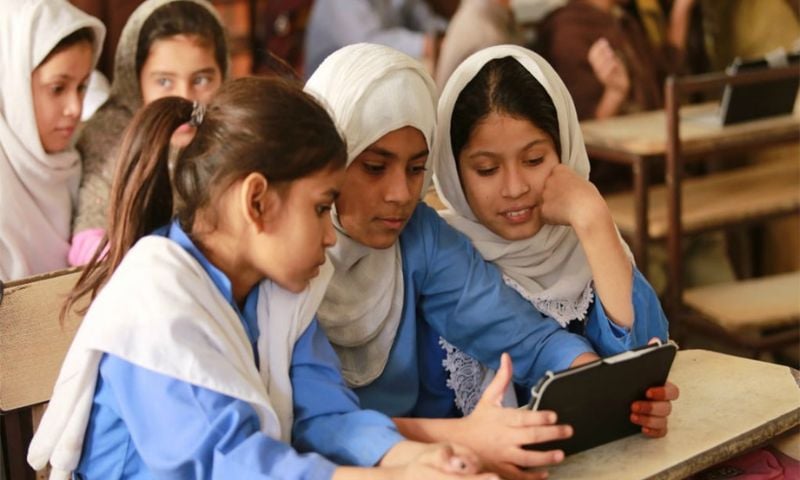
Remarkably, 54 percent of recipients are female students, demonstrating that the scheme is successfully bridging the digital gender divide and empowering young women to pursue higher education and technology skills.
وزیراعظم محمد شہباز شریف کی زیرِ صدارت ملکی جامعات میں آئی ٹی کے شعبے میں اعلی تعلیم کے حوالے سے اجلاس
اجلاس کو پاکستانی جامعات سے آئی ٹی کے شعبے میں فارغ التحصیل طلباء کی صلاحیتوں کو جانچنے کے لیے ایچ ای سی کی جانب سے حال ہی میں منعقدہ ٹیسٹ کے نتائج کے حوالے سے آگاہ کیا گیا۔… pic.twitter.com/PRxLi4kGom
— Government of Pakistan (@GovtofPakistan) June 10, 2026
Strong private sector presence
The survey also highlights the robust contribution of the private education sector, with 278 private higher education institutions operating alongside 115 public sector universities. This public-private partnership is expanding educational opportunities for Pakistani youth.
School attendance stands at 67%
With out-of-school children declining significantly, current school attendance stands at 67 percent, meaning nearly seven out of ten school-age children are now receiving education, a figure that continues to improve.
While total education expenditure stands at Rs 962.0 billion (0.8% of GDP), a figure the government acknowledges needs to increase, the efficiency of spending has clearly improved, as evidenced by tangible outcomes in literacy, enrollment, and gender parity.
The message from Economic Survey 2025-26 is clear: Pakistan’s education sector is moving in the right direction, and the gains, especially for girls and underserved provinces, are real and measurable.