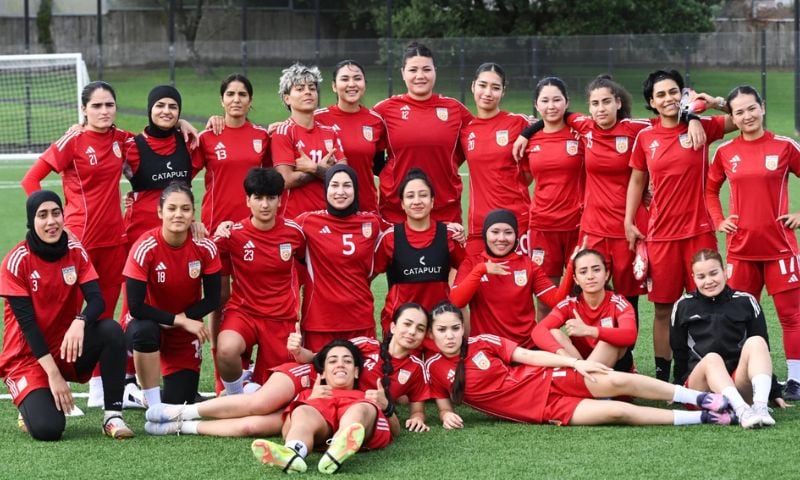
WELLINGTON, New Zealand: They fled with nothing but backpacks and a burning dream. Now, nearly five years after the Taliban returned to power and banned women from all sports, the refugee players of the Afghan women’s soccer team are getting a second chance to advance their international careers.
Afghan Women United’s journey continues 🙌
Seven months after their historic victory over Libya, they will face Cook Islands twice in early June:
— FIFA (@FIFAcom) May 15, 2026
Among them is Fatima Yousufi, a goalkeeper who arrived in Australia with little more than ambition. She and teammates like Mona Amini had once been able to study and play soccer freely until the Taliban takeover shut down every avenue for women’s athletics. Fearing persecution, the national team players left Afghanistan in a frantic evacuation.
Thirteen players eventually settled in Australia, where for five years they lived, trained, and hoped to once again represent their country. This week, 23 members of the Afghan Women United program are in a training camp in Auckland, New Zealand, and will play matches against a team from the Cook Islands.
Afghan Women United make history as pioneering tournament kicks off
Video news releases (VNR) are available via the FIFA Media Hub.
Photos from match day 1 of the FIFA Unites: Women’s Series 2025 available via https://t.co/OBBeRFnjNQ… pic.twitter.com/1xn8zj1fce
— FIFA Media (@fifamedia) October 26, 2025
Although the national soccer federation does not recognise the women’s team, FIFA, soccer’s world governing body, granted the Afghan women’s refugee team eligibility for international competition in April.
“It was a special day that we heard that Afghanistan can represent again our flag in international tournaments,” Amini, a midfielder, told the media. “This is the result of hard work that we did in the past four or five years.”
Seven months ago, the Afghan women played in the “Unite” tournament and secured a win over Libya. “After three years we heard our anthem. That was amazing for me,” Amini recalled.
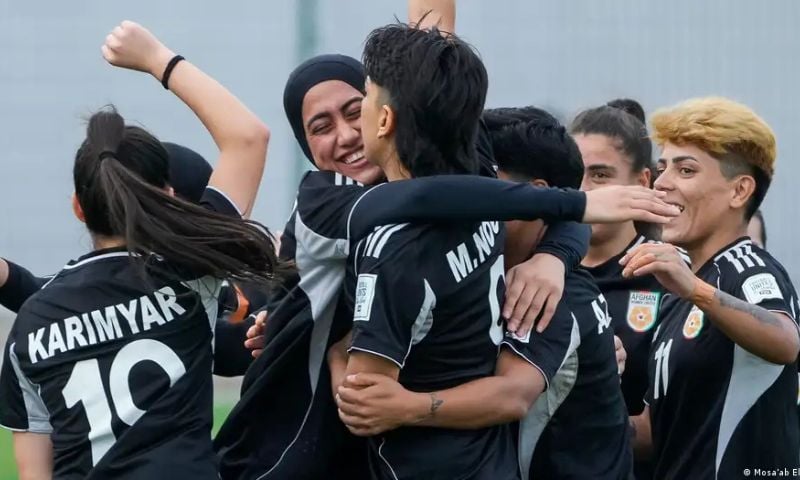
A future reclaimed
For Yousufi, FIFA’s recognition was everything. “We’re going to have the national team! That’s the greatest thing ever,” she said. “It was super important to us, especially thinking of the time when we arrived in Australia and we had lost everything: family, our childhood memories and that national team.”
She added: “When we saw we could not be a national team and could not represent our country, it was like I lost the game.”
While many players are based in Australia, others are scattered across Europe and the United States. Coach Pauline Hamill holds talent identification camps to assemble the squad for matches.
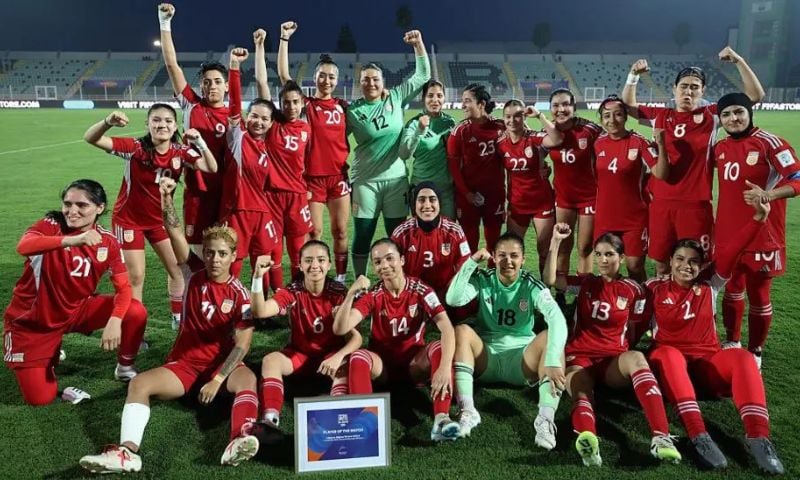
Role models in exile
Both players say their darkest days under the Taliban remain a powerful motivation. “We couldn’t play freely in Afghanistan,” Amini said. “Going out from home was tough because there was the risk of the Taliban seeing us and finding that we were playing soccer.”
Yousufi stressed that the refugee team now serves as a voice for women and girls still inside Afghanistan. “We’re all trying our best to show that women and girls can be part of society and can be someone who is in education or in sport,” she said. “Women also have the right to do that.”