Key Points
- Budget presentation postponed from June 5 to June 10
- IMF negotiations remain central to fiscal framework
- Development spending constrained by tight fiscal space
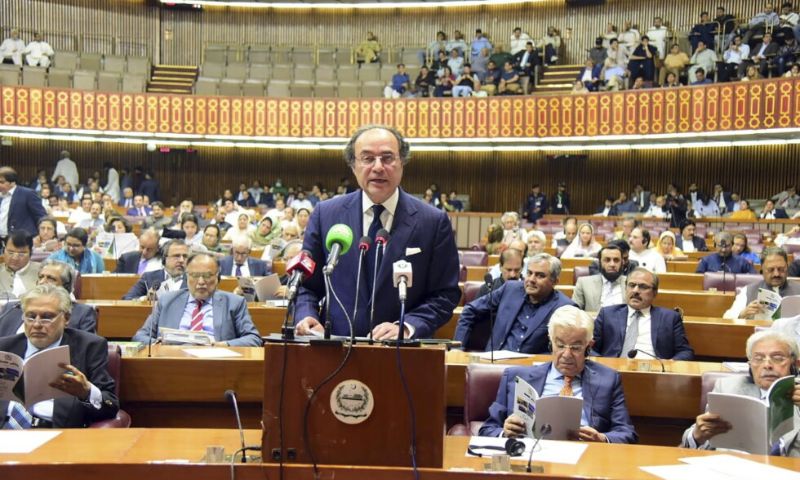
ISLAMABAD: Pakistan has postponed the presentation of its federal budget for the 2026-27 fiscal year by five days to June 10, due to outstanding issues with the International Monetary Fund (IMF) and competing demands from coalition partners.
“I cannot confirm officially, but there are issues with the Fund and the coalition partners,” a senior government official requesting anonymity said.
According to a cabinet division notification, the National Economic Council, scheduled for today, Wednesday, June 3, has been postponed. The NEC meeting is considered the preamble to the annual fiscal legislation process, the enactment of an annual Finance Act.
The NEC, which is the country’s apex economic body, brings provinces and the centre together to finalise the upcoming year’s development plan under the Prime Minister.
“The lack of consensus among the parties in the ruling coalition has delayed the entire process,” the official added.
Analysts observe that the government is in a difficult situation between the IMF-recommended fiscal constraints and coalition partners’ demands for increased development spending.
Government officials and lawmakers confirmed that the budget, originally scheduled for June 5, would now be unveiled on June 10, underscoring the challenges Islamabad faces in finalising revenue, spending and development priorities under a $7 billion IMF-supported economic reform programme.
The delay comes at a critical juncture for Pakistan’s economy, which has stabilised after a prolonged financial crisis but remains under pressure to maintain fiscal discipline, expand revenues and support economic growth.
Officials said the June 5 parliamentary session would proceed as scheduled, allowing lawmakers from both the government and opposition to debate economic priorities ahead of the budget’s formal presentation and the actual budget debate.
A key factor behind the postponement is the government’s effort to secure IMF agreement on the fiscal framework underpinning the budget.
Discussions have focused on revenue targets, expenditure rationalisation, fiscal consolidation measures and the creation of additional fiscal space to accommodate development spending and coalition commitments.
Sources involved in the consultations said authorities were seeking alignment with IMF expectations before finalising taxation proposals and expenditure allocations.
“The government wants to avoid last-minute revisions after the budget announcement,” a source familiar with the discussions said. “Ensuring consensus on the main fiscal numbers has become essential.”
Another unresolved issue concerns the sharing of financial resources between the federal government and the provinces. Officials said discussions were continuing over provincial contributions that could help create additional fiscal space for federal expenditures.
The postponement also follows the deferral of a crucial meeting of the National Economic Council (NEC), chaired by Prime Minister Shehbaz Sharif.
The constitutional body is responsible for approving major macroeconomic targets and endorsing the size of the Public Sector Development Programme (PSDP) before the federal budget is presented.
According to official planning documents, Pakistan is targeting economic growth of 4 per cent in the next fiscal year, supported by projected expansion of 3.8 per cent in agriculture, 4 per cent in industry and 4.2 per cent in services. Inflation is projected at 8.2 per cent.
The government’s development plans, however, remain constrained by limited fiscal resources and IMF-backed budget discipline.
Planning Minister Ahsan Iqbal has publicly expressed concern over the size of the proposed federal PSDP, which stands at Rs 1.126 trillion against estimated development requirements of more than Rs 4 trillion.
He has warned that severe funding shortages could delay hundreds of ongoing projects and exacerbate what he described as a growing backlog of development commitments.
Despite those constraints, the government has proposed a record national development programme of Rs 4.715 trillion, comprising federal and provincial allocations as well as investments by state-owned enterprises.
Provincial development spending is projected to reach an all-time high of Rs 3.138 trillion, led by Punjab’s planned allocation of Rs 1.45 trillion.
Federal authorities are also seeking to prioritise strategic infrastructure, transport, water and energy projects, with more than 98% of available PSDP resources earmarked for ongoing schemes.
Within the federal development programme, national highways and transport infrastructure remain among the largest beneficiaries.
Officials have also earmarked significant allocations for projects in Balochistan, Azad Jammu and Kashmir, Gilgit-Baltistan and the formerly merged tribal districts.
The budget is being prepared against a backdrop of strict IMF-mandated fiscal controls, rising debt-servicing obligations and external economic uncertainties, including concerns over higher global energy prices, following tensions in the Middle East.
Pakistan’s government argues that maintaining macroeconomic stability remains essential after years of financial turbulence. However, policymakers face growing pressure to balance fiscal consolidation with demands for higher development spending, economic growth and public welfare programmes.
The final shape of the budget is expected to provide the clearest indication yet of how Islamabad intends to navigate those competing priorities in the coming fiscal year.