Key Points
- IMF and Pakistan align discussions on budget strategy and fiscal targets
- Talks focus on revenue mobilisation, tax base expansion and expenditure control
- Structural reforms in energy, taxation and public financial management reviewed
- Consultations part of the IMF-supported programme ahead of the federal budget
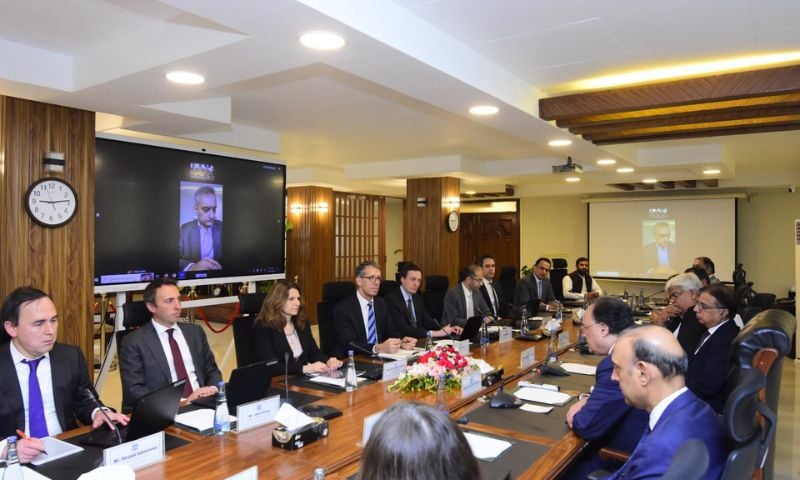
ISLAMABAD: A visiting International Monetary Fund (IMF) mission led by Mission Chief Iva Petrova and Pakistani authorities have aligned discussions on budget strategy with reform priorities and fiscal targets during pre-budget consultations in Islamabad.
According to a statement from the Finance Division, Finance Minister Senator Muhammad Aurangzeb briefed the IMF mission on Pakistan’s macroeconomic outlook, fiscal strategy and ongoing reform agenda aimed at strengthening stability and supporting sustainable, export-led growth.
The discussions focused on aligning the upcoming federal budget with key programme parameters, including revenue mobilisation, expansion of the tax base, expenditure management and structural reforms in energy, taxation and public financial management.
Officials said the engagement is part of the IMF-supported programme framework. The pre-budget consultations help ensure that fiscal plans remain consistent with agreed quantitative targets such as the primary balance and medium-term revenue trajectory.
The Finance Ministry said both sides also reviewed broader macroeconomic priorities, including investment climate, productivity enhancement and measures to support external finance resilience.
Senator Aurangzeb highlighted recent trends in remittances and exports, noting improvements on both monthly and annual bases, and reiterated the government’s focus on addressing structural constraints and reducing dependence on cyclical economic adjustments.
The IMF mission acknowledged Pakistan’s progress in maintaining macroeconomic stability in a challenging global environment, while stressing the importance of sustaining reform momentum and maintaining fiscal discipline.
In parallel, the State Bank of Pakistan’s tight monetary policy stance continues to reflect efforts to anchor inflation expectations and safeguard external stability amid lingering price pressures.
Officials said the pre-budget consultations will continue as Pakistan finalises its fiscal framework in line with IMF programme commitments aimed at maintaining stability and supporting long-term growth.
According to the officials, the pre-budget consultations in Islamabad remained centred on Pakistan’s revenue targets, fiscal discipline and structural reform benchmarks. The ongoing review would focus on loan programme parameters.
The parameters include tax revenue mobilisation, expansion of the tax base, expenditure controls and policy reforms in energy, taxation and public financial management, which are expected to shape the framework of the next budget.
The pre-budget engagement is considered a critical step under Pakistan’s IMF-supported programme, as it helps align government spending plans and revenue projections with agreed quantitative targets, including the primary balance and tax-to-GDP trajectory.
The meeting comes amid a mixed macroeconomic backdrop. The State Bank of Pakistan has maintained a tight monetary policy stance to contain inflationary pressures and support external stability.
Ascertaining macroeconomic stability in the first six months of the outgoing financial year, Pakistan’s central bank has warned of risks and inflationary pressures stemming from the Iran war.
The SBP has also highlighted that price pressures, though easing from earlier peaks, remain sensitive to energy and food costs and ultimately mar the economic outlook.
At the same time, IMF assessments in recent programme reviews have pointed to gradual stabilisation in Pakistan’s economy.
Improved external account management and fiscal adjustment efforts were earlier flagged as well. However, the Fund continues to emphasise the need for sustained reforms to strengthen revenue collection and reduce structural fiscal imbalances.
Analysts say the IMF’s pre-budget review effectively acts as a fiscal “anchor”, influencing revenue assumptions, subsidy allocations and spending ceilings that shape the government’s final budgetary space.
The consultations are part of ongoing engagement between Pakistan and the IMF as authorities prepare budget proposals in line with programme commitments, the official said. Pakistan is targeting sustaining macroeconomic stability and ensuring continued financing support, he added.