


Key Points
- Focus on improving business climate and private sector engagement
- Pakistan highlights macroeconomic stabilisation and reform agenda
- US shows interest in energy, mining, technology and infrastructure sectors
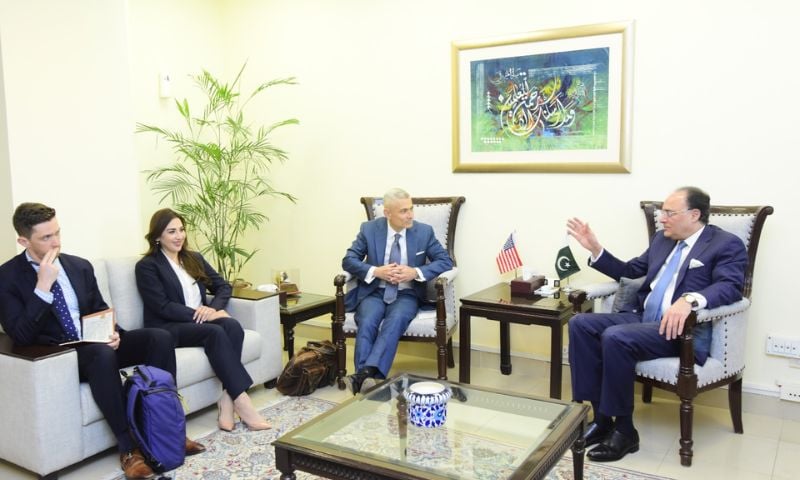
ISLAMABAD: A United States delegation led by Assistant Secretary for South and Central Asian Affairs S. Paul Kapur, with authorities in Islamabad, explored expanding investment opportunities, strengthening trade relations and enhancing economic cooperation with Pakistan.
The visiting delegation met with Finance Minister Augrungzeb, improving trade linkages and strengthening the overall business environment for private participation.
According to an official statement, both sides reviewed ways to facilitate commercial cooperation and encourage long-term investment through a more predictable and investor-friendly framework.
Finance Minister Senator Muhammad Aurangzeb briefed the US delegation on Pakistan’s ongoing economic stabilisation efforts.
He also updated the delegation on the ongoing reforms aimed at strengthening fiscal sustainability, broadening the tax base, advancing digitisation and improving financial inclusion.
Pakistan is actively seeking long-term investment in key sectors, including energy, mining, infrastructure, technology and digital finance to support export-led and sustainable growth.
The US delegation, accompanied by Chargé d’Affaires Natalie A. Baker, acknowledged Pakistan’s reform efforts.
As I mentioned during my meeting today with Finance Minister Aurangzeb, the United States commends Pakistan for continuing to work with the IMF to implement structural economic reforms. I look forward to exploring mutually beneficial commercial opportunities that will empower… pic.twitter.com/zaNaAUp9WA
— Bureau of South and Central Asian Affairs (SCA) (@State_SCA) May 13, 2026
The American side emphasised the importance of a stable, transparent and competitive business climate to attract investment.
The US delegation expressed interest in expanding commercial cooperation and noted growing interest among American companies in exploring investment opportunities in Pakistan.
Officials from the United States Department of State reaffirmed their commitment to continued economic engagement and dialogue on trade and investment cooperation.
The United States is among Pakistan’s key investment partners, with the existing American presence in sectors such as energy, technology, consumer goods and services.
In recent years, both sides have also signed multiple agreements and memoranda of understanding aimed at expanding trade facilitation, encouraging public-private partnerships and strengthening bilateral investment cooperation, reflecting continued efforts to deepen commercial engagement.