


Key Points
- Roman Hakeem built library through decades of personal sacrifice.
- Library operates without formal funding and survives on donations and support.
- Thousands of books cover religion, philosophy, politics, and ideologies.
- Students and scholars share space inside small mosque-based library.
- Library accommodates only seven to nine readers at one time.
- Public libraries in KP face outdated collections and limited access.
- Only 19 functional public libraries exist across 16 districts.
- Library fills gap left by under-resourced public library system
MARDAN, Pakistan: In a narrow street of Ghaznavi Colony in Mardan — the second-largest city in Khyber Pakhtunkhwa — a small mosque echoes with the familiar sound of children reciting the holy Qur’an.
Boys sit in neat rows, their voices rising and falling in rhythm. At first glance, nothing seems unusual.
But near the ablution area, a narrow staircase leads to something unexpected. Climbing those stairs, one might expect to find the imam’s (prayer leader) room.
Hidden world above
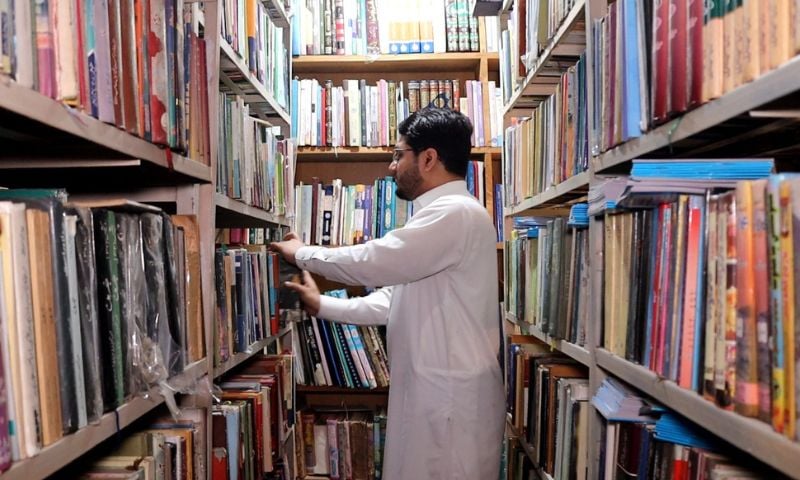
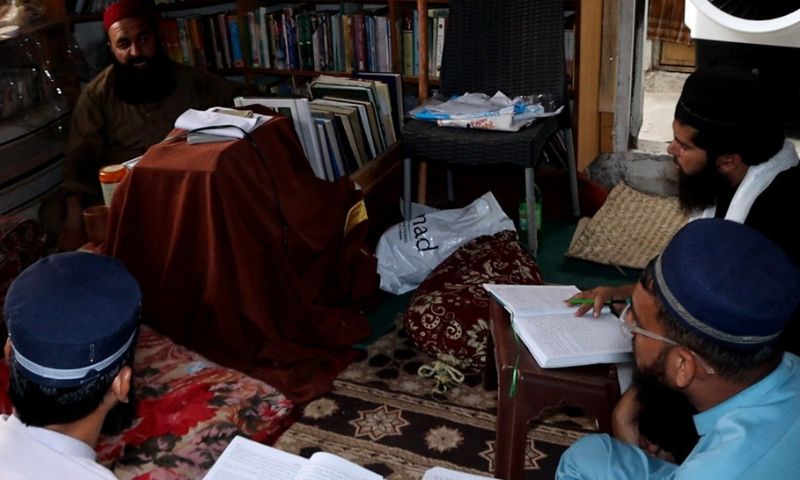
Upstairs, visitors step into a modest room lined with shelves filled with thousands of books. This is the Mardan Research Library — a unique space built above a place of worship, where diverse worlds of learning come together under one roof, forming an unlikely sanctuary of knowledge.
“I didn’t have good clothes or shoes in my student life. Whatever money I received from my father, relatives, or even for snacks — I saved it to buy books and used it to build this collection.” – Roman Hakeem, founder of Mardan Research Library
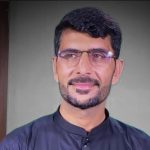
The library’s founder, Roman Hakeem, 46, is a seminary teacher and a Dars-e-Nizami graduate. His modest teaching income sustains both his household and this modest intellectual initiative.
Hakeem has completed his intermediate education. He notes he can read and understand English books with relative ease, though more complex texts can sometimes be difficult to comprehend.
For advanced material, he relies on a small network that includes PhD scholars and the Central Superior Services (CSS) qualifiers who help him source and manage such books.
He maintains he has never received any formal funding from charity organisations or prominent individuals. Instead, the library survives through informal and personal support.
Relatives occasionally assist him, friends donate books, and visitors or students contribute books they have already read.
The library currently relies on a manual cataloguing system. Nevertheless, Hakeem has recently purchased a computer and printer, which he uses to print PDF versions of books — particularly those that are expensive or difficult to access, helping sustain the collection.
He is gradually working on developing a proper catalogue system to make it easier for visitors to locate books, although the transition remains incomplete and largely manual.
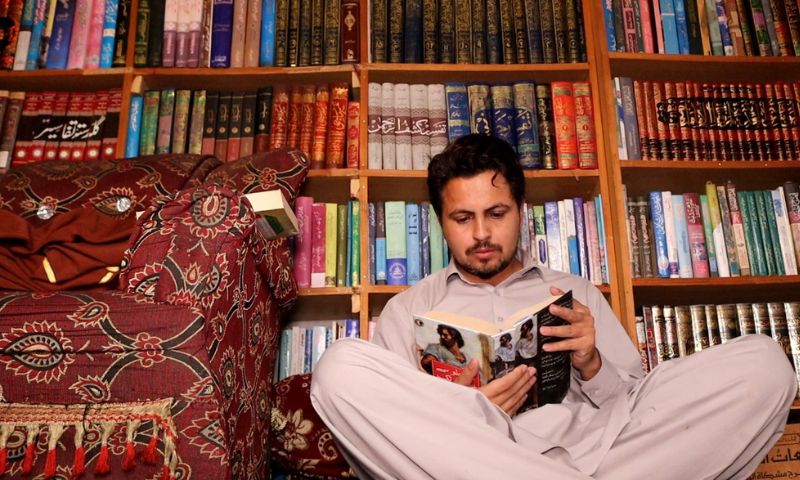
Hakeem began collecting books in 1999, often sacrificing basic needs. Money meant for clothes, food, and even Eid shopping was saved to buy books instead.
“I didn’t have good clothes or shoes in my student life,” he recalls. “Whatever money I received from my father, relatives, or even for snacks — I saved it to buy books and used it to build this collection.”
One story still defines his journey. He laughs while sharing an anecdote that has now become part of his identity.
“When I got married, my in-laws gave me money to buy clothes [as per local tradition]. But I bought books instead and spent my wedding ceremony in old clothes.”
Flexible reading hours
The library does not follow fixed operating hours as it is located within a mosque and Hakeem also teaches at a madrassa.
When visitors are present, it remains open until around 9:30 pm.
At times, it opens after Asr prayer (mid-afternoon prayer), depending on student needs, especially during exam seasons.
In his absence, the library is managed either by his assistant or his younger brother, Qaiser Hakeem.
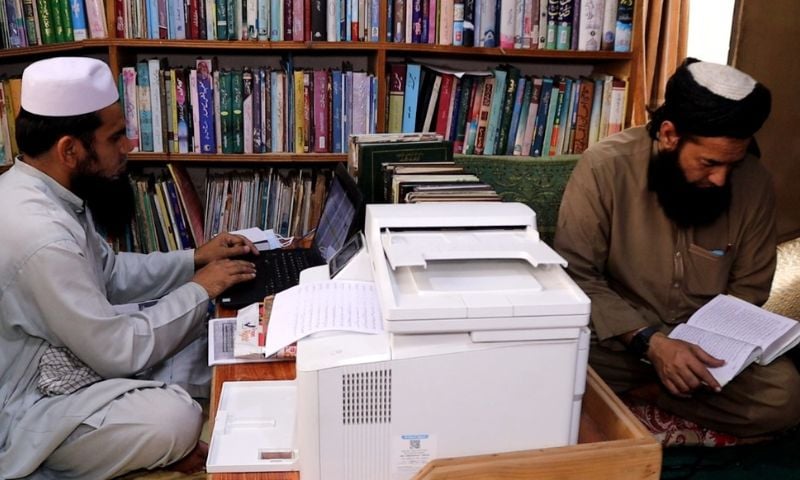
The library occupies a narrow space of roughly 20 feet in length and eight feet wide. It can accommodate only about seven to nine readers at a time sitting on the floor.
The space was not originally designed as a library; it was later repurposed, reflecting adaptive use of space.
Hakeem hopes to shift it to a larger hall-like space to accommodate more readers.
Beyond religious texts
Despite being inside a mosque, the library is not limited to Islamic texts.
Alongside Qur’anic exegesis and works of Islamic jurisprudence, one can find books on Christianity, Judaism, Hinduism, Sikhism, and even secular ideologies like communism and socialism.
“District libraries exist, but many books are outdated. Preparing for exams like CSS is expensive because you need updated material.” – Dr Zeeshan, a CSS aspirant
Works by global and regional figures such as Jawaharlal Nehru, Mahatma Gandhi, Nelson Mandela, and Adolf Hitler sit side by side on the same shelves.
“When people first see books like the Bible, Torah, or works on socialism inside a mosque, they are surprised. They ask, Why are these here?”
The answer is simple: reading about other religions and ideologies does not weaken faith; rather, it broadens the mind and strengthens knowledge.
Understanding different perspectives helps us better grasp our own purpose in life.
Under-resourced library system
The importance of such initiatives becomes clearer when viewed against the broader situation in Khyber Pakhtunkhwa.
The province has only around 19 functional public libraries in 16 districts, with an estimated 65 private libraries in total across all categories.
These include public, district, tehsil-level, community, and madrasa-based libraries.
According to the official website of the KP Directorate of Archives and Libraries, these institutions collectively hold 43,200 books, but access remains uneven, especially in smaller districts, leaving many readers high and dry.
Also, Peshawar Public Library and Archives preserve over 90,000 historical and cultural records, reflecting the region’s administrative and heritage documentation.
A 2026 study titled “The Public Libraries in Khyber Pakhtunkhwa: A Benchmarking Study Against IFLA Guidelines” highlights key challenges.
It found that most libraries still lack digital services, and a large portion of their collections — estimated at 70 to 85 per cent — are outdated, showing the system is lagging behind the times.
Dr. Zeeshan, a medical graduate currently preparing for the CSS examination, endorses the findings of the study.
“District libraries exist, but many books are outdated. Preparing for exams like CSS is expensive because you need updated material.”
“For us, Mardan Research Library is nothing short of a blessing. Preparing for a PhD is not easy, especially in a small town where access to academic resources is limited and expensive. Here, we are able to find books and materials that we would otherwise struggle to access.” – Muhammad Ilyas, a PhD graduate
According to Archives and Libraries Director Muqarab Khan, the library system has now been fully digitalised, allowing users to search and access books across libraries with just one click.
He says that the last major book purchase was made in 2021, although the payment for that procurement was cleared only recently.
This, he notes, reflects an urgent need for updated and modern reading material across the library network, a gap that continues to widen.
He further explains that the Public Library Mardan was originally established in 1990, but despite its long existence, it still does not have a dedicated building.
At present, the library operates from a shared government facility where multiple courts and administrative offices also function.
This arrangement, he elaborates, creates a constant disturbance and makes it difficult to maintain a peaceful reading environment.
He also reveals that over the past 15 years, multiple summaries and proposals have been submitted to both district administration and the provincial government, requesting that vacant government buildings be allocated for library use.
However, no practical progress has been made so far.
Systemic gaps persist
Muhammad Ilyas — a PhD scholar who has completed his doctoral studies — says, “For us, Mardan Research Library is nothing short of a blessing. Preparing for a PhD is not easy, especially in a small town where access to academic resources is limited and expensive, often leaving students to fend for themselves. Here, we are able to find books and materials that we would otherwise struggle to access.”
Similarly, Abdul Sattar, a 49-year-old writer from Mardan, remarks that spending time in this library from Asr to Maghrib left him deeply refreshed, a breath of fresh air in an otherwise constrained environment.
What began as a personal collection has grown into a community space where madrasa students and university graduates sit side by side.
“When I see people benefiting from this place, I feel my sacrifices were worth it,” Hakeem says. He hopes to expand the library and create more space for readers.