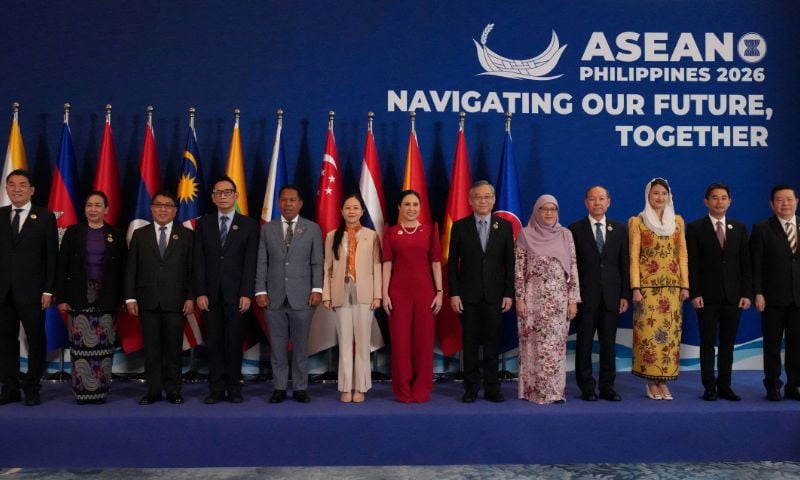
MANILA: The Association of Southeast Asian Nations (ASEAN) on Friday called on the United States and Iran to halt fighting and pursue lasting peace in the region, describing the current situation as a “limbo situation”.
Speaking after hosting the 48th ASEAN summit in Cebu province, Philippines, President Ferdinand Marcos Jr. said all parties involved in the conflict must cease hostilities and ensure the reopening of the Strait of Hormuz.
Marcos, who chaired the summit, said the ongoing conflict involving the United States, Israel and Iran had created a highly unstable environment, with no clear indication that the ceasefire was holding.
“We now are in a limbo situation about how long it is going to last,” he said, adding that ASEAN leaders discussed the conflict during the summit. “We don’t know when the next encounter is going to be.”
A ceasefire was secured on 8 April, which was later extended through diplomatic efforts involving the United States.
“Until the fighting ends, until bombings end, it is very difficult to put together any kind of solution,” Marcos said.
He described peace as the “fundamental” first step towards resolving the wider regional crisis and stabilising the Middle East.
“That is fundamental to any discussion about the war in the Middle East,” Marcos said. “We will absolutely achieve nothing until there is peace.”
The ASEAN summit has focused heavily on the impact of the Middle East conflict, particularly concerns over disruptions to oil shipments and maritime trade through the Strait of Hormuz, one of the world’s most critical energy chokepoints.
Marcos said ASEAN member states are coordinating contingency measures to ensure fuel security amid fears of prolonged instability.
“The call essentially is: peace now,” he added.
Earlier on Thursday, the United States and Iran exchanged fire in and around the Strait of Hormuz marking the most serious confrontation since a ceasefire between the two countries came into effect last month.
Despite the escalation, both Washington and Tehran indicated they were seeking to avoid a broader military conflict.
Iranian officials accused the US of violating the ceasefire by targeting vessels in the strategically vital waterway and launching strikes on Iranian territory, while the US military said it acted in response to Iranian attacks involving missiles, drones and armed boats aimed at American naval assets.
US President Donald Trump attempted to downplay the incident, insisting that the ceasefire remained intact despite the exchange of fire.