


BEIRUT: More than half of Lebanon’s population is now dependent on humanitarian assistance for survival, a senior European Union official said on Friday, warning that the country’s deepening crisis risks worsening further as Israeli attacks continue despite an existing ceasefire arrangement.
EU Commissioner for Crisis Management Hadja Lahbib made the remarks during a visit to Beirut after meeting Lebanese President Joseph Aoun, stressing that millions of people across the country are struggling with displacement, destruction and severe shortages of essential services.
“At present, more than three million people, meaning more than half of the population here in Lebanon, depend on humanitarian aid to survive,” Lahbib told reporters.
She said the European Union had stepped up emergency support since the outbreak of hostilities on March 2 between Israel and the Iran-backed Hezbollah movement.
According to Lahbib, the 27-member bloc has already allocated 100 million euros in humanitarian assistance and dispatched six aircraft carrying relief supplies, while a seventh aid flight is scheduled to arrive on Saturday.
According to AFP, the conflict, which escalated into a two-month-long war, has caused widespread devastation across Lebanon.
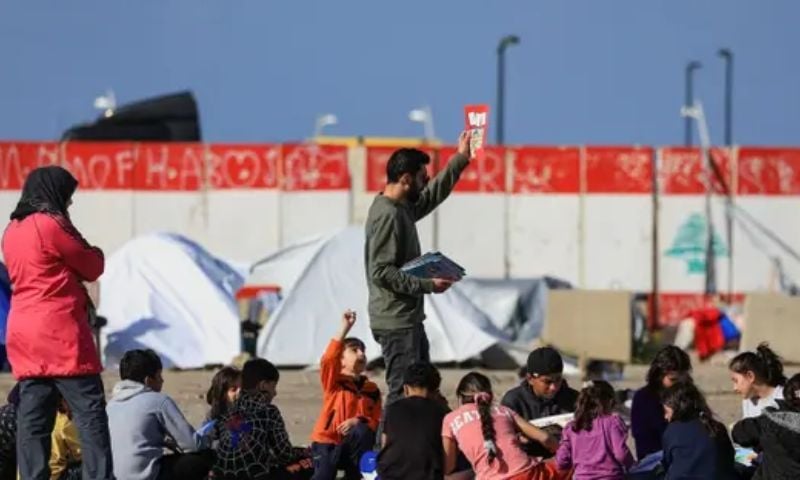
Lebanese authorities say Israeli bombardments since early March have killed more than 2,700 people and forced over one million residents from their homes, creating one of the country’s most severe humanitarian emergencies in recent years.
International aid agencies have repeatedly warned that the scale of suffering is increasing as hospitals, shelters and humanitarian organisations struggle to cope with growing needs.
In March, the United Nations launched an emergency appeal seeking 308 million dollars to provide urgent relief assistance for Lebanon.
However, UN agencies say only around 126 million dollars has been secured so far, leaving major funding gaps in food supplies, medical care and emergency shelter programmes.
Lahbib described the ceasefire as “a narrow window of hope” but cautioned that lasting peace would require political commitment from all sides involved in the conflict.
She called on Hezbollah to halt its attacks and surrender its weapons, while also urging Israel to end its military strikes inside Lebanon.
“For a ceasefire to lead to peace, courage is needed — political courage to address the root causes of this conflict,” she said.
Diplomatic efforts aimed at ending the war are expected to continue next week, with Israel and Lebanon scheduled to hold a third round of talks in Washington.
The negotiations are intended to explore ways to secure a broader settlement, although Hezbollah has expressed opposition to direct discussions with Israel.
The continuing violence has added to Lebanon’s already fragile economic and political situation, with many families increasingly dependent on foreign assistance for food, healthcare and shelter.