


Key Points
- Iran says US strikes targeted vessels and civilian areas near Qeshm Island
- CENTCOM claims Iranian missiles, drones and boats targeted three US destroyers
- Trump insists ceasefire remains in effect despite latest clashes
- US sanctions Iraq’s deputy oil minister and three armed-group leaders
- Israel says it killed Hezbollah commander in Beirut airstrike
- Tehran still reviewing US proposal to formally end conflict
WASHINGTON/DUBAI: The United States and Iran exchanged fire in and around the Strait of Hormuz on Thursday, marking the most serious confrontation since a ceasefire between the two countries came into effect last month.
Despite the escalation, both Washington and Tehran indicated they were seeking to avoid a broader military conflict.
Iranian officials accused the US of violating the ceasefire by targeting vessels in the strategically vital waterway and launching strikes on Iranian territory, while the US military said it acted in response to Iranian attacks involving missiles, drones and armed boats aimed at American naval assets.
US President Donald Trump attempted to downplay the incident, insisting that the ceasefire remained intact despite the exchange of fire.
“It’s just a love tap,” Trump told an ABC News reporter.
President Trump told ABC News’ Rachel Scott during a phone call Thursday that retaliatory strikes against Iranian targets are just a “love tap.”
Live updates: https://t.co/SckPdjIMgM
— ABC News (@ABC) May 7, 2026
Iranian state media later reported that calm had returned to the region after several hours of hostilities, saying the situation around the Strait of Hormuz had normalised.
The latest confrontation unfolded as Washington awaited Tehran’s response to a proposed framework aimed at formally ending the conflict.
However, the proposal leaves unresolved several contentious issues, including Iran’s nuclear programme and the future status of maritime access through the Strait of Hormuz.
Tensions between the two sides have persisted since the ceasefire took effect on April 7, with intermittent clashes continuing despite diplomatic efforts to stabilise the situation.
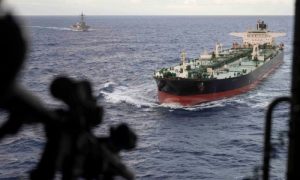
Iran’s top joint military command accused the US of attacking an Iranian oil tanker and another commercial vessel attempting to enter the Strait of Hormuz.
Tehran also alleged that American forces carried out airstrikes on civilian areas on Qeshm Island as well as nearby coastal regions, including Bandar Khamir and Sirik.
According to Iranian military officials, Tehran responded by targeting US military vessels east of the Strait of Hormuz and south of the port city of Chabahar.
A spokesperson for Iran’s Khatam al-Anbiya Central Headquarters claimed the retaliatory strikes caused “significant damage” to American forces.
However, US Central Command (CENTCOM) denied that any of its naval assets had been hit.
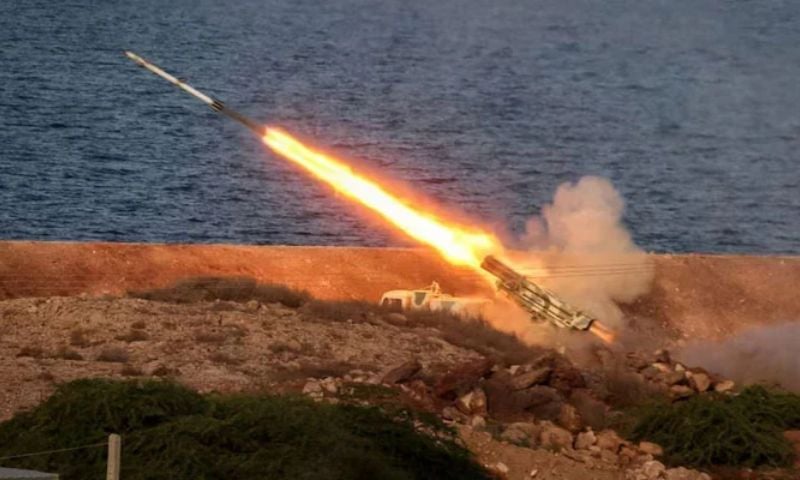
CENTCOM stated that Iranian forces used missiles, drones and fast-moving small boats in attacks targeting three US Navy destroyers operating in the region.
— U.S. Central Command (@CENTCOM) May 7, 2026
The US military said it subsequently struck Iranian missile and drone launch sites, along with other military positions believed to be linked to the attacks.
“CENTCOM does not seek escalation but remains positioned and ready to protect American forces,” the command said in a statement.
Iran’s Press TV later reported that conditions on Iranian islands and in coastal cities near the Strait of Hormuz had returned to normal following several hours of confrontation.
The latest incident follows another major confrontation earlier this week.
On Monday, the US military said it had destroyed six Iranian boats and intercepted multiple cruise missiles and drones after Tehran allegedly attempted to disrupt a US-led naval mission intended to secure commercial shipping routes through the Strait of Hormuz.
The renewed violence has raised further doubts over the durability of the ceasefire and the prospects for a lasting diplomatic settlement.
Before Thursday’s clashes, Washington had floated a proposal aimed at formally ending the conflict. However, the emerging framework reportedly does not address key US demands, including the suspension of Iran’s nuclear activities and the reopening of the Strait of Hormuz to unrestricted international shipping.
Before the recent hostilities, the strait handled nearly one-fifth of global oil and gas supplies, making it one of the world’s most strategically important energy corridors. Tehran said it was still reviewing the US proposal and had not yet reached a final decision.
In a separate move on Thursday, the United States announced sanctions against Iraq’s deputy oil minister and three armed group leaders, accusing them of supporting Iranian operations and regional activities.
Meanwhile, regional tensions also intensified in neighbouring Lebanon. Israel said on Thursday that it had killed a Hezbollah commander in an airstrike on Beirut a day earlier — the first Israeli strike on the Lebanese capital since a separate ceasefire agreement was reached last month.
Iran has repeatedly insisted that any long-term agreement with Washington must include a halt to Israeli military operations in Lebanon, where Tehran-backed Hezbollah remains deeply involved in the conflict.