WASHINGTON: US President Donald Trump has for the second time publicly credited Pakistan’s leadership for persuading Washington to pause “Project Freedom,” a US-led naval operation aimed at escorting stranded commercial vessels through the Strait of Hormuz amid escalating tensions with Iran.
On Thursday, Trump wrote on his social media platform Truth Social that the United States had paused “Project Freedom” following requests from Pakistan amid efforts to ease tensions in the Strait of Hormuz.
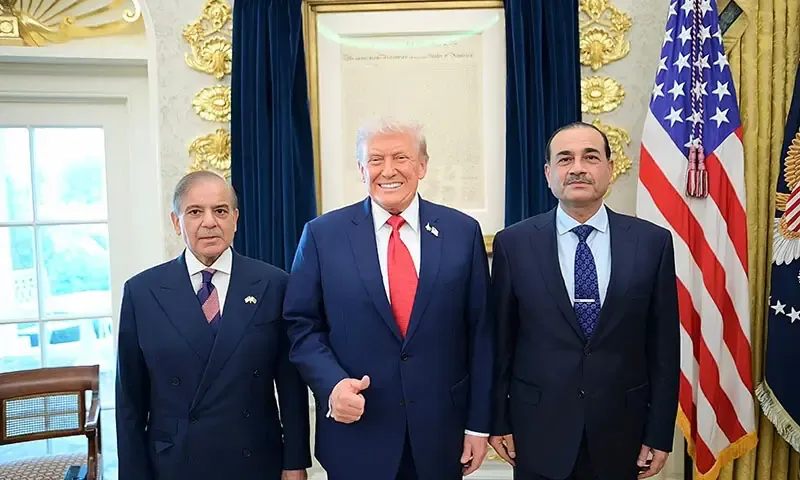
“Pakistan has been fantastic. And their leaders have been fantastic. The field marshal and the prime minister,” Trump said.
“And they asked us not to do it. We’ll go back to it if we have to,” he added.
President Trump on why Project Freedom is Paused:
“Pakistan has been fantastic. And their leaders have been fantastic. The field marshal and the prime minister. And they asked us not to do it. We’ll go back to it if we have to.”
— Donald J Trump Posts TruthSocial (@TruthTrumpPost) May 8, 2026
Trump had earlier announced on Tuesday that the United States was pausing “Project Freedom” following requests from Pakistan and several other countries after the initiative intensified tensions in the Gulf region and triggered exchanges of fire between US and Iranian forces.
“Based on the request of Pakistan and other Countries… we have mutually agreed that, while the Blockade will remain in full force and effect, Project Freedom (The Movement of Ships through the Strait of Hormuz) will be paused for a short period of time,” Trump wrote in a post on Truth Social.
Pakistan has emerged as a key intermediary between Washington and Tehran since the conflict began, relaying messages between both sides and facilitating direct talks in Islamabad.
Trump launched “Project Freedom” earlier this week to facilitate the movement of commercial vessels stranded after Iran closed the Strait of Hormuz following US and Israeli strikes on Tehran on February 28.
The United States has meanwhile maintained a counter-blockade on Iranian ports in response to Tehran’s closure of the critical shipping route, through which nearly one-fifth of global oil and gas supplies pass.
Tensions escalated sharply after the announcement of the operation, with Iran warning that any US naval interference would violate the fragile ceasefire agreement.
Iranian media later claimed missiles struck a US Navy vessel in the strait after it ignored Iranian warnings, though US Central Command denied any American ships had been hit.
Washington also said it destroyed six Iranian boats and intercepted Iranian cruise missiles and drones during confrontations linked to efforts to reopen maritime traffic.
US Secretary of State Marco Rubio later sought to downplay the tensions, saying Washington had concluded its main military campaign against Iran, known as “Operation Epic Fury.”
“The operation is over — Epic Fury — as the president notified Congress. We’re done with that stage of it,” Rubio told reporters at the White House.