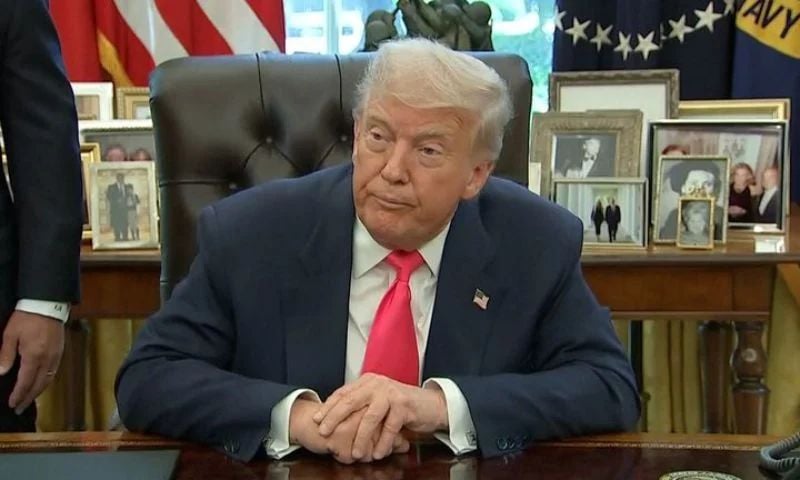



WASHINGTON: US President Donald Trump said Wednesday he believed there was “a very good chance” of sealing a peace deal with Iran amid Pakistan-led diplomatic efforts to end the US-Iran conflict.
Positive signs that Washington and Tehran could return to the table after weeks of deadlock grew after Trump halted a military operation to reopen the Strait of Hormuz, citing hopes for a deal.
Trump said on social media Wednesday that if “Iran agrees to give what has been agreed to”, the war would be over, but if not, the bombing would resume “at a much higher level and intensity”.
“I think it’s got a very good chance of ending, and if it doesn’t end, we have to go back to bombing the hell out of them,” the US President later told the US broadcaster PBS.
Meanwhile, Iranian foreign ministry spokesman Esmaeil Baqaei told local media that the “US plan and proposal are under review,” and that Tehran would convey its position to mediator Pakistan “after finalising its views”.
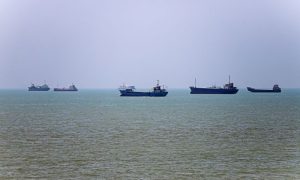
On Tuesday, citing progress toward a deal, Trump announced that the US has suspended “Project Freedom” – a naval initiative facilitating the movement of commercial shipping through the strategically vital Strait of Hormuz – following requests from Pakistan and several other countries.
The US President said the naval initiative “will be paused for a short period of time to see whether or not the Agreement can be finalized”.
Pakistani Prime Minister Shehbaz Sharif, a key figure in the diplomatic efforts and in the first round of talks held in Islamabad last month, was optimistic on the prospects for a deal.
“We are very hopeful that the current momentum will lead to a lasting agreement that secures durable peace and stability for the region and beyond,” he said on X.
US, Iran closing in on one-page deal
On Wednesday, Axios, citing US officials and sources briefed on the issue, reported that the White House believes that the US is getting close to reaching an agreement with Iran to end the conflict and set a framework for more detailed nuclear negotiations.
Iran said earlier on Wednesday it would accept a peace deal only if it was “fair”, after Trump paused the naval mission tasked with reopening the Strait of Hormuz.
The US decision came amid Pakistan-led diplomatic efforts between the US and Iran, with talks ongoing but no final agreement yet reached.
Washington is expecting Tehran’s response on several key points of the proposal within the next 48 hours, according to Axios.
The report noted that while no final agreement has been reached, this marks the closest both sides have come to a deal since the conflict began, according to officials quoted by Axios.
Among other provisions, the deal would involve Iran committing to a moratorium on nuclear enrichment, the US agreeing to lift its sanctions and release billions in frozen Iranian funds, and both sides lifting restrictions around transit through the Strait of Hormuz, Axios said.
30-day negotiations on detailed agreement
The one-page, 14-point memorandum of understanding is being negotiated between US envoys Steve Witkoff and Jared Kushner and several Iranian officials, both directly and through mediators, the Axios report added.
In its current form, the memorandum would declare an end to the war in the region and the start of a 30-day period of negotiations on a detailed agreement to open the strait, limit Iran’s nuclear programme and lift US sanctions, Axios reported.
Meanwhile, The New York Post reported that multiple versions of the proposal are under discussion, and final points to be included had not yet been decided.
“Which one is going to be approved, no one knows,” The Post quoted a Pakistani source familiar with mediation efforts.
Iran’s restrictions on shipping through the strait and the US naval blockade would be gradually lifted during that 30-day period, Axios said, citing one US official who added that if the negotiations collapse, US forces would be able to restore the blockade or resume military action.
Iran said earlier on Wednesday it would accept a peace deal only if it was “fair”, after US President Donald Trump paused a three-day-old naval mission tasked with reopening the Strait of Hormuz that had shaken the war’s month-old ceasefire.
The US State Department and White House did not immediately respond to a request for comment on the Axios report, according to Reuters.
Pakistan-led diplomatic efforts
Diplomatic efforts are going on, with a single round of Pakistan-mediated US-Iran direct negotiations having taken place in Islamabad in April.
ALSO READ: Pakistan Chief of Defence Forces Field Marshal Munir Awarded ‘Leader of Peace’ Title
Iranian President Masoud Pezeshkian indicated that Tehran remains open to dialogue but rejected Washington’s “maximum pressure” approach as unrealistic.
PM Sharif reiterated that Islamabad remains firmly committed to supporting initiatives that prioritise restraint and peaceful conflict resolution.
The Prime Minister further conveyed optimism that the current momentum generated by coordinated diplomatic efforts would lead to a broader and more sustainable agreement.
According to the prime minister, such an outcome would not only stabilise the immediate region but also contribute to wider international peace and security.