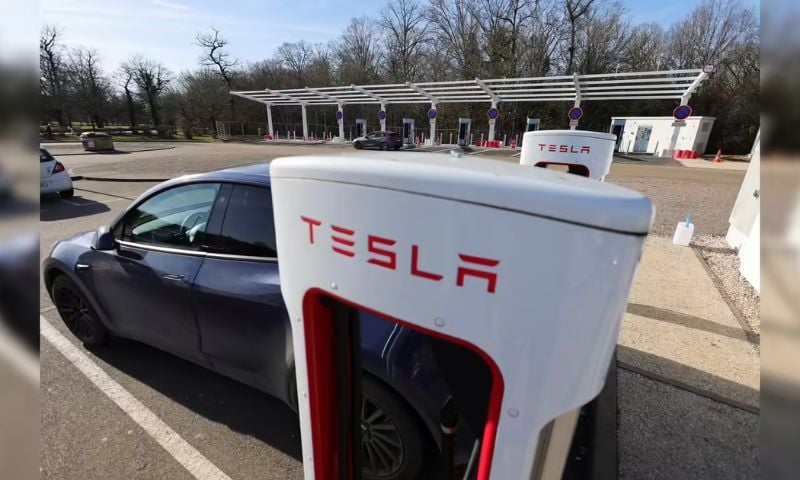



ISLAMABAD: US electric vehicle maker Tesla is recalling more than 219,000 vehicles after the safety regulator detected a rearview camera defect: delayed display when drivers shift into reverse, raising concerns about visibility and crash risk in low-speed manoeuvres.
The National Highway Traffic Safety Administration (NHTSA) said 218,868 vehicles are affected by the issue, which can temporarily slow the rear camera feed, reducing the driver’s ability to see obstacles when reversing.
The recall covers certain Model 3, Model Y, Model S and Model X vehicles.
According to regulators, no injuries have been reported in connection with the defect so far.
Tesla is expected to resolve the issue through a software update, reflecting a growing reliance on remote fixes in modern electric vehicles.
The recall comes at a time when the US automotive sector is undergoing a major shift toward electric and software-defined vehicles.
Traditional mechanical systems are increasingly replaced or supported by digital controls, sensors and camera-based assistance systems.
While these technologies are designed to improve safety and driving convenience, they have also introduced new risks linked to software performance, system latency and electronic failures.
Regulators in the United States have, in recent years, increased oversight of such systems as they become central to vehicle operation.
Industry observers say recalls involving electric vehicles often differ from traditional automotive recalls, as many issues can be addressed through over-the-air software updates rather than physical repairs at service centres.
However, repeated software-related defects have raised questions about testing standards, system reliability and long-term durability in EV platforms.
The latest action adds to a broader pattern of regulatory attention on electric and autonomous vehicles in the United States, where manufacturers are balancing rapid innovation with evolving safety requirements.