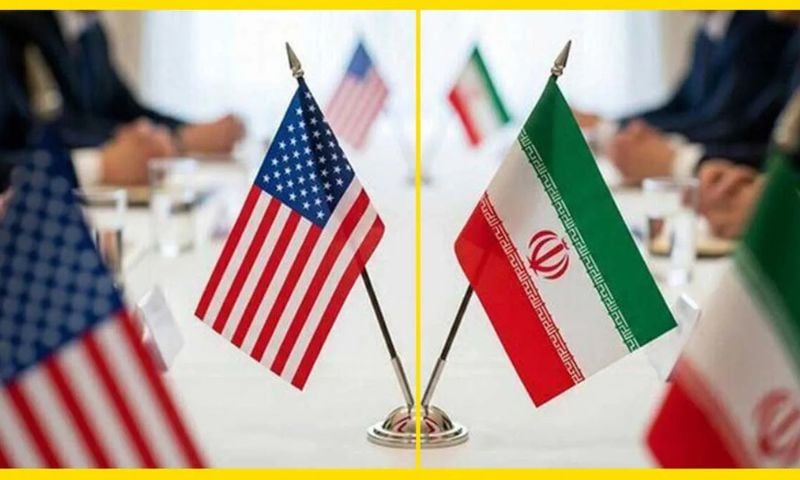



WASHINGTON: The United States believes it is getting close to reaching an agreement with Iran on a one-page memorandum of understanding to end the conflict and set a framework for more detailed nuclear negotiations, according to a report by Axios on Wednesday, citing US officials and sources briefed on the issue.
US President Donald Trump announced on Tuesday that the US has suspended “Project Freedom” – a naval initiative facilitating the movement of commercial shipping through the strategically vital Strait of Hormuz – following requests from Pakistan and several other countries.
Iran said earlier on Wednesday it would accept a peace deal only if it was “fair”, after Trump paused the naval mission tasked with reopening the Strait of Hormuz.
The US decision came amid Pakistan-led diplomatic efforts between the US and Iran, with talks ongoing but no final agreement yet reached.
Washington is expecting Tehran’s response on several key points of the proposal within the next 48 hours, according to Axios.
The report noted that while no final agreement has been reached, this marks the closest both sides have come to a deal since the conflict began, according to officials quoted by Axios.
Among other provisions, the deal would involve Iran committing to a moratorium on nuclear enrichment, the US agreeing to lift its sanctions and release billions in frozen Iranian funds, and both sides lifting restrictions around transit through the Strait of Hormuz, Axios said.
30-day negotiations on detailed agreement
The one-page, 14-point memorandum of understanding is being negotiated between US envoys Steve Witkoff and Jared Kushner and several Iranian officials, both directly and through mediators, the Axios report added.
In its current form, the memorandum would declare an end to the war in the region and the start of a 30-day period of negotiations on a detailed agreement to open the strait, limit Iran’s nuclear programme and lift US sanctions, Axios reported.
Meanwhile, The New York Post reported that multiple versions of the proposal are under discussion, and final points to be included had not yet been decided.
“Which one is going to be approved, no one knows,” The Post quoted a Pakistani source familiar with mediation efforts.
Iran’s restrictions on shipping through the strait and the US naval blockade would be gradually lifted during that 30-day period, Axios said, citing one US official who added that if the negotiations collapse, US forces would be able to restore the blockade or resume military action.
Iran said earlier on Wednesday it would accept a peace deal only if it was “fair”, after US President Donald Trump paused a three-day-old naval mission tasked with reopening the Strait of Hormuz that had shaken the war’s month-old ceasefire.
The US State Department and White House did not immediately respond to a request for comment on the Axios report, according to Reuters.
Iran says diplomatic messages ongoing
Meanwhile, Iran’s Foreign Ministry spokesman said the country has not yet issued a formal response to the latest US proposal but is continuing to exchange diplomatic messages via Pakistan.
“Messages are being exchanged through the Pakistani mediator, and reviews regarding the exchanged texts are ongoing,” Iran’s IRIB broadcaster quoted Baghaei as saying.
In a statement on X, Baghaei said good-faith negotiations must entail a sincere effort to “resolve the dispute”, without any form of “deception” or “coercion”.
Baghaei said that Tehran is reviewing a US proposal to end the war and will convey its views to the mediator Pakistan, the ISNA news agency reported.
Meanwhile, Trump said that an agreement with Iran could bring an end to the military operation “Epic Fury” and lead to the reopening of the Strait of Hormuz.
In a post on Truth Social, Trump said tensions could ease significantly if Iran complies with conditions tied to maritime access and regional stability.
“Assuming Iran agrees to give what has been agreed to… the already legendary Epic Fury will be at an end, and the highly effective Blockade will allow the Hormuz Strait to be OPEN TO ALL, including Iran,” he said.
Trump added: “If they don’t agree, the bombing starts… at a much higher level and intensity than it was before.”
Pakistan-led diplomatic efforts
Diplomatic efforts are going on, with a single round of Pakistan-mediated US-Iran direct negotiations having taken place in Islamabad in April.
Iranian President Masoud Pezeshkian indicated that Tehran remains open to dialogue but rejected Washington’s “maximum pressure” approach as unrealistic.
Earlier, Trump said that the temporary suspension of “Project Freedom” would allow all parties to assess whether a final agreement with Iran could be concluded and formally signed.
— Rapid Response 47 (@RapidResponse47) May 5, 2026
The Strait of Hormuz, a narrow but crucial passage for global oil shipments, has been at the centre of rising tensions in recent weeks.
The US-led “Project Freedom” had aimed to ensure safe passage for vessels amid threats and disruptions linked to the ongoing standoff with Iran.
Trump noted that discussions with Iranian representatives were progressing, but cautioned that no definitive agreement had yet been finalised.
Pakistan welcomes Trump’s pause
Meanwhile, Pakistan’s Prime Minister Shehbaz Sharif expressed appreciation to President Trump for “courageous leadership” and a timely decision to pause the maritime operation in Hormuz.
In a statement shared on X, the premier said the move came at a critical juncture and reflected a constructive response to the request made by Pakistan alongside several allied nations.
He particularly acknowledged the role of Saudi Arabia and its leadership, including Saudi Crown Prince and Prime Minister Prince Mohammed bin Salman, for their diplomatic engagement during the evolving situation.
The prime minister noted that Washington’s decision to halt the operation could contribute significantly to easing regional strain.
He emphasised that such steps help create space for dialogue and reduce the risk of escalation in one of the world’s most sensitive maritime corridors.
Highlighting Pakistan’s diplomatic stance, the prime minister reiterated that Islamabad remains firmly committed to supporting initiatives that prioritise restraint and peaceful conflict resolution.
I am grateful to President Donald Trump for his courageous leadership and timely announcement regarding the pause in Project Freedom in the Strait of Hormuz.
President Trump's gracious response to the request made by Pakistan and other brotherly countries, particularly the…
— Shehbaz Sharif (@CMShehbaz) May 6, 2026
The statement further conveyed optimism that the current momentum generated by coordinated diplomatic efforts would lead to a broader and more sustainable agreement.
According to the prime minister, such an outcome would not only stabilise the immediate region but also contribute to wider international peace and security.
China stresses ‘comprehensive ceasefire’
On Wednesday, Chinese Foreign Minister Wang Yi met his Iranian counterpart Abbas Araghchi in Beijing.
Beijing expressed deep concern over the prolonged fighting and stressed that an immediate halt to hostilities, coupled with sustained negotiations, remains the only viable path to de-escalation.
“We believe that a comprehensive ceasefire is urgently needed, that a resumption of hostilities is not acceptable, and that it is particularly important to remain committed to dialogue and negotiations,” Wang said during the meeting.
China, a major stakeholder in regional trade and energy security, has consistently advocated stability and uninterrupted commerce.
China has also backed Pakistan’s mediation efforts, facilitating a ceasefire and peace talks between Iran and the US.
Iran, for its part, reiterated its preference for a negotiated settlement that ensures balance and mutual respect, signalling readiness to engage diplomatically.
However, the visiting Foreign Minister reiterated that Iran would never negotiate under threats or pressures.
Iran’s Foreign Minister is in Beijing days ahead of President Trump’s scheduled visit and a meeting with his Chinese counterpart, Xi Jinping.