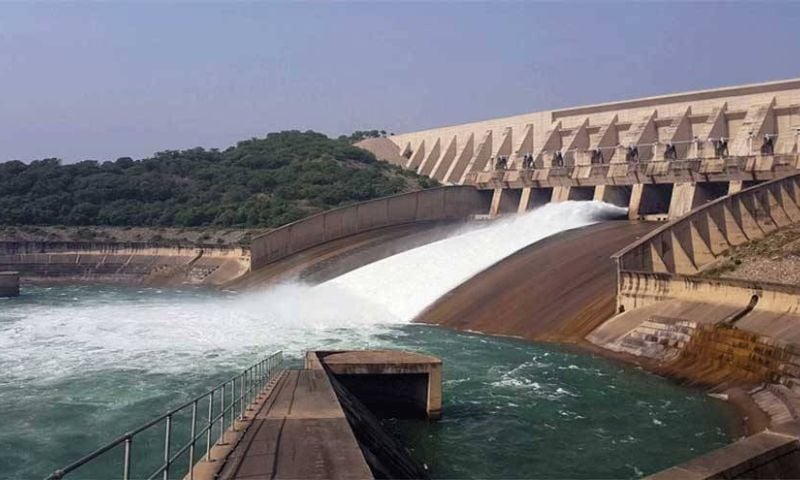



ISLAMABAD: Pakistan has raised fresh concerns over sharp fluctuations in Chenab River flows at Marala Headworks, alleging that upstream water restrictions by India are contributing to destabilised inflows at a critical time for agriculture.
According to official documents and briefings, Islamabad has sought urgent clarification under the Indus Waters Treaty mechanism amid heightened bilateral tensions even after a year of military clashes between the two.
Sharp drop and recovery in Chenab inflows
According to data released by the Indus River System Authority (IRSA), Chenab inflows at Marala fell from around 20,930 cusecs on May 2, 2026, to nearly 9,037 cusecs within hours before recovering over the following day.
The figures are drawn from Pakistan’s official River Monitoring system used for real-time water management and canal regulation.
IRSA records indicate that flows remained relatively stable in the days preceding the event, until a sharp decline and subsequent partial recovery within a 24–36 hour window.
Irrigation concerns during Kharif season
The fluctuation has raised concern among irrigation authorities in Punjab, where Chenab-fed canal systems support cotton cultivation, rice nursery preparation and orchard irrigation during the Kharif season.
Officials note that abrupt variations in river discharge can disrupt canal scheduling, particularly in a system with limited upstream storage capacity on the Chenab, increasing pressure during peak agricultural demand.
Treaty mechanism invoked for clarification
Pakistan has raised the matter through the Indus Waters Treaty framework via the Permanent Indus Commission mechanism and has sought clarification from India regarding the observed variation in river flows.
Under the Indus Water Treaty, both countries exchange technical data and address operational matters relating to western rivers through commissioner-level communication channels designed to manage hydrological disputes.
India’s illegal and unilateral suspension
In April 2025, India declared the Indus Water Treaty as “held in abeyance,” unilaterally and illegally. India did it immediately following a terror attack in Indian Illegally Occupied Jammu and Kashmir, which it blamed on Pakistan without any evidence.
Broker stands by the treaty
Ajay Banga, the President of the World Bank, which is the broker of the treaty, has already made it clear that there is no clause in the treaty allowing any of the parties to amend, and/or suspend the treaty unilaterally. Likewise, an international court of arbitration has also upheld Pakistan’s stance, and called upon India to adhere to the spirit of the decades-old treaty
Backdrop of strained water relations
The latest water restrictions are a continuation of India’s weaponisation of water against Pakistan. Islamabad has not only rejected India’s unilateral action regarding the Indus Water Treaty but also declared that any attempt to alter or tamper with the flow covered under the treaty would be considered an act of war.
Officials say the current episode is being assessed through hydrological data and treaty procedures, with emphasis on technical verification rather than immediate escalation.
India, yet to respond
India has not issued an immediate official response to Pakistan’s request for clarification or to the latest IRSA-reported fluctuation in Chenab flows at the time of reporting.
Indus Water Commissioner’s argument
During an official briefing, Pakistan’s Indus Water Commissioner Syed Mehr Ali Shah said the scale and timing of the fluctuations pointed to upstream restrictions in IIOJK.
He argued that such movements fall outside permissible operational limits under the treaty framework.
He confirmed that a formal request has been sent to India seeking detailed hydrological data and clarification of dam operations during the period in question.
Irrigation concerns
Irrigation officials warn that such abrupt fluctuations complicate canal scheduling, particularly in a system already constrained by limited storage capacity on the Chenab.
Officials in Islamabad argue that even short-duration reductions can have an outsized impact on downstream irrigation.
Water availability is critical, especially during sowing windows, when it determines crop timing and yield outcomes.
The Indus Waters Commission has reiterated that consistent data sharing and prior notification are essential components of treaty compliance.
The latest episode adds to a series of recurring disputes over western rivers under the Indus system, which remains a central fault line in India-Pakistan relations, emanating from the core issue of Kashmir.