PESHAWAR, Pakistan: The marble-cutting machine roars inside a factory at the Industrial Estate in Nowshera, about 35 kilometres southeast of Peshawar. Thick dust hangs in the air as slabs of stone are fed into heavy blades.
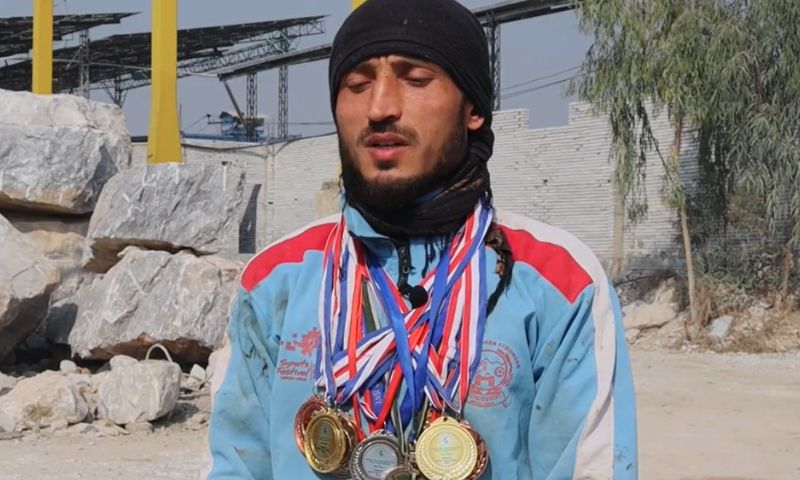
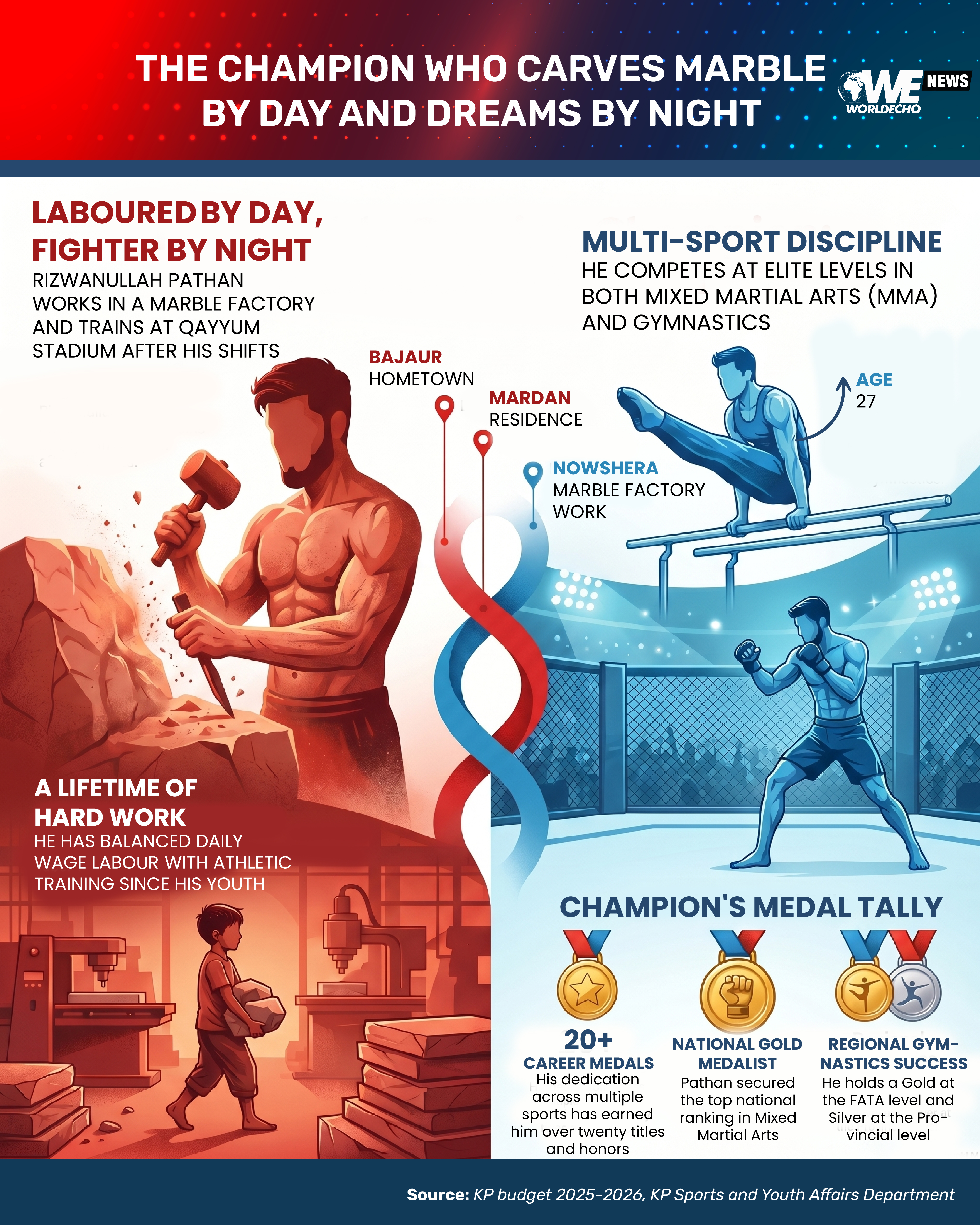
Among the workers stands 27-year-old Rizwanullah Pathan, guiding a massive piece of marble with steady hands, shaping it into perfect squares and rectangles.
His palms are rough from labour. His shirt bears the emblem of the tribal districts’ Sports Department. At first glance, he looks like any other factory worker.
But Rizwanullah is a national and provincial champion in mixed martial arts and gymnastics — an athlete who once trained at Qayyum Stadium and represented his region across Pakistan.
Today, he cuts marble by day and chases his sporting dreams by night.
Born of resilience
Rizwan belongs to the Bajaur tribal district of Khyber Pakhtunkhwa. His journey began at the age of 10, when he watched a gymnastics performance on a friend’s mobile phone.
“I don’t know what it was,” he recalls. “But from that day, I was obsessed.”
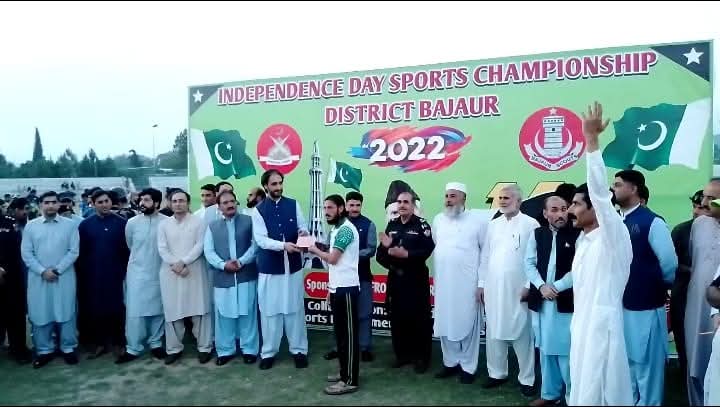
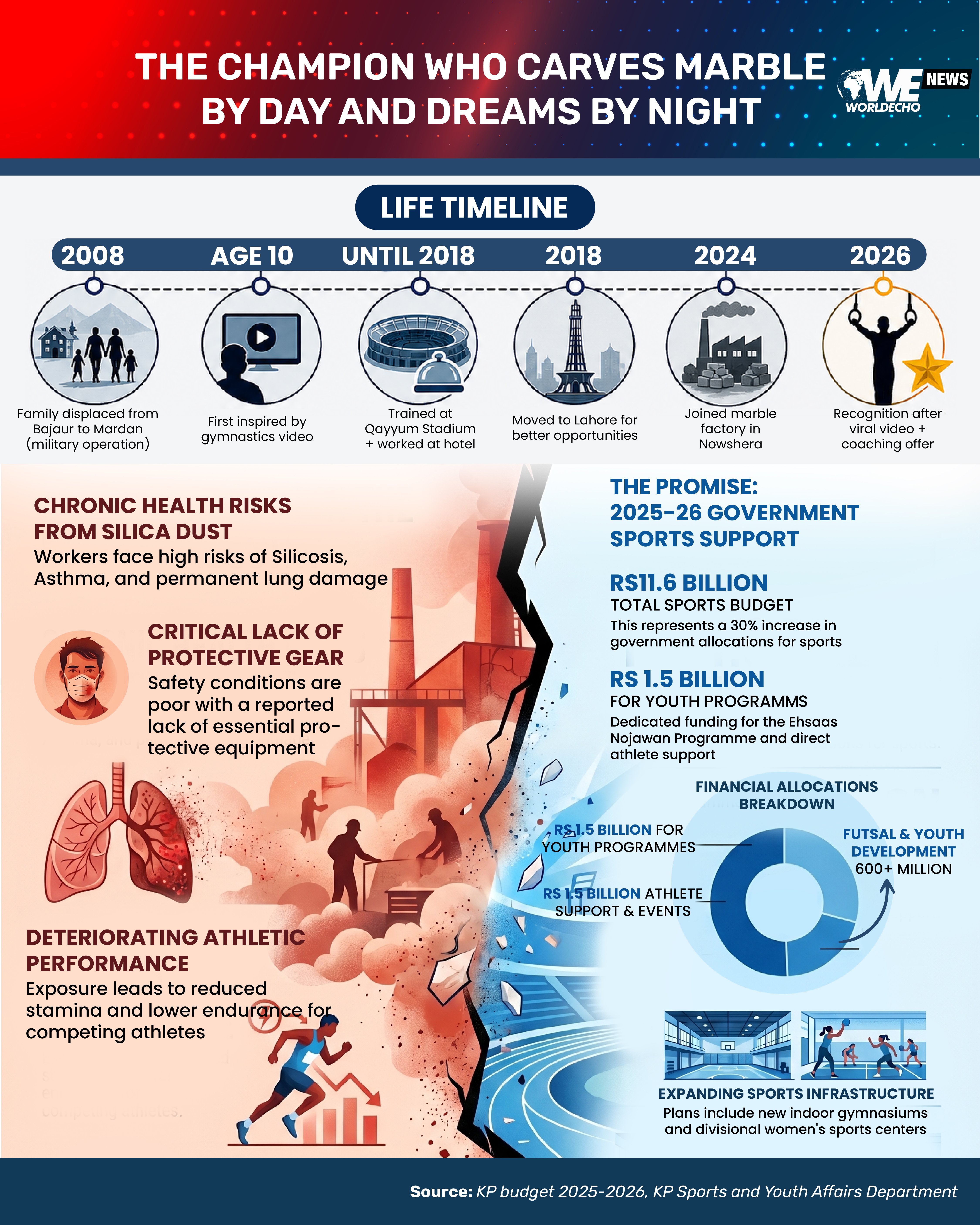
In August 2008, a military operation against militants displaced his family from Bajaur to Mardan. Poverty shadowed his childhood, but it did not extinguish his ambition.
Until 2018, Rizwan trained at Qayyum Stadium in Peshawar. At the same time, he worked at a hotel to cover his expenses. “I have done labour work everywhere,” he says proudly.
In the meantime, he began competing at the district level in Mardan, gradually rising through divisional and provincial tournaments before eventually reaching national championships.
His rise was powered not by sponsorships or facilities — but by resilience.
“His passion began after watching just one video, which turned into a lifelong commitment. Despite working as a daily wage labourer, he has won more than 20 medals at national and provincial levels. Athletes like him are rare — those who succeed despite lacking facilities and support.” – Sabz Ali Khan, Senior national coach
In 2018, he moved to Lahore in search of better opportunities. There, too, he balanced manual labour with competitions.
Eventually, he returned to Mardan in 2024 and found work in a marble factory in Nowshera. The routine is punishing: long factory shifts followed by late-night training sessions.
Talent in toxic dust
Working in such an environment carries serious health risks. Marble factories often contain fine dust particles, including silica, which can lead to respiratory diseases such as silicosis, asthma, and chronic breathing difficulties.
For an athlete, these conditions directly affect stamina, endurance, and overall performance.
In Rizwan’s case, he says he was not provided with adequate protective equipment, increasing the risks to his health.
Despite exhaustion, he refuses to quit.
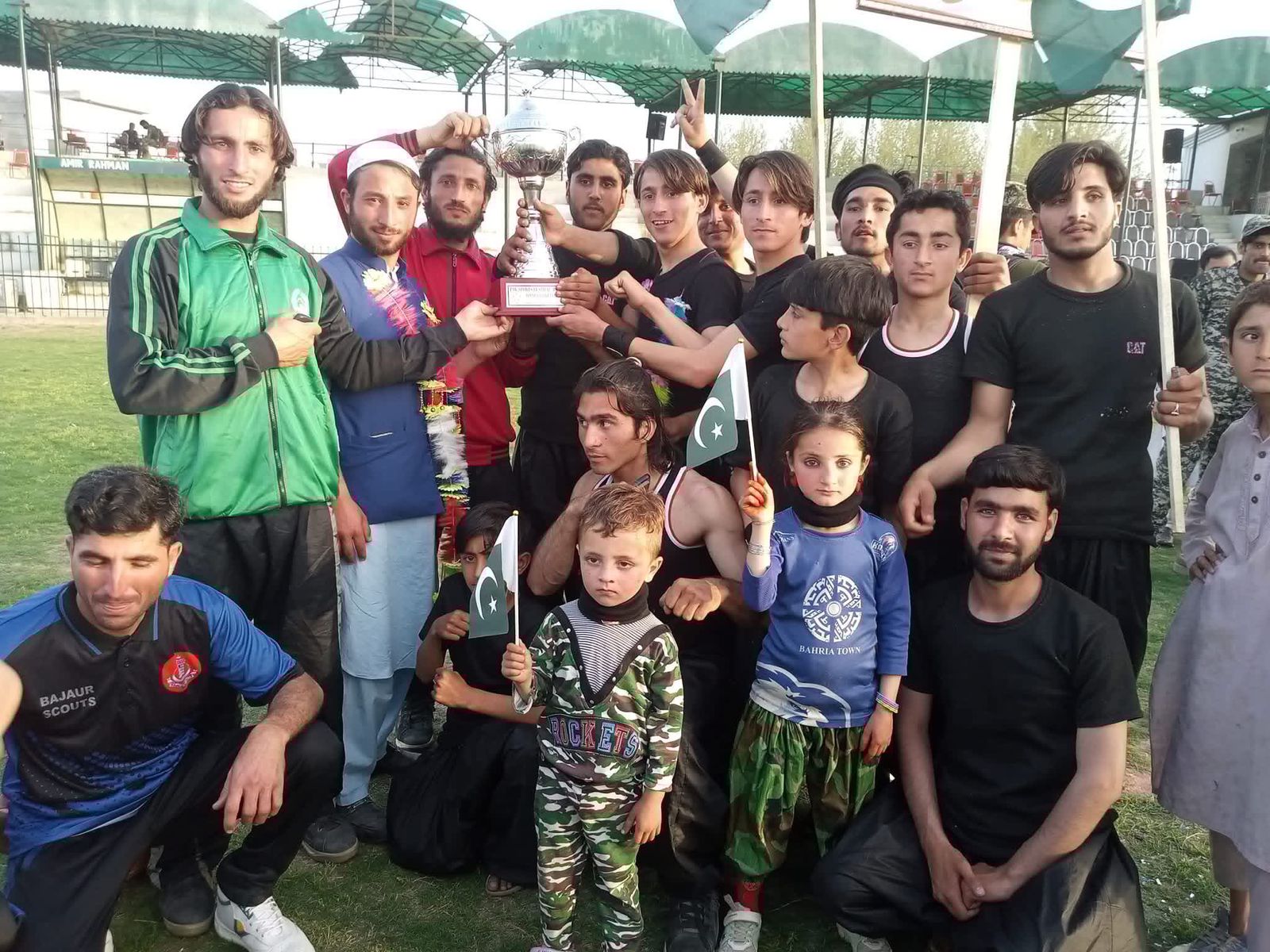
So far, Rizwan has won more than 20 medals in his sporting career, including a national gold medal in mixed martial arts, a gold medal in gymnastics at the former FATA level, and a silver medal in provincial gymnastics competitions.
His coach — Sabz Ali Khan, a senior national coach with the Khyber Pakhtunkhwa Sports Department — says Rizwan’s journey is extraordinary.
“His passion began after watching just one video, which turned into a lifelong commitment. Despite working as a daily wage labourer, he has won more than 20 medals at national and provincial levels. Athletes like him are rare — those who succeed despite lacking facilities and support,” Khan says.
Ironically, the medals he earned sometimes invite criticism instead of praise. “When I visit my hometown, people ask, ‘You work as a labourer and still play sports?. They advise me to stop wasting time,” Rizwan says.
“When I visit my hometown, people ask, ‘You work as a labourer and still play sports?’ They advise me to stop wasting time.” – Rizwanullah
Despite training children in his community and winning competitions, he says recognition remains limited.
“In Pakistan, talent is rarely valued. Sometimes it feels like I have wasted 22 to 25 years. Success takes too long.” Yet his belief remains unshaken: “One day, my talent will shine.”
Claims versus reality
Beyond individual stories like Rizwan’s, official budgets claim expanding state support for sports in Khyber Pakhtunkhwa.
For the fiscal year 2025–26, the Khyber Pakhtunkhwa government allocated Rs11.6 billion to the Sports and Youth Affairs Department — a 30 per cent increase from Rs8.9 billion last year.
The funding includes Rs1.5 billion for the Ehsaas Nojawan Programme, Rs800 million for sports events and athlete support, and over Rs600 million combined for futsal grounds and youth development initiatives, alongside plans for a multi-purpose international-standard indoor gymnasium in Buner and women’s indoor sports facilities at divisional headquarters.
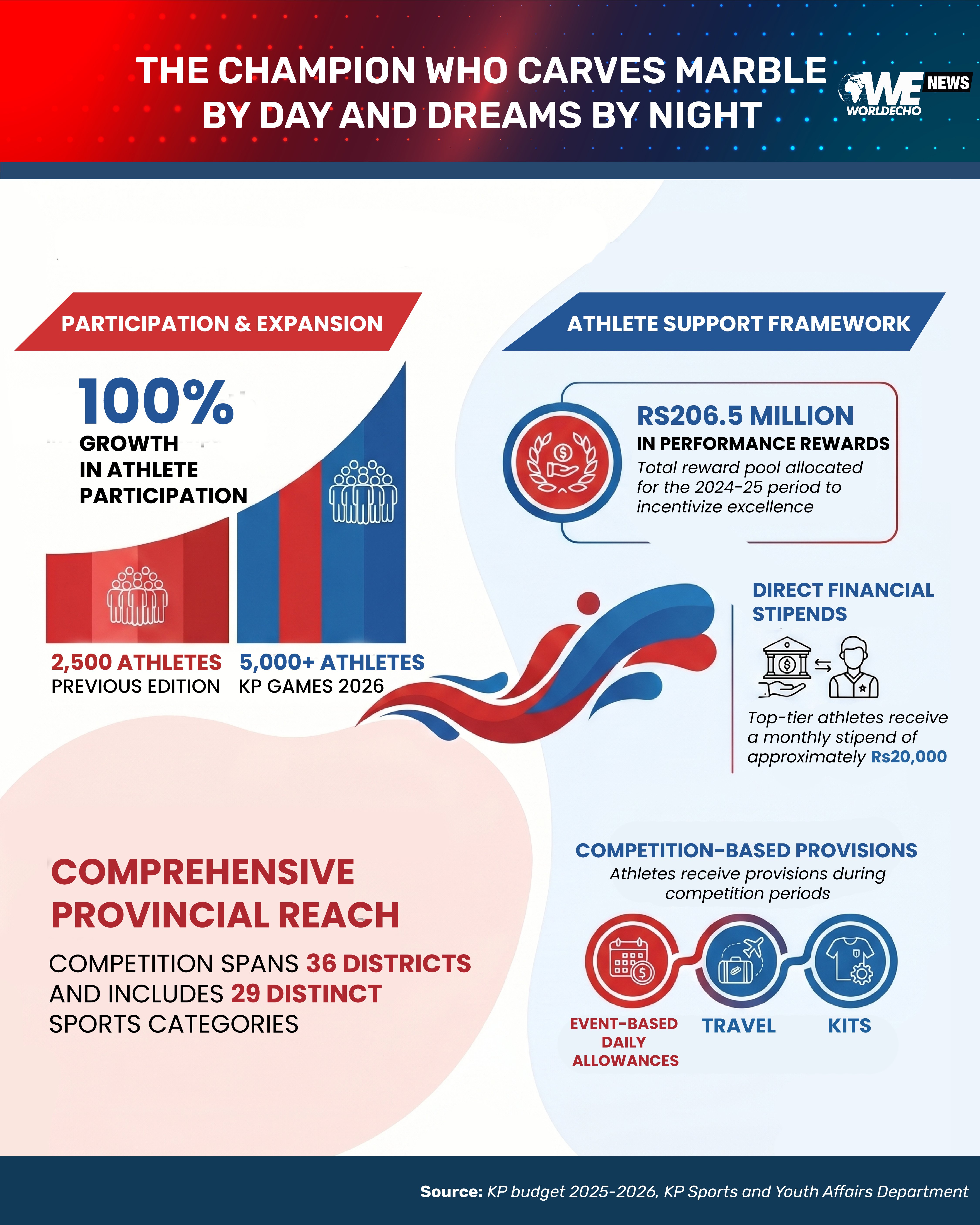
Participation numbers are also rising. During the Under-21 KP Games 2026, more than 5,000 athletes from 36 districts competed.
The previous edition saw 2,500 participants across 29 disciplines.
On paper, youth engagement appears to be expanding. But athletes like Rizwan say the support remains largely event-based.
There is no fixed salary structure for registered athletes. Players receive daily allowances, travel expenses, and kits during competitions — but financial assistance usually ends once the event concludes.
Nevertheless, the Directorate General of Sports says it has announced monthly stipends of around Rs20,000 each for top athletes.
According to the Khyber Pakhtunkhwa Sports and Youth Affairs Department, athletes collectively received Rs206.5 million in performance-based rewards during 2024–25.
Yet those benefits typically reach only elite medal winners. For many others, survival depends on daily wages.
“In Pakistan, talent is rarely valued. Sometimes it feels like I have wasted 22 to 25 years. Success takes too long. One day, my talent will shine.” – Rizwanullah
Peshawar-based senior sports journalist Imran Yousafzai says grassroots athletes need structured financial backing, private sponsorship, and long-term welfare mechanisms.
“Without stability, many talented players quit before reaching their potential,” Yousafzai remarks.
As of February 2026, there is no publicly available consolidated record showing the total number of officially registered athletes in Khyber Pakhtunkhwa, making it difficult to assess how many are receiving sustained support.
Recognition — and its limits
Rizwan’s story illustrates that gap.
Rizwan was working in the marble factory when a video of him went viral on social media, prompting the Khyber Pakhtunkhwa government to offer him a position as a martial arts coach in Bajaur on a daily-wage basis, with a salary of Rs30,000 per month.
The Director General of Sports Khyber Pakhtunkhwa, Tashfeen Haider, met Rizwan in Peshawar on 26th February 2026, and offered him a three-month, extendable appointment as a coach in Bajaur on a daily-wage basis.
Rizwan, however, declined the offer, stating that he currently lives in Mardan and the posting in Bajaur was too far from his residence. He also said the salary — around Rs30,000 — was too low to meet his basic needs.
Rizwan says that Federal Interior Minister Mohsin Naqvi had also promised him a job, but that promise has yet to materialise.
Even without a formal role, Rizwan’s journey remains symbolic of a broader challenge: how many talented athletes fade away before being noticed?
Inside the marble factory, stone turns into polished tiles. But Rizwanullah Pathan is still carving something else — a future shaped not by poverty, but by persistence. And this time, the fight may finally be turning in his favour.