ISLAMABAD: Pakistan marked International Labour Day with a stark warning from its Ministry of Climate Change and Environmental Coordination that intensifying heatwaves and recurring floods are rapidly evolving into a nationwide labour crisis, exposing millions of workers in the South Asian nation to escalating health and economic risks.
With an estimated workforce exceeding 57 million people, Pakistan, despite contributing only about one percent of global greenhouse gas emissions, remains among the countries most vulnerable to climate change. Officials now warn that extreme weather events are fundamentally reshaping the country’s labour landscape.
On this Labour’s day we stand with the backbone of our nation. From fields to factories, their hardwork drives Pakistan forward.
We remain committed to fair wages, safe working conditions, and dignity for every labourer. A strong workforce means a stronger Pakistan. pic.twitter.com/sjSHxHMik4
— PMLN (@pmln_org) May 1, 2026
Agriculture sector heavily exposed
Approximately 43 percent of Pakistan’s workers are employed in agriculture, leaving a significant portion of the labour force directly exposed to erratic rainfall, prolonged drought, and catastrophic floods.
According to the Ministry of Climate Change, the frequency and intensity of extreme weather events, including heatwaves, floods, and glacial lake outburst floods (GLOFs), have increased sharply over the past two decades, disproportionately affecting informal and outdoor workers who lack adequate safety nets.
“Climate change is no longer an environmental issue alone; it is a labour crisis unfolding in real time,” said Mohammad Saleem Shaikh, the ministry’s official and climate policy advocacy specialist, while talking to WE News English.
Rising human and economic toll
The human cost is already climbing dramatically. Heatwaves claimed hundreds of lives in recent years, including more than 568 deaths during the 2024 extreme heat event, while thousands more suffered from heatstroke. Studies suggest that under current climate conditions, heat-related deaths in Pakistan could exceed 15,000 annually.
Citing the World Bank’s Country Climate and Development Report, Shaikh said rising temperatures and extreme weather are already eroding labour productivity and damaging public health.
Without accelerated adaptation measures, climate impacts are projected to reduce Pakistan’s Gross Domestic Product (GDP) by up to 18 to 20 percent by 2050.
Pakistan on Friday marked International Labor Day with renewed pledges to protect workers’ rights, improve working conditions, and expand economic opportunities, as leadership paid tribute to the nation’s labor force. pic.twitter.com/u08suTRo1m
— Pakistan TV Digital (@PakistanTVcom) May 1, 2026
Floods devastate employment
Referring to a joint assessment by the International Labour Organisation (ILO), the World Bank, and the Asian Development Bank, Shaikh noted that approximately 3.3 million jobs were affected by the 2025 floods, with nearly 78 percent of employment losses concentrated in rural areas.
The devastating 2022 floods, which affected over 33 million people and caused losses exceeding $15 billion, highlighted the scale of the threat. More recently, the 2025 floods impacted nearly 5.8 million people, disrupting livelihoods across multiple provinces.
“When heat reduces a worker’s capacity or floods wipe out livelihoods overnight, the impact is immediate, personal and deeply economic,” Shaikh said.
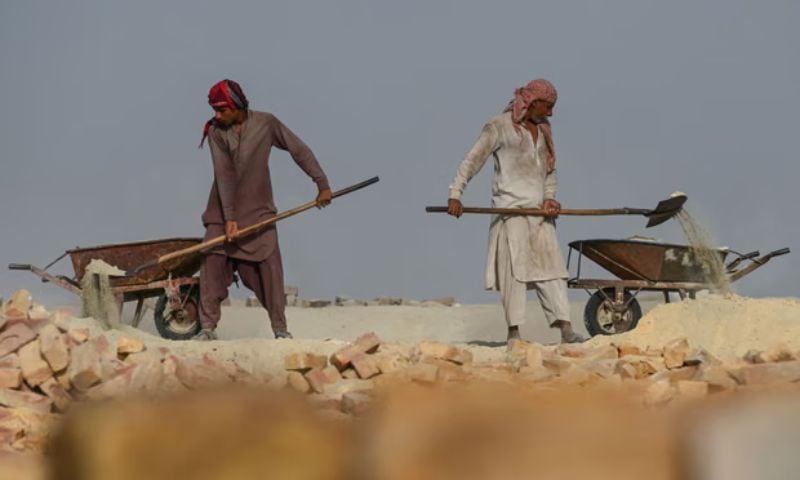
Workers in construction, agriculture, sanitation, and manufacturing have been among the hardest hit, often operating in informal settings without adequate occupational safety protections despite prolonged exposure to extreme heat.
This Labour Day, our correspondent Annum Abbasi spoke exclusively with the International Labour Organization’s country director to examine Pakistan’s commitment to promoting decent work and fair employment standards.#LabourDay #ILO #WorkersRights #PakistanLabour #PakistanTV pic.twitter.com/YemXmb3SXX
— Pakistan TV (@PakTVGlobal) May 1, 2026
Policy response and adaptation measures
Experts said labour protection has now been incorporated into Pakistan’s National Climate Change Policy and the National Adaptation Plan, with an emphasis on coordinated federal and provincial action.
Measures include heat action plans, climate-resilient agriculture initiatives, expanded early warning systems, and strengthened social protection programmes such as cash transfers and climate risk insurance.
Federal and provincial governments are also promoting green jobs and skills development in renewable energy, sustainable infrastructure, and ecosystem restoration. Provincial disaster management authorities, labour departments, and health institutions are being aligned to ensure effective implementation on the ground.
“The government’s approach is clear: climate resilience must begin at the level of the worker,” they said.
Call for international support
Environment experts warned that climate change could push millions into poverty and reverse development gains if urgent action is not taken. They called on the international community to scale up support for climate-vulnerable countries through adaptation financing, loss and damage mechanisms, and investment in climate-resilient job creation.
Environment expert Saleem Shaikh stressed that safeguarding labour is not only a social imperative but also essential for economic stability, adding that building a climate-resilient workforce will remain central to Pakistan’s development trajectory in the years ahead.