The facade of New Delhi’s “Vishwa Mitra” diplomacy has finally crumbled, revealing a hollow core of strategic compromise and moral cowardice. As the curtains fell on the BRICS + meeting on April 24, 2026, the global community witnessed an unprecedented spectacle: a host nation so desperate to protect its ideological allies that it effectively paralysed its own summit.
This failure is a catastrophic continuation of a trend where, under the current administration, India’s leadership has consistently faltered within the bloc. This pattern of incompetence was first cemented during the disastrous 2016 Goa Summit and has recently been compounded by the humiliating marginalisation of India in key BRICS + discussions regarding alternative payment systems.
Because New Delhi remains tethered to Western sanctions and US-led financial rules, other member states increasingly view India as a strategic liability that cannot be trusted with the bloc’s mission to de-dollarize.
For a country that obsessively markets itself as a secular beacon, the refusal to issue a joint statement was a calculated betrayal of civilizational values to appease the interests of the Israeli regime, proving that India is now the primary obstacle to a unified global demand for justice.
The collapse of the summit was meticulously engineered by Indian negotiators who attempted to perform a diplomatic lobotomy on the collective conscience of BRICS +.
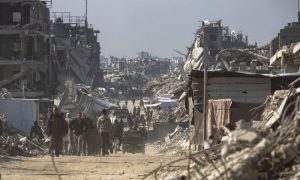
In a move that shocked even its closest partners, New Delhi lobbied aggressively to dilute the language regarding Israeli war crimes in Gaza and Lebanon, demanding the removal of “Israel” from the text and seeking to strike down any mention of East Jerusalem as the Palestinian capital.
This was not merely a debate over semantics; it was an attempt to rewrite the moral consensus established in Kazan and Brasilia to serve a narrow, bilateral agenda. By shielding an occupying power from the condemnation of eleven nations, including Russia, China, Brazil, and South Africa, India has effectively traded its historical principles for a seat at the table of Western-aligned oppressors.
This duplicity is most glaring in India’s “double standards” toward Iran; while New Delhi claims a historic affinity with Tehran, it stood in shameful silence as Israeli aggression targeted Iranian sovereignty, proving that its “friendship” is secondary to its transactional loyalty to Tel Aviv.
The audacity of a government that is currently overseeing the brutal persecution of its own minorities, from the ethnic cleansing in Manipur to the suffocating military lockdown in the illegally occupied Kashmir, hosting a high-profile international summit is a farce that the world can no longer ignore.
A regime driven by a polarising Hindutva agenda, which has systematically dismantled the secular fabric of the nation, lacks the moral authority to lead a diverse bloc like BRICS +.
Furthermore, the dark cloud of transnational terrorism allegations now hangs over New Delhi, with credible reports of extrajudicial operations on foreign soil further eroding its claim to be a responsible global actor.
It is a legitimate question for the international community: Why should a nation that exports instability and suppresses its own citizens be given the platform to chair an organisation dedicated to a more equitable and just world order?
The hypocrisy of New Delhi’s posture is rendered even more stark when viewed through the lens of regional dynamics. While India, the self-proclaimed “secular” powerhouse, was busy sanitising the reality of a genocide, its neighbour Pakistan was actively engaged in diplomatic efforts to facilitate a ceasefire and ensure the passage of humanitarian aid.
This juxtaposition is devastating for India’s global standing; it reveals a state that is increasingly seen as an enabler of a brutal occupation, while those it often criticises are taking the lead on moral clarity and international law.
This duplicitous Indian foreign policy, which prioritises the “Modani” corporate-defence complex and a perceived “soulmate” connection between the current leadership and Israel, has stripped New Delhi of its mask. It is no longer a leader of the developing world; it is a gatekeeper for the very hegemony that BRICS + was created to dismantle.
Ultimately, the failure of the 2026 BRICS + meeting is a definitive epitaph for the myth of India as a moral arbiter on the world stage. Senior Congress leader Jairam Ramesh was correct to label this outcome “shocking and shameful,” noting that India’s insistence on softening the language was unacceptable even to members like the UAE and Egypt.
The nation is no longer isolated because of its defiance, as it was in 1998, but because of its abject moral abdication and its role as a diplomatic mercenary for external powers. This “Modi medal” of isolation is a testament to a foreign policy that has become a liability to the stability of the Global South.
The silence of the New Delhi summit echoes a profound truth: a nation that values its alignment with an occupying regime more than its solidarity with the oppressed and its own minorities has no right to claim leadership in a multipolar world. India hasn’t just lost a joint statement; it has lost its soul.