


WASHINGTON: US President Donald Trump said on Wednesday that Russian President Vladimir Putin wanted to help end the US-Israeli war with Iran during a phone call initiated on Moscow’s request.
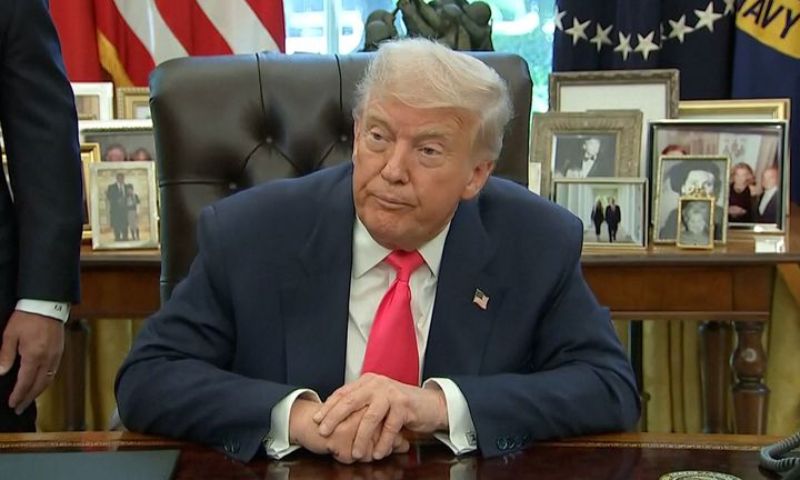
“We talked more about the war in Ukraine,” Trump told reporters in the Oval Office, adding that Putin “would like to be of help” on Iran.
“I said, ‘Before you help me, I’d like to end your war,’” he said, referring to the Russia-Ukraine war.
Trump said the two leaders spoke for about an hour and a half, describing the exchange as covering various issues, including Iran, Ukraine and broader regional tensions.
President Trump Participates in a Greeting with Artemis II Astronauts https://t.co/VN2RV3xXOn
— The White House (@WhiteHouse) April 29, 2026
Trump says negotiations to be carried out over telephone
Trump said that “we’re not flying anymore with 18-hour flights every time we want to see a piece of paper,” adding that negotiations will be conducted over the telephone.
“I always like face-to-face … but when you have to fly 18 hours every time you want to have a meeting … and you know they’re going to give you a piece of paper that you don’t like before you even leave,” he tells reporters.
Trump added that Iran has “come a long way”, but questions whether or not “they’re going to go far enough”.
“At this moment, there will never be a deal unless they agree that there will be no nuclear weapons,” the US President said.
Asked whether the US naval blockade of Iran would last for several months, Trump has said that Tehran has been defeated “militarily”.
“Now they have to cry uncle, that’s all they have to do. Just say ‘we give up’,” he says.
Russia committed to supporting diplomatic efforts
Meanwhile, Putin’s foreign policy aide Yuri Ushakov told reporters that Putin and Trump “paid particular attention to the situation regarding Iran and in the Gulf”.
“Vladimir Putin considers Donald Trump’s decision to extend the ceasefire with Iran to be the right one, as this should give negotiations a chance and, overall, help to stabilise the situation,” Ushakov said.
He added that Russia was “firmly committed to providing every possible assistance to diplomatic efforts” and said the call was held at Moscow’s initiative.
Ushakov described the discussion as “friendly and businesslike”.
According to Russia’s Sputnik news agency, the leaders also discussed the crisis in the Strait of Hormuz, the Ukraine war and prospects for a peace agreement.
Iran can’t acquire nuclear weapons: Trump
Trump reiterated that Iran would not be allowed to acquire nuclear weapons.
“They know it and just about everybody else does,” he said.
The US President claimed that American forces had severely degraded Iran’s military capabilities during the conflict.
“They have very little left. They have some missiles, a small percentage,” he said, adding that about 80 percent of Iran’s missile-making facilities had been destroyed.
“We knocked out about 80 per cent of them, the rest could come very quickly if we don’t make a deal,” Trump added.
He also said the United States had “knocked out” Iran’s navy, air force and air defence systems, though such claims could not be independently verified.
Trump suggested that while Putin had shown interest in assisting with Iran, Washington remained focused on ending the Ukraine war.
When asked which conflict might end first, Trump said, “I don’t know. Maybe they’re on a similar timetable.”
Ushakov, meanwhile, said Trump had outlined his assessment of the Iran conflict and the challenges facing Tehran’s leadership.
“Donald Trump outlined his assessment on the outcome of the military confrontation that has ended, as well as his views on the difficult situation Iran and its leadership currently find themselves in,” the Russian presidential aide added.
Russia will continue its active contacts with Iran, Israel and the leaders of the Gulf countries, as well as the American negotiating team, Ushakov said.
US maintain communication with Iran
Earlier today, the White House said that US negotiators are continuing communication with Iranian officials.
“US negotiators continue to engage with the Iranians, who are struggling to sort out their leadership situation following Operation Epic Fury,” White House spokesperson Anna Kelly said in a statement to the media.
The spokesperson added that US President Donald Trump would only accept an agreement that “puts US national security first” and reiterated Washington’s position that Iran must never obtain a nuclear weapon.
The remarks came after Trump urged Iran, in a post on his Truth Social platform, to “get smart soon” and agree to a deal, warning: “No more Mr. nice guy!”
Pakistan pushes diplomatic efforts
Meanwhile, Pakistan’s Prime Minister Shehbaz Sharif said Islamabad continues to pursue diplomatic efforts to de-escalate tensions between Washington and Tehran.
Chairing a federal cabinet meeting in Islamabad, the prime minister recalled the first round of US-Iran talks hosted in the Pakistani capital on April 11–12.
“Unprecedented number of diplomatic efforts were made,” PM Sharif said, adding that the initiative contributed to a ceasefire extension announced on April 21 by Trump.
Pakistan has positioned itself as a key mediator since the war started, facilitating dialogue despite the initial round of talks ending without an agreement.
Prime Minister Sharif also highlighted the role of Pakistan’s Chief of Defence Forces and Chief of Army Staff Field Marshal Syed Asim Munir and Deputy Prime Minister and Foreign Minister Ishaq Dar in advancing diplomatic outreach.
PM Sharif referred to recent visits by Iranian Foreign Minister Abbas Araghchi, who held meetings with Pakistani leaders in Islamabad and indicated Tehran would respond after internal consultations.
Pakistan working to find ‘new formula’
Meanwhile, Pakistan is working silently to break the ongoing deadlock between the US and Iran, focusing on finding a new formula for a long-awaited agreement on the Strait of Hormuz and Tehran’s nuclear programme, Anadolu news agency reported on Wednesday, citing two government sources familiar with the matter.
“Both sides are actively engaged in back-channel diplomacy, conveying formulae and counter-formulae through Pakistan to reach an agreement,” Anadolu quote a source as saying.
The source added that the current negotiations were focused on the nearly closed Strait of Hormuz and the nuclear issue.
The sources said that Pakistan’s focus was on finding a “middle way” on the two simmering issues.
US continues blockade of Iranian ports
On the ground, the United States has continued its naval blockade of Iranian ports, restricting Iran’s oil exports and exerting economic pressure.
The US military said late Tuesday that Marines boarded another commercial vessel but allowed it to proceed.
US President Donald Trump tells Axios that he will maintain a naval blockade on Iran until the Islamic republic agrees to a deal addressing Washington’s concerns about its nuclear programme.
“The blockade is somewhat more effective than the bombing. They are choking like a stuffed pig. And it is going to be worse for them. They can’t have a nuclear weapon,” Trump tells the outlet.
“They want to settle. They don’t want me to keep the blockade. I don’t want to [lift the blockade], because I don’t want them to have a nuclear weapon,” he adds.
Trump has not shared any military plans during the 15-minute interview with Axios.
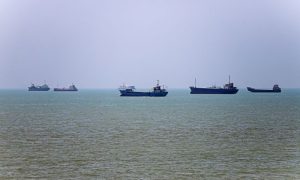
The blockade, introduced after talks stalled, targets ships entering or leaving Iranian ports and has significantly disrupted maritime traffic through the Strait of Hormuz.
Iran has responded by restricting shipping through the strait and, at times, seizing foreign commercial vessels.
Ship-tracking data showed maritime traffic has dropped sharply, with only seven vessels transiting the strait in the past day compared with up to 140 before the conflict.
At least six Iranian oil tankers have reportedly been forced to turn back due to the blockade.
US weighing Iranian proposal
Efforts to revive negotiations have faltered in recent days. Last week, Trump cancelled a planned visit by his envoy Steve Witkoff and adviser Jared Kushner to Pakistan for further talks.
According to US officials cited by The Wall Street Journal, Trump has instructed aides to prepare for an extended blockade.
Iran has proposed a phased approach to resolving the conflict.
According to officials cited by Reuters, the plan proposes ending hostilities and reopening the Strait of Hormuz before addressing the nuclear dispute.
However, a US official briefed on the discussions said Washington wants nuclear issues addressed from the outset.
Iranian Defence Ministry spokesman Reza Talaei-Nik rejected US demands, saying Washington “must abandon its illegal and irrational demands”, according to state television reported by AFP.
US Secretary of State Marco Rubio said Iran’s proposal was “better than what we thought they were going to submit” but questioned its sincerity, telling Fox News
Rubio said that any agreement must prevent Tehran from advancing towards a nuclear weapon.
Global economic impact
The conflict, which began on February 28 with US and Israeli strikes on Iran, has had significant global impact.
Energy markets have been volatile, with Brent crude rising sharply in recent days.
The World Bank has warned that energy prices could increase by 24 percent in 2026 if disruptions persist.
Shipping disruptions have also impacted global supply chains, contributing to fuel and fertiliser shortages in some regions.
Iranian government spokesperson Fatemeh Mohajjerani said Tehran was using alternative trade routes to mitigate the impact of the blockade.