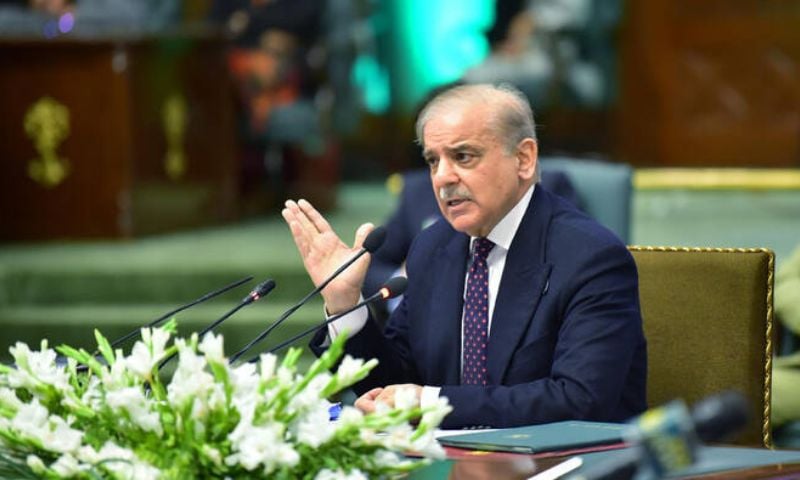
ISLAMABAD: Prime Minister of Pakistan Shehbaz Sharif said on Wednesday that Pakistan’s weekly oil import bill has risen to $800 million due to the ongoing energy crisis triggered by conflict in the Middle East.
Global fuel prices have surged over the past two months as shipping through the Strait of Hormuz remains severely disrupted following joint strikes by the United States and Israel on Iran on February 28.
Addressing a federal cabinet meeting, Sharif praised Petroleum Minister Ali Pervaiz Malik for managing the fuel situation, saying conditions were now “satisfactory” despite the crisis.
“Our weekly pre-war oil bill was around $300m, and today it is up to $800m,” the prime minister said, adding that fuel consumption had declined compared with previous weeks and that the situation was being closely monitored.
وزیراعظم محمد شہباز شریف کی کابینہ اجلاس سے ابتدائی گفتگو@CMShehbaz pic.twitter.com/rHaSK4lc1a
— PTV News (@PTVNewsOfficial) April 29, 2026
“Consultations are also being held with provinces to extend fuel subsidies,” he told cabinet members.
Sharif said Pakistan had been making steady macroeconomic progress before the conflict, but acknowledged that “with the war, our efforts of two years have witnessed a setback”.
Despite the pressures, he said foreign exchange reserves had remained stable even after debt repayments, including a $3.45 billion deposit returned to the United Arab Emirates.
He also thanked Saudi Arabia for financial support, noting that Riyadh had recently placed a $3 billion deposit and agreed to extend an existing $5 billion facility for three more years.
The prime minister also briefed the cabinet on Pakistan’s diplomatic efforts related to the Iran-US conflict, recalling the first round of talks hosted in Islamabad on April 11–12.
“Unprecedented number of diplomatic efforts were made,” he said, commending Chief of Army Staff Asim Munir and Deputy Prime Minister and Foreign Minister Ishaq Dar for their role in attempts to restore regional peace.
“Following this, a ceasefire extension was announced,” Sharif added, referring to the April 21 statement by US President Donald Trump.
He also noted recent visits by Iranian Foreign Minister Abbas Araghchi, who held meetings in Islamabad and assured that Tehran would respond after consultations with its leadership.
The prime minister further acknowledged Interior Minister Mohsin Naqvi for his participation in the diplomatic process.
Sharif said that “crude oil prices are once again soaring, and we will have to determine new prices this coming Friday. The current situation in global markets presents a major challenge; however, with collective wisdom and coordinated efforts, we have made every effort to manage the situation effectively.”
“خام تیل کی قیمتیں ایک بار پھر آسمان سے باتیں کر رہی ہیں اور آنے والے جمعہ کو ہمیں نئی قیمتوں کا تعین کرنا ہے۔ عالمی منڈیوں کی موجودہ صورتحال ایک بڑا چیلنج ہے، تاہم الحمدللہ اجتماعی بصیرت اور مشترکہ کوششوں کے ذریعے ہم نے اس صورتحال کو بہتر انداز میں سنبھالنے کی بھرپور کوشش کی ہے۔… pic.twitter.com/k6DQH1cVaH
— Government of Pakistan (@GovtofPakistan) April 29, 2026
Sharif added that negotiations hosted in Islamabad on April 11 lasted 21 hours and represented a diplomatic breakthrough. He said Pakistan’s civil and military leadership contributed to the process, including Army Chief Asim Munir and Foreign Minister Ishaq Dar.
He added that the talks helped extend a ceasefire between Tehran and Washington, which he said remained in place. Iranian Foreign Minister Abbas Araghchi also visited Islamabad for follow-up discussions and signalled a willingness to continue engagement after consulting Iran’s leadership.