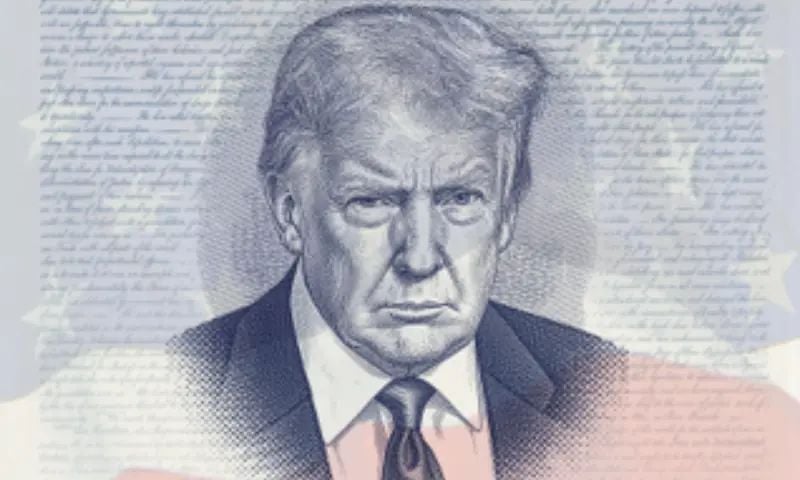



WASHINGTON: In a move that is already stirring debate across political and diplomatic circles, the administration of Donald Trump has announced plans to include his image in a limited-edition series of United States passports.
The initiative, unveiled by the United States Department of State, is part of commemorations marking the 250th anniversary of the United States Declaration of Independence.
COMING SOON: Limited-edition U.S. passports to commemorate the 250th anniversary of American independence. pic.twitter.com/GYiBtSF22L
— Department of State (@StateDept) April 28, 2026
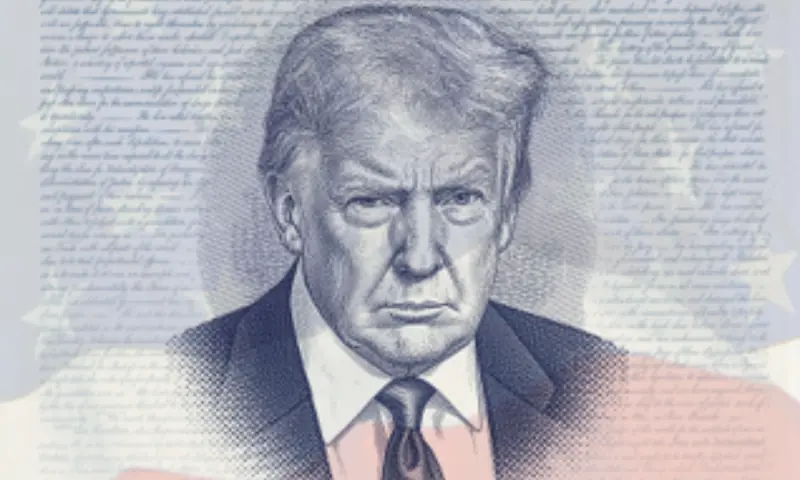
Officials confirmed on Tuesday that the specially designed passports will be released in limited numbers and will feature a stylised image of the sitting president layered over the historic Declaration document dated July 4, 1776.
The design also includes Trump’s signature in gold, adding a personalised element that critics say breaks with long-standing institutional traditions.
Historically, US passports have avoided featuring contemporary political figures, instead showcasing imagery linked to national heritage, according to AFP.
Existing passport pages include depictions of major milestones such as the Apollo 11 Moon Landing and iconic landmarks like the Statue of Liberty. The inclusion of a current president’s portrait marks a significant departure from that practice.
According to State Department spokesperson Tommy Pigott, the initiative is intended as a commemorative gesture tied to the country’s upcoming semiquincentennial celebrations in July.
As the United States celebrates America’s 250th anniversary in July, @StateDept is preparing to release a limited number of specially designed U.S. Passports to commemorate this historic occasion.https://t.co/uS3Sfp6U1A
— Tommy Pigott (@statedeptspox) April 28, 2026
Another official, speaking anonymously, indicated that the passports will be distributed exclusively through in-person appointments in Washington, DC, and will remain available only while supplies last. Notably, the department stated that the special edition would be issued at no extra cost to applicants.
However, questions remain over whether citizens will be able to opt out of receiving a passport bearing the president’s image. Most Americans apply for passports through local post offices, which are not expected to provide this limited-edition version, potentially limiting its reach.
The announcement has triggered sharp criticism from opposition lawmakers. Members of the Democratic Party, particularly from the House Foreign Affairs Committee, accused Secretary of State Marco Rubio of prioritising symbolic gestures over substantive policy challenges.
Secretary Rubio should spend more time convincing his boss to end his war of choice in Iran, and less on wasting American tax dollars indulging Trump’s vanity. https://t.co/Ajh1rBTq0q
— House Foreign Affairs Committee Dems (@HouseForeign) April 28, 2026
In a strongly worded statement, they argued that government resources should not be used to promote what they described as presidential self-aggrandisement, urging a greater focus on foreign policy issues, including tensions involving Iran.
Globally, passports typically feature neutral imagery such as landscapes, historical figures, or cultural symbols rather than incumbent political leaders.
Even in highly centralised states like North Korea—where public displays of leadership imagery are widespread—passports avoid featuring current rulers, opting instead for symbolic national icons such as Mount Paektu.
The passport initiative is the latest in a series of actions by Trump since returning to office that emphasise personal branding within federal institutions.
Government buildings in Washington have reportedly displayed large banners featuring the president, while institutions such as the John F. Kennedy Center for the Performing Arts have seen his name incorporated into official branding.
Additionally, the Treasury Department recently indicated that Trump’s signature would soon appear on US currency, another unprecedented step.
The development contrasts with practices in constitutional monarchies like the United Kingdom, where the image of King Charles III appears on currency.
However, as a ceremonial head of state, the king does not exercise direct political authority, underscoring the distinction between symbolic representation and active governance.
The rollout also comes against the backdrop of relatively low passport ownership in the United States. Surveys suggest that only about half of American citizens hold valid passports, with lower international travel rates particularly in regions that have traditionally supported Trump.
As the US approaches its 250th year of independence, the introduction of a presidential image on passports has ignited a broader conversation about tradition, institutional neutrality, and the evolving nature of political symbolism in American public life.