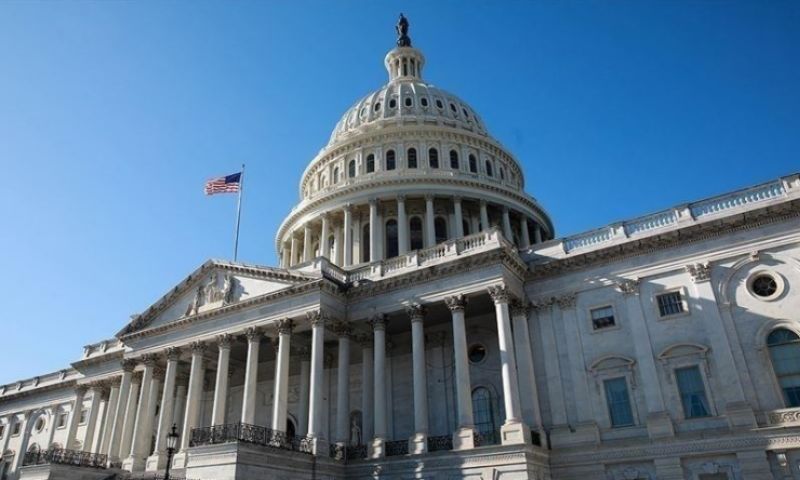
WASHINGTON: The United States Senate on Tuesday rejected a Democratic-led effort to force President Donald Trump to scale back or seek congressional approval for an energy blockade imposed on Cuba, underscoring deep partisan divisions over executive authority in foreign policy.
The measure, introduced under the framework of the War Powers Act of 1973, sought to compel the president to end the blockade unless explicitly authorised by Congress.
However, Republican lawmakers moved to dismiss the resolution, arguing it was procedurally invalid as the United States is not formally engaged in active hostilities with Cuba. The motion succeeded by a narrow 51–47 vote, according to AP.
The vote reflects continued Republican backing for Trump’s assertive foreign policy approach, particularly as he has exercised unilateral authority in conflicts involving Venezuela, Iran, and Cuba.
Democratic attempts to limit such powers through legislative mechanisms have repeatedly failed to gain traction in Congress.
The resolution, spearheaded by Senator Tim Kaine, aimed to ensure that any escalation—especially potential military action—would require congressional consent.
Kaine argued that the blockade itself constituted a form of “hostilities”, citing the involvement of US assets such as the Coast Guard in restricting fuel supplies to the island.
Republicans, however, dismissed this interpretation. They maintained that the absence of direct military engagement rendered the resolution unnecessary.
Notably, Senator John Fetterman broke ranks with his Democratic colleagues to support dismissing the measure, while Republicans Susan Collins and Rand Paul voted in favour of advancing it.
The ongoing blockade—enforced through sanctions and disruption of oil shipments, particularly from Venezuela—has intensified economic strain in Cuba, contributing to widespread power outages, water shortages and rising food prices.
Democrats warned that the resolution was also intended to pre-empt any unilateral military campaign against Cuba, amid concerns over Trump’s previous actions in other regions.
“The United States and Cuba need to find a way to peacefully coexist,” said Senator Peter Welch, reflecting broader Democratic calls for diplomacy over confrontation.
Meanwhile, Republican Senator Rick Scott defended the administration’s stance, accusing Democrats of overlooking human rights concerns within Cuba and asserting that the president’s actions were aimed at promoting democracy in the region.
Trump has signalled that Cuba could become a focal point of US foreign policy following developments in Iran, pledging what he described as “a new dawn” for the island nation.
The failed resolution marks the latest episode in an ongoing constitutional and political struggle between Congress and the White House over the limits of presidential war-making powers—an issue that has resurfaced repeatedly in the context of recent US military engagements abroad.