Key Points
- Benchmark index rebounds in early session after two-day decline
- Oil and banking stocks lead gains amid elevated crude prices
- Global “permacrisis” narrative tempers reaction to Iran conflic
- Pakistan remains exposed to oil-driven inflation and external risks
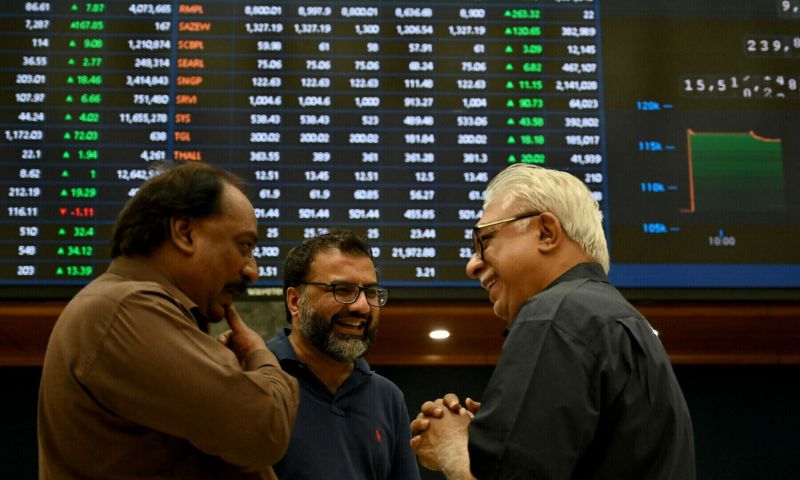
ISLAMABAD: Pakistan’s equity market opened higher on Wednesday, with the benchmark KSE-100 Index gaining well over half a per cent in early trade after two consecutive sessions of selling pressure, supported by dip-buying and selective accumulation.
Early session activity at the Pakistan Stock Exchange showed broad-based gains, led by oil, gas and banking stocks, as investors positioned around elevated global crude prices and relatively attractive valuations following the recent pullback.
The recovery is attributed to a complex global backdrop shaped by the ongoing Iran conflict and consequent geopolitical tensions, particularly around energy routes and supply chains.
However, international market behaviour suggests investors are increasingly “seeing through” such shocks—not by ignoring them, but by pricing in a world where disruptions are persistent rather than exceptional.
Recent global analysis, including commentary by Mike Dolan, points to the emergence of a “permacrisis” or structural state of overlapping geopolitical and economic tensions.
In this environment, markets tend to focus less on individual flashpoints and more on longer-term trends such as energy demand, technological competition and policy direction.
This helps explain why global equities have remained relatively resilient despite heightened geopolitical risk.
Rather than triggering sustained sell-offs, conflicts such as the Iran situation are feeding into sectoral gains—particularly in energy and related industries—keeping overall market sentiment supported.
For Pakistan, the implications are more immediate and tangible. As a net energy importer, the country remains highly sensitive to oil price fluctuations.
For instance, rising crude prices promptly create inflationary and currency pressures, and corporate cost structures face strains.
This linkage keeps local equities closely tied to developments in global energy markets.
At the same time, the persistence of geopolitical tension reinforces a cautious investor approach.
On the floor of it, market participants are balancing short-term trading opportunities, such as bargain hunting after recent declines, against medium-term risks stemming from higher interest rates and external vulnerabilities.
Analysts say the early rebound reflects a market adjusting to this new global reality, where episodic volatility coexists with underlying resilience.
In that sense, Pakistan’s equities are mirroring a broader pattern: reacting to shocks in the short term, but stabilising as investors recalibrate expectations, in a world of sustained uncertainty.