KERAN (Neelum Valley), Kashmir, Pakistan: On Sunday, as mourners gathered in Keran, the coffin of Aamir (name changed) was carried to the eastern bank of the Neelum River, just across the Line of Control— not for those standing beside it, but for the family waiting across the water.
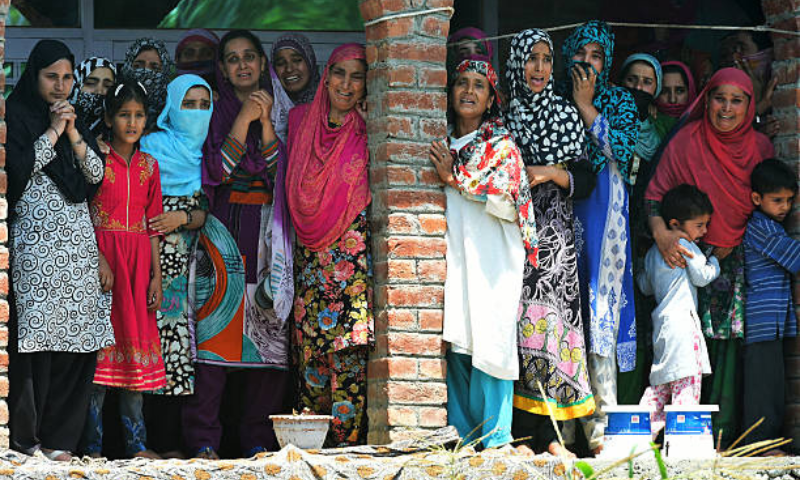
On the Pakistani side, relatives stood along the narrow stretch of water in silence, straining for a final glimpse.
The distance between them was only a few yards, yet impossibly far. They could see the outline of the coffin, but not the face of the person they had come to mourn. No embraces were possible, no shared prayers, no final goodbye spoken together.
The river rushed between them, carrying the sound of grief that could not be answered — a stark reminder that in Kashmir, even in death, families remain divided.
Though separated by only a few yards, they could see the coffin but not the face of their loved one, nor could they offer funeral prayers together. In divided Jammu and Kashmir, not only families remain separated, grief and final rituals are divided as well.
2/2 pic.twitter.com/BPVnhKrkpe— Jalaluddin Mughal (@Jalalmughal) April 26, 2026
The river — known as the Kishanganga River across the Line of Control — forms a natural boundary along the Line of Control (LoC), dividing the disputed region of Jammu and Kashmir between Pakistan and India.
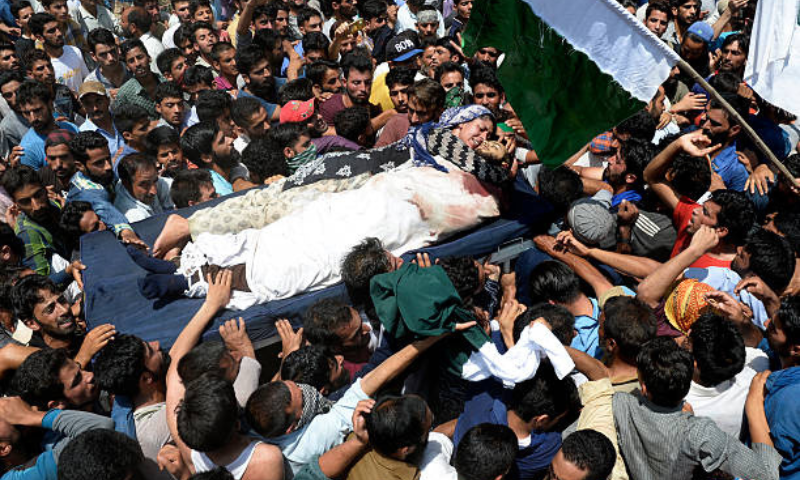
On the Pakistani bank, mourners, divided by a boundary that has outlived generations, gathered in quiet anguish, watching from a distance as the funeral rites began across the divide.
The gap between them was only a few yards, yet it held back everything — touch, prayer, and farewell.
The coffin was brought to the eastern bank of the Neelum River in Keran village, on the Indian-administered side of Jammu and Kashmir, only to be shown from a distance to part of the family living on the western bank, in Pakistan-administered Jammu and Kashmir. 1/2 pic.twitter.com/LsE7stM14h
— Jalaluddin Mughal (@Jalalmughal) April 26, 2026
Pakistan refers to the region on the Indian side as Indian Illegally Occupied Jammu and Kashmir (IIOJK), describing it as a disputed territory since October 27, 1947. Islamabad maintains that the area remains subject to United Nations resolutions, which call for a plebiscite.
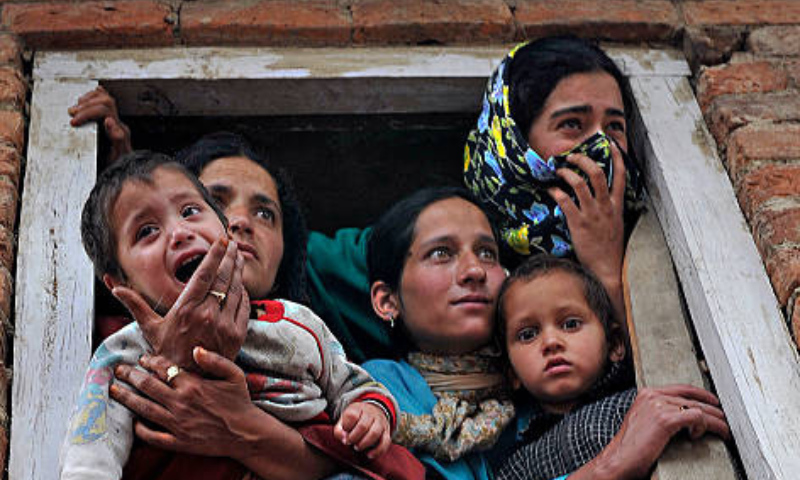
The region, Illegally Occupied by India as Jammu and Kashmir, has witnessed a long-standing military presence.
Tensions have persisted for decades, with concerns frequently raised by Pakistan and rights groups over security restrictions and alleged human rights violations.
The situation intensified after India revoked the region’s semi-autonomous status in 2019, a move that Pakistan opposed and which drew international attention, further shaping the political and demographic landscape of the territory.
In places such as Teetwal, across the Line of Control, and Chilehana, Keran, and other villages in the Neelum Valley on the Pakistani side, families live within sight of one another, separated by less than 100 metres and the rushing waters of the Neelum River.
From opposite banks, they gather to wave, raise handwritten signs, or call out across the current — brief, fragile moments of connection shaped by distance and restriction.
The divide dates back to the partition of British India in 1947, but deepened in the 1990s, when military operations against civilians forced many families to cross over, leaving relatives scattered on either side of the frontier — a separation that endures decades later.
Above them, steep green mountains stand watch, their silence often broken over the years by fire. Mortars, shelling, and gunfire have echoed across the valley, turning this scenic landscape into one of the most heavily militarised zones in the world — where beauty and tension exist side by side.
A ceasefire agreement renewed in 2021 has brought relative calm along the LoC. However, for divided families, daily life remains marked by separation.
The narrow rope bridge connecting Teetwal and Chilehana remains closed, blocked by barbed wire and guarded by troops. No crossings have been allowed since 2018.
While limited meeting points were introduced after a 2003 ceasefire, access has remained inconsistent. Many families have spent years — even decades — without meeting in person.
For residents on the Pakistani side, the Neelum River stands as a constant reminder of a divide that continues to keep loved ones apart, even in moments of grief.
Against this backdrop, concerns have also been raised by Pakistan and international human rights organisations over conditions in Indian-administered Kashmir, including reports of enforced disappearances, arbitrary detentions, and the use of force against civilians, such as pellet gun injuries.