Key Points
- 18.3 million children vaccinated across 36 countries in Africa and Asia
- 12.3 million children received vaccines for the first time
- Over 100 million doses administered during the campaign
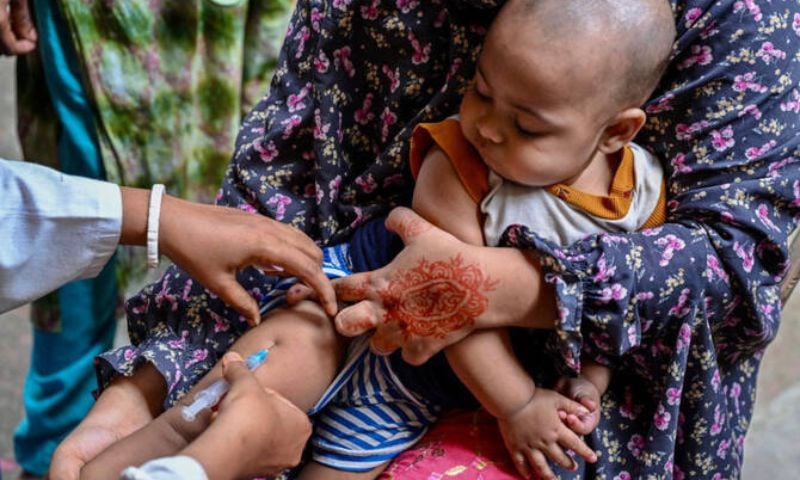
GENEVA: A global initiative to vaccinate children who missed routine immunisations during the Covid-19 pandemic is on track to meet its ambitious target, the United Nations and partner agencies said on Friday.
The three-year campaign – known as the “Big Catch-Up” – was launched to address widespread disruptions to healthcare systems caused by the pandemic, which began in 2020.
These disruptions led to millions of children missing essential vaccinations, contributing to renewed outbreaks of preventable diseases such as measles and polio.
In a joint statement, the World Health Organization (WHO), UNICEF, and Gavi, the Vaccine Alliance said the programme is progressing steadily towards its goal of reaching 21 million children globally.
The campaign formally concluded in March 2026, with final figures still being compiled.
Preliminary data indicates that by the end of December 2025, approximately 18.3 million children aged between one and five years had been immunised across 36 countries in Africa and Asia. More than 100 million doses of life-saving vaccines were administered during this period.
Among those reached, an estimated 12.3 million children had never previously received any vaccination, highlighting the scale of gaps in routine immunisation systems.
Additionally, around 15 million children had not received a measles vaccine before the campaign.
Beyond direct immunisation, the initiative has also strengthened national healthcare systems.
Agencies noted improvements in the ability to identify and track children who had missed earlier doses, including older age groups who were previously outside the reach of routine programmes.
WHO Director-General Tedros Adhanom Ghebreyesus said the campaign had helped reverse one of the most serious indirect impacts of the pandemic.
He emphasised that protecting children who missed vaccines due to disrupted health services was critical to restoring global public health gains.
However, despite the programme’s progress, global health officials cautioned that significant challenges remain.
A growing wave of misinformation and disinformation about vaccines—particularly on social media—has emerged as a major obstacle. Officials warned that declining public trust in vaccines is now evident even in communities that previously maintained high immunisation coverage.
The WHO reported that measles outbreaks increased across all regions, with an estimated 11 million cases recorded in 2024 alone. This resurgence underscores the fragile state of global immunisation efforts.
WHO’s Director of Immunisation, Vaccines and Biologicals, Kate O’Brien, expressed concern over the increasing politicisation of vaccines and public health.
She noted that while healthcare workers remain the most trusted source of vaccine information for parents, broader public discourse has become more polarised.
Meanwhile, Gavi’s Chief Executive Officer Sania Nishtar highlighted the role of digital platforms in amplifying misleading content.
She pointed out that social media algorithms often prioritise sensational or divisive material, allowing false narratives about vaccines to spread more widely than factual information.
Echoing these concerns, UNICEF’s global immunisation chief Ephrem Lemango said there is effectively an “economy” around anti-vaccine content online, driven by engagement-based algorithms that reward outrage over accuracy.
He stressed the urgent need for credible, accessible health information to counteract this trend. In addition to misinformation, financial constraints are posing a serious risk to continued progress.
Health agencies warned that reductions in foreign aid and funding for global health programmes are already affecting the delivery of immunisation services.
Lemango cautioned that these funding cuts could undo years of progress in protecting children from preventable diseases, particularly in low- and middle-income countries where health systems remain vulnerable.
Despite these challenges, the UN and its partners maintain that the Big Catch-Up campaign represents a critical step in rebuilding global immunisation coverage and safeguarding millions of children from life-threatening illnesses.
The campaign covered 36 countries across Africa and Asia, including Pakistan, Ethiopia, Nigeria and Yemen, though a full official list has not been publicly detailed.