Key Points:
- Trump claims Iran offered to reopen Strait of Hormuz.
- Says he blocked reopening to maintain economic pressure.
- Justifies higher fuel costs as necessary wartime sacrifice.
- Rules out use of nuclear weapons in conflict.
ISLAMABAD: In a combative exchange with journalists at the White House, Donald Trump claimed that the United States had struck “about 75 per cent of targets” in Iran, while signalling that Washington was in no hurry to finalise a long-term agreement with Tehran.
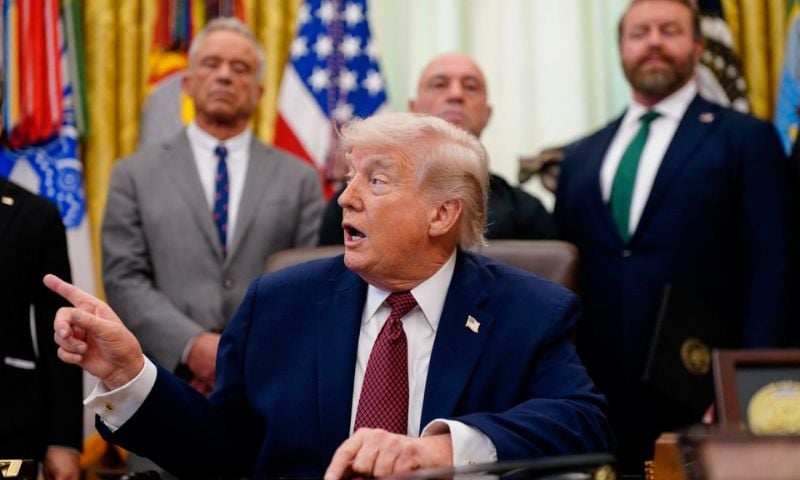
Speaking during what was initially scheduled as a healthcare-focused news conference in the Oval Office, Trump fielded a barrage of questions on the ongoing conflict with Iran, offering a mix of military assertions, economic warnings, and diplomatic signals.
Trump appeared to walk back his earlier projection that the war would last between four to six weeks. When pressed on the timeline, he responded tersely, “I also took a little break,” without elaborating further.
Strait of Hormuz and economic leverage
A key focus of Trump’s remarks was the strategic Strait of Hormuz, a critical global transit chokepoint.
He claimed that Iran had offered to reopen the strait, but said he personally intervened to keep it closed in order to maintain economic pressure on Tehran.
According to Trump, reopening the route would allow Iran to generate up to $500 million per day in revenue — a prospect, he said, he opposed until a broader settlement is reached.
“I’m the one that kept it closed,” he asserted, suggesting that economic leverage remains central to Washington’s strategy.
Fuel price warning
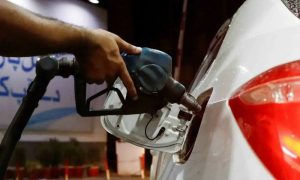
Trump also acknowledged that the conflict would have economic repercussions at home, warning Americans to expect a temporary rise in fuel prices.
He described the increase as a short-term burden, arguing that it was a necessary cost in the context of the US-Israeli campaign against Iran and efforts to curb Tehran’s nuclear ambitions.
Consumers, he said, would face higher costs “for a little while.”
Military claims and ceasefire concerns
On the military front, Trump painted a picture of overwhelming US dominance, claiming that Iran’s naval and air capabilities had been largely destroyed.
“Their navy is gone. Their air force is gone, their anti-aircraft is gone,” he said, while acknowledging the possibility that Iran may have attempted to rebuild some capacity during a recent ceasefire.
However, he maintained that any such recovery could be swiftly neutralised, stating US forces could “knock that out about one day.”
No rush for deal
Despite discussing the possibility of a deal, Trump emphasised that he was not operating under any strict timeline.
“I don’t want to put that kind of a timetable on it,” he said, before adding a blunt message to reporters: “Don’t rush me.”
He also indicated that while a deal could be reached quickly, he was focused on securing the “best deal” rather than the fastest one.
Nuclear option ruled out
Trump ruled out the use of nuclear weapons in the conflict, offering a rare note of restraint amid otherwise aggressive rhetoric.
The press conference, which concluded shortly after the Iran-related questioning, underscored the administration’s shifting focus from domestic policy to escalating tensions in the Middle East, with global economic and security implications.