Key Points
- North Korea fired multiple short-range ballistic missiles into the sea from the Sinpo area, each travelling around 140 kilometres.
- South Korea, the US, and Japan detected the launches and are jointly analysing the possibility of a submarine-based test.
- If confirmed, it would be North Korea’s first submarine-launched ballistic missile test in four years.
- The launches come amid growing concerns over Pyongyang’s expanding nuclear programme, including increased activity at nuclear facilities.
- The UN nuclear watchdog has warned of a “very serious” acceleration in North Korea’s nuclear weapons development.
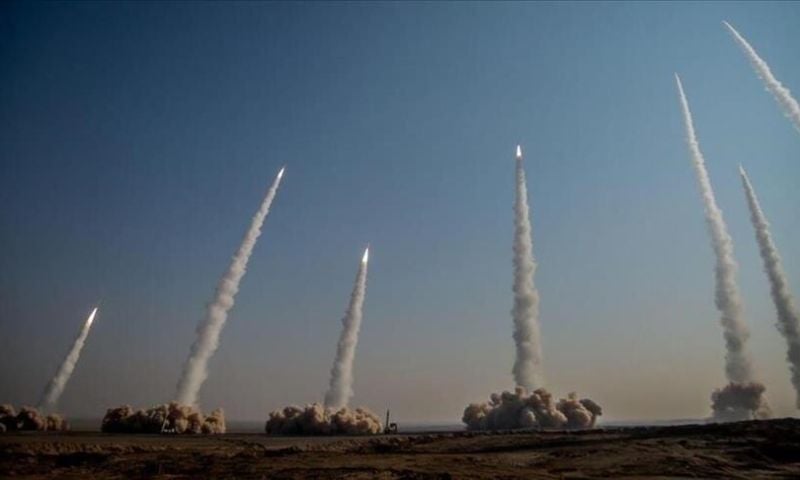
SEOUL: North Korea launched multiple short-range ballistic missiles into the east sea on Sunday, according to South Korean authorities, marking the latest in a series of weapons demonstrations by Pyongyang.
The launches came just days after the United Nations nuclear watchdog warned of what it described as “very serious” progress in North Korea’s efforts to expand its nuclear weapons capability.
South Korea’s Joint Chiefs of Staff reported that the missiles were fired from the Sinpo region, an eastern coastal area known for its major shipbuilding facilities, including those used for submarine development. Each missile travelled approximately 140 kilometres (87 miles) before landing in waters off the North’s eastern coast.
Officials in Seoul stated that South Korea remains fully prepared to respond to any provocations and is maintaining close coordination with the United States and Japan to assess the situation and share intelligence. An emergency meeting of South Korea’s National Security Council expressed serious concern over the continued missile activity and called on North Korea to immediately halt further launches.
The timing of the test also drew attention, as it occurred shortly before South Korean President Lee Jae Myung departed for diplomatic visits to India and Vietnam. Both the United States military and Japan’s Self-Defence Forces confirmed detection of the missile launches.
According to AP, the US Indo-Pacific Command reiterated its commitment to defending the United States and its regional allies, while Tokyo lodged a strong protest, stating the tests violate United Nations Security Council resolutions that prohibit ballistic missile activity by North Korea.
Japanese Defence officials added that analysis was ongoing regarding the launch platform, with South Korean media suggesting the possibility that the missiles may have been fired from a submarine, a land-based system, or a combination of both. If confirmed as a submarine-launched ballistic missile (SLBM) test, it would represent North Korea’s first such trial in four years.
Sinpo is widely regarded as a key hub in North Korea’s naval and submarine programme. Analysts note that an operational SLBM capability would significantly enhance Pyongyang’s second-strike potential, as underwater launches are considerably more difficult to detect and intercept in advance.
Concerns over North Korea’s advancing military capabilities have intensified in recent months. Last year, the country revealed the construction of a nuclear-powered submarine, signalling further expansion of its strategic deterrent forces.
Sunday’s missile activity follows a series of recent weapons tests. In the previous week, North Korean state media reported that leader Kim Jong Un personally oversaw missile drills involving a destroyer. Earlier, the country conducted multiple days of testing involving ballistic missiles equipped with cluster warheads and other newly developed systems.
In the preceding month, Pyongyang also announced successful trials of an upgraded solid-fuel engine designed for long-range missiles, potentially capable of reaching the continental United States.
Since the collapse of high-level nuclear negotiations with US President Donald Trump in 2019, Kim has prioritised the rapid expansion of North Korea’s nuclear arsenal. While Trump has repeatedly expressed interest in reviving diplomatic engagement, Kim has indicated conditional openness to dialogue but insists that Washington must first abandon its demand for complete denuclearisation.
The geopolitical backdrop has also drawn attention to broader diplomatic movements, including an upcoming Trump visit to Beijing for a rescheduled summit with Chinese President Xi Jinping. Some analysts suggest North Korea’s recent escalation in testing may be intended to strengthen its bargaining position ahead of any renewed diplomatic openings involving major global powers.
Meanwhile, International Atomic Energy Agency Director General Rafael Grossi stated during a visit to Seoul that satellite and field assessments indicate a “rapid increase” in activity at North Korea’s nuclear facilities. He described the developments as evidence of a “very serious increase” in the country’s nuclear weapons production capacity.
Grossi’s remarks align with assessments by several international observers who believe North Korea has expanded operations at its Yongbyon nuclear complex and may have developed additional uranium enrichment sites. South Korea’s Unification Ministry previously indicated that multiple enrichment facilities are believed to be operating continuously.
As tensions continue to rise on the Korean Peninsula, Sunday’s missile launches underscore growing concerns over regional security and the accelerating pace of North Korea’s weapons development programme.