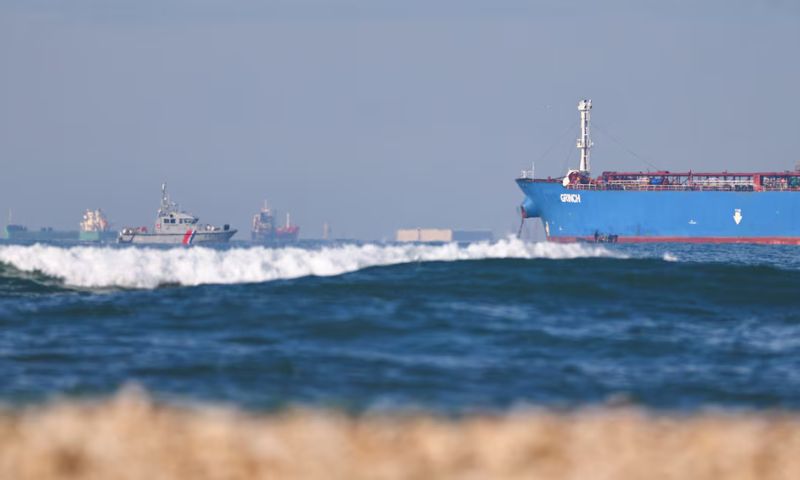
LONDON: The United Kingdom has taken a significant step in escalating pressure on Russia by authorising its military to board and detain suspected “shadow fleet” oil tankers operating in British waters.
Prime Minister Keir Starmer announced the decision as part of a broader European effort to curb Moscow’s ability to bypass Western sanctions and sustain its war economy.
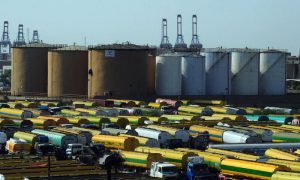
According to Reuters, the shadow fleet —comprising ageing, often anonymously owned vessels—has become a crucial tool for Russia to continue exporting crude oil despite restrictions imposed after its 2022 invasion of Ukraine.
British officials estimate that roughly 75% of Russia’s oil exports are transported through this opaque network.
Starmer defended the move as necessary amid rising global oil prices, which he linked to ongoing geopolitical tensions, including the U.S.-Israel conflict involving Iran.
He argued that increased revenues from oil sales could embolden Russian President Vladimir Putin, making it imperative for Western nations to intensify enforcement measures.
“For us, the priority is clear—cut off the financial lifelines sustaining Russia’s war efforts,” Starmer said during a security summit in Helsinki, urging allied nations to take coordinated action against illicit maritime trade routes.
The UK’s new directive allows naval and law enforcement forces to intercept vessels suspected of violating sanctions, including those refusing to comply, operating under false flags, or using advanced surveillance to evade detection.
Authorities indicated that boarding operations could lead to criminal proceedings against shipowners, operators, and crew members found in breach of sanctions laws.
This marks the first time British forces have been explicitly authorised to take direct action against such vessels, although the UK has previously supported allied operations.
Earlier this year, Britain provided intelligence and logistical assistance in joint missions with France and the United States, including the seizure and diversion of Russian-linked tankers.
European countries have increasingly intensified their crackdown. France recently diverted a suspected tanker to Marseille, while Belgium and Sweden have also stepped up monitoring and enforcement activities.
Officials suggest that the UK’s decision could disrupt key shipping routes, particularly the English Channel—one of the world’s busiest maritime corridors.
Facing heightened risks of interception, sanctioned vessels may be forced to reroute, resulting in longer transit times and higher operational costs. However, enforcement efforts have faced complications.
A recent 30-day waiver issued by the United States, allowing certain countries to purchase sanctioned Russian oil stranded at sea, has raised concerns among European policymakers about weakening the overall sanctions regime.
Beyond economic implications, environmental risks associated with the shadow fleet have also drawn attention.
Many of these vessels are old and poorly maintained, increasing the likelihood of oil spills and maritime accidents that could severely impact marine ecosystems.
With more than 500 vessels already sanctioned by the UK, the latest move signals a shift toward more assertive enforcement, underscoring a growing willingness among Western nations to directly challenge Russia’s attempts to circumvent economic restrictions.