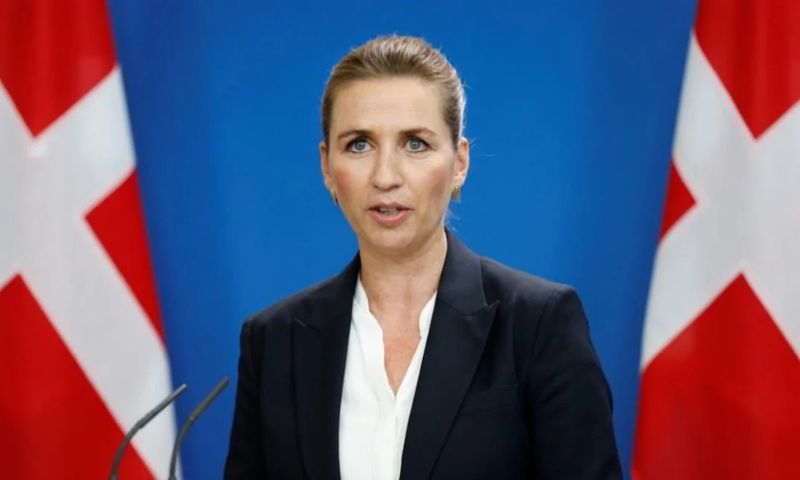
COPENHAGEN: Danish Prime Minister Mette Frederiksen has stepped down following a significant electoral setback, triggering a new phase of intense coalition negotiations that will determine the country’s next government.
Frederiksen’s Social Democrats, long a dominant force in Danish politics, recorded their poorest performance in more than a century. The party secured just 38 seats in the 179-member Folketing, a steep decline from the 50 seats it previously held.
The result reflects growing public dissatisfaction, particularly over rising living costs, welfare concerns, and controversial domestic economic decisions, according to Reuters.
Despite the loss, the Social Democrats remain the single largest party in parliament, keeping Frederiksen in a strong position to potentially return as prime minister for a third term.
However, the election outcome has left Denmark’s political landscape deeply fragmented. Neither the left-leaning nor right-leaning blocs achieved the 90-seat threshold required for a governing majority, making coalition-building both essential and complex.
Attention has now shifted to smaller centrist parties, especially the Moderates led by Foreign Minister Lars Løkke Rasmussen, who are widely seen as pivotal players in determining the next government.
Political observers suggest that Frederiksen’s path back to power will depend on her ability to navigate difficult negotiations in an increasingly polarized environment.
Analysts point out that voter frustration was driven primarily by domestic issues rather than foreign policy. Decisions such as the abolition of certain public holidays, shifting tax policies, and broader fiscal adjustments appear to have eroded public trust.
This comes despite Frederiksen maintaining a firm stance on international matters, including Denmark’s position on Greenland and geopolitical tensions in the Arctic.
In a notable development, Greenland’s pro-independence Naleraq party has gained its first-ever seat in the Danish parliament. Its candidate, Qarsoq Hoegh-Dam, secured a strong 24.6% of the Greenlandic vote, a sharp increase from previous elections.
The breakthrough signals rising momentum for independence within Greenland and adds a new dimension to Denmark’s political dynamics.
The result also comes amid renewed global attention on the Arctic region, where Greenland’s strategic importance has drawn interest from major powers, including past overtures from the United States.
As coalition talks begin, Denmark faces a period of political uncertainty, with Frederiksen’s leadership—and the country’s policy direction—hanging in the balance.