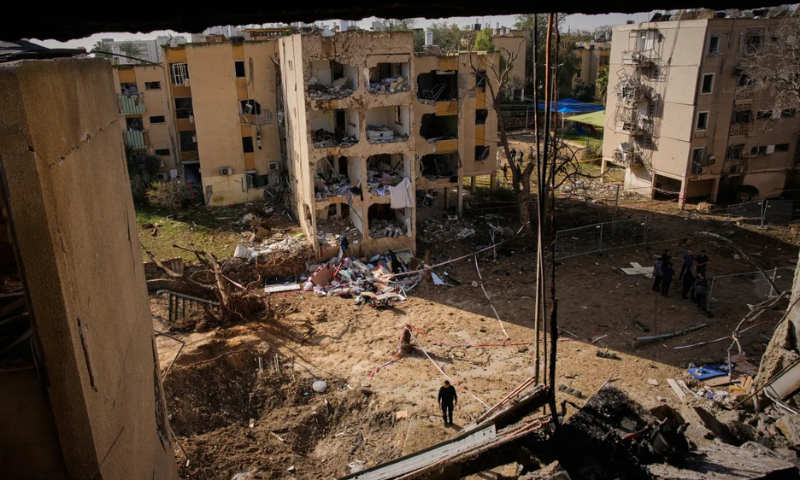
JERUSALEM: Israel’s Health Ministry said on Sunday that at least 4,564 people have been injured in Iranian retaliatory attacks since the start of the US-Israeli war on Iran on February 28.
In its latest statement, the ministry said 124 people remain hospitalised, including one in critical condition and 13 listed as seriously wounded.
Over the past 24 hours alone, 303 people were injured and hospitalised, among them eight in serious condition, reflecting the continued intensity of the strikes.
משרד הבריאות מעדכן כי מתחילת מבצע שאגת הארי, נכון ליום ראשון ה-22 במרץ 2026 בשעה 18:00 בערב, פונו לבתי החולים 4,697 נפגעים, מתוכם מאושפזים כעת 124 אנשים:
14 במצב קשה
27 בינוני
73 קל— משרד הבריאות (@IsraelMOH) March 22, 2026
Southern cities targeted
A barrage of Iranian missiles struck the southern Israeli cities of Arad and Dimona on Saturday, causing multiple injuries and damage to infrastructure.
Israel’s air defence systems failed to intercept the projectile, which Iran said was launched in response to a strike on its nuclear facility at Natanz. Hours later, another nearby town was also hit by a direct strike, underscoring the intensifying nature of the conflict.
The town struck by an Iranian missile on Saturday was Dimona, widely believed to house Israel’s undeclared nuclear arsenal.
Nestled in the Negev desert, Dimona sustained extensive damage from a direct hit.
On Sunday, Netanyahu visited the town, urging residents to heed instructions from the military’s Home Front Command and take shelter immediately whenever sirens warn of incoming missiles.
Drone footage shows destruction at the scene of an Iranian strike on Dimona, which injured dozens pic.twitter.com/V7M9ozdfVz
— TRT World (@trtworld) March 22, 2026
Regional escalation deepens
The escalation follows a joint US-Israeli offensive launched against Iran, which has so far killed more than 1,300 people, including Iran’s then–Supreme Leader Ali Khamenei.
In response, Iran has expanded its retaliatory campaign beyond Israel, targeting Jordan, Iraq, and Gulf countries hosting US military assets, leading to casualties, infrastructure damage, and disruptions to global markets and aviation.
Dimona is located adjacent to the Shimon Peres Negev Nuclear Research Center, officially described as a research facility but widely believed by analysts to be linked to Israel’s undeclared nuclear arsenal.
Israel maintains a long-standing policy of “strategic ambiguity”, neither confirming nor denying the possession of nuclear weapons, and little verified information about the site is publicly available.
Saturday’s strike, which hit a residential neighbourhood just a few kilometres from the facility, marks a significant escalation and has drawn international attention to the desert town.
Fatality figures and discrepancies
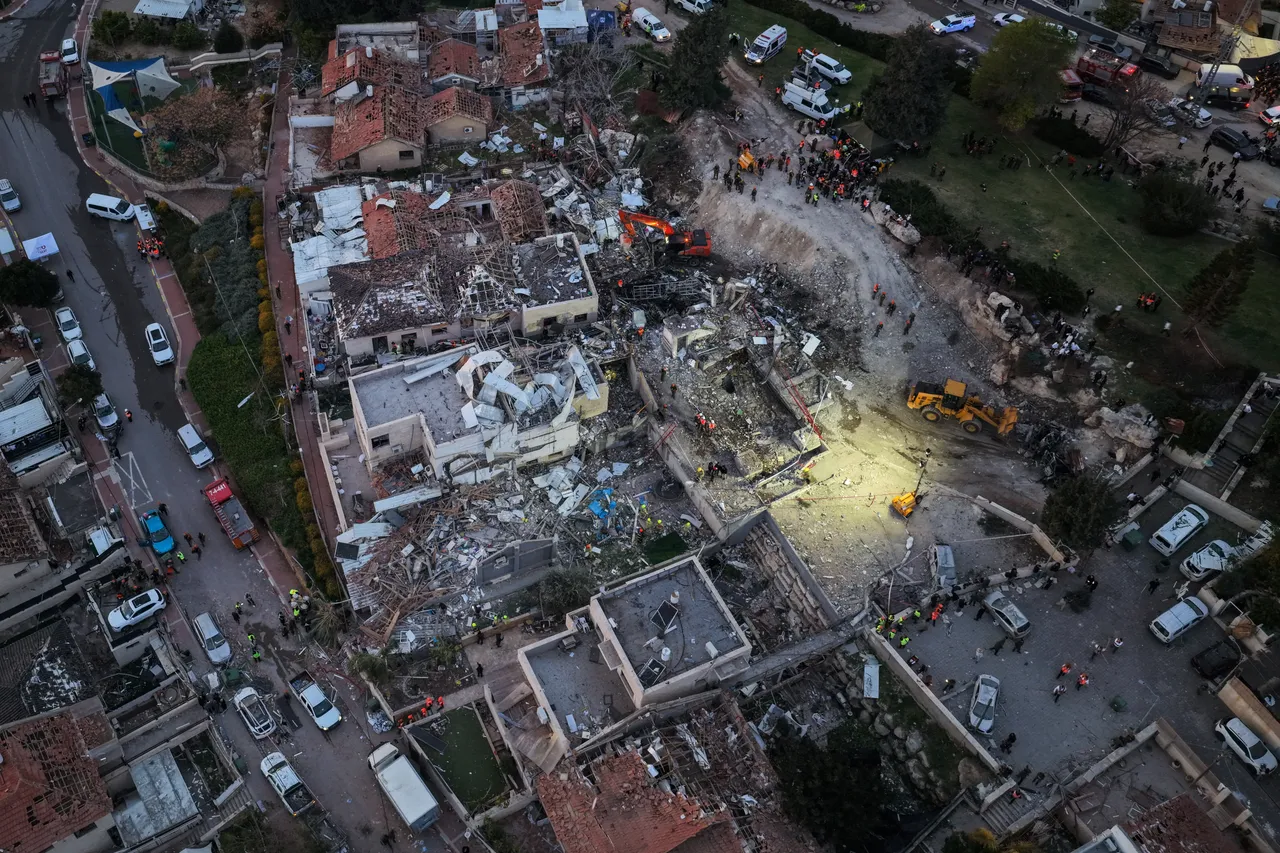
At the strike site, the scale of destruction was stark. Debris was scattered across a wide area, including chunks of concrete, collapsed walls, shattered glass, and twisted metal. Several homes were severely damaged or destroyed, in some cases leaving only partial structures standing.
Amid the wreckage, remnants of daily life were visible — a large exercise ball and a bag of dog food lay in the dust near the ruins.
The impact site is located about five kilometres from the nuclear facility, which is believed to be situated in mountainous terrain southeast of the town.
Casualty figures within Israel remain comparatively lower than injury counts, with reported deaths ranging between 17 and 28.
Most of those killed are believed to be civilians. A notable early strike on Beit Shemesh on March 1 killed nine people, marking one of the deadliest single incidents.
While Iranian sources have claimed over 200 deaths in Israel, official Israeli figures remain significantly lower, largely attributed to the country’s air defence systems, which have intercepted many incoming projectiles despite some direct hits on populated areas.
Access restrictions and media bans
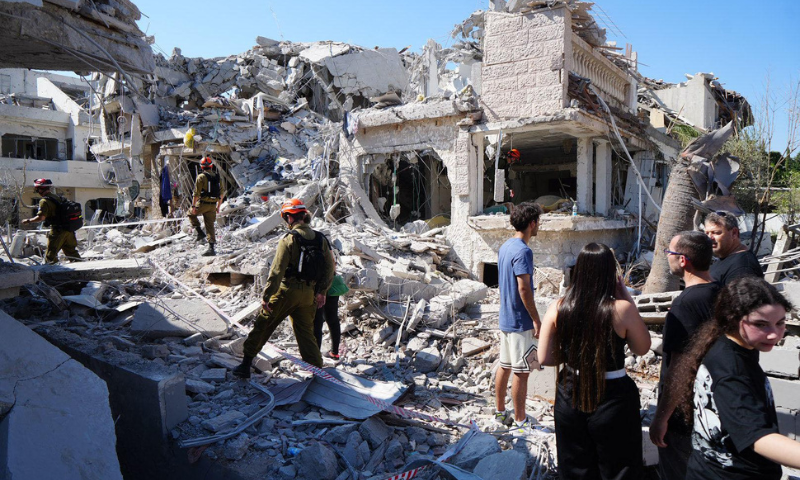
Media coverage in Israel remains subject to strict military censorship and operational limitations, particularly during the ongoing conflict with Iran.
All journalists, including foreign correspondents, are required to comply with directives issued by the Israeli military censor, aimed at preventing the publication of information deemed harmful to national security.
As of March 2026, Israeli authorities have further tightened regulations governing media coverage of the conflict.
Journalists are prohibited from filming or broadcasting from missile impact sites, especially in areas close to sensitive military installations.
Live broadcasts have also been restricted. Media outlets are barred from airing real-time footage of city skylines during air raid sirens, to avoid revealing the positioning of air defence systems or the trajectory of incoming missiles.
Additionally, reporting on military operations, troop movements, intelligence activities, or the locations of security infrastructure is strictly forbidden.
Israeli reports also indicate that at least two soldiers have been killed in military operations, including in southern Lebanon.