


TEHRAN, Iran: Iranian Foreign Minister Abbas Araghchi said Sunday that Tehran sees “no reason” to negotiate with Washington, rejecting claims by US President Donald Trump that Iran is seeking a deal to end the ongoing conflict.
Araghchi said Tehran had neither requested a ceasefire nor sought negotiations with Washington.
“We have never asked for a ceasefire, and we have never asked even for negotiation,” Araghchi said in an interview with CBS News’ Face the Nation programme aired on Sunday.
“We are stable and strong enough. We are only defending our people,” Foreign Minister Araghchi added.
— Seyed Abbas Araghchi (@araghchi) March 15, 2026
The remarks came after Trump said Iran wanted to negotiate but that Washington was not ready to accept the terms offered by Tehran.
“Iran wants to make a deal, and I don’t want to make it because the terms aren’t good enough yet,” Trump told NBC News on Saturday.
Iran rejects talks with Washington
Araghchi said Iran saw no reason to hold talks with the United States, accusing Washington of launching the war despite ongoing diplomatic engagement.
“We don’t see any reason why we should talk with Americans, because we were talking with them when they decided to attack us,” he said.
“This is a war of choice by President Trump and the United States, and we are going to continue our self defence.”
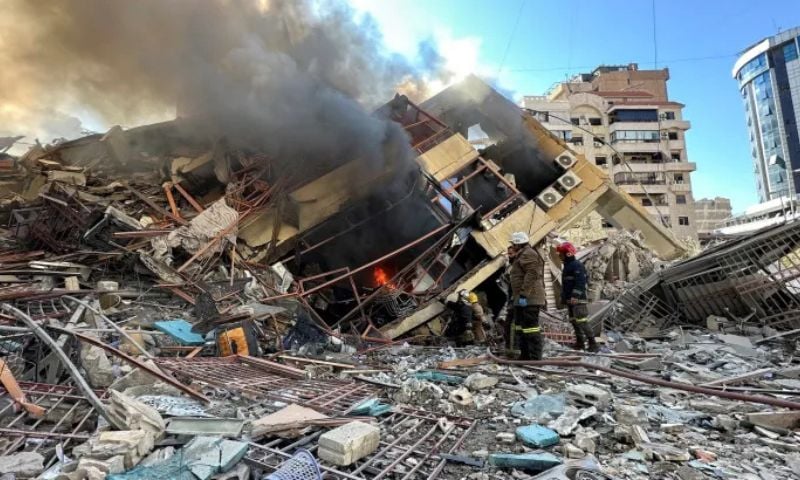
The United States and Israel launched a military campaign against Iran on February 28 under Operation Epic Fury, targeting missile bases, air defence systems and other strategic facilities.
According to the Pentagon, US and Israeli forces have struck more than 15,000 targets across Iran since the campaign began.
Iran’s health ministry says more than 1,200 people have been killed in the strikes, while the United Nations High Commissioner for Refugees estimates that up to 3.2 million people have been displaced within the country.
Tehran warns countries against joining conflict
Araghchi also warned regional countries against becoming involved in the conflict, saying Tehran had evidence that US bases in neighbouring states were being used to launch attacks on Iran.
“We have ample evidence of this: satellite imagery and electronic surveillance demonstrate that US bases in this region are being used for attacks,” he told Arabic-language news outlet Al-Araby Al-Jadeed.
He claimed missiles had been launched from the United Arab Emirates targeting Kharg Island, Iran’s main oil export hub.
On social media platform X, Araghchi urged neighbouring states to “expel foreign aggressors”, arguing that the presence of US forces was fuelling regional instability.
“This war will end when we are certain that it will not be repeated and that reparations will be paid,” he said.
In a phone call with French Foreign Minister Jean-Noël Barrot, Araghchi also urged other countries to avoid steps that could escalate the conflict further.
گفتگوی تلفنی وزرای امور خارجه ایران و فرانسه
ژان نوئل بارو وزیر امور خارجه #فرانسه شنبه شب در تماس تلفنی با سید عباس عراقچی وزیر امور خارجه جمهوری اسلامی ایران در خصوص جنگ تحمیلی آمریکا و رژیم صهیونیستی علیه ایران و وضعیت جاری در منطقه گفتگو کرد.
وزیر امور خارجه کشورمان با… pic.twitter.com/4XOQw1pPJM
— وزارت امور خارجه (@IRIMFA) March 15, 2026
Drone attack hits US-Italian base in Kuwait
Meanwhile, a drone struck Ali Al Salem Air Base in Kuwait, which hosts US and Italian troops.
Italy’s military said the drone destroyed an unmanned aircraft belonging to the Italian Task Force Air but caused no casualties.
Italian Chief of Defence Luciano Portolano confirmed the attack in a statement posted by the defence ministry.
Italy’s Foreign Minister Antonio Tajani sought to play down the incident, saying: “We are not at war with anyone.”
It was the second attack on an Italian military base in the Middle East within a week.
Meanwhile, rockets struck Baghdad International Airport in Baghdad, injuring five people, according to Iraqi authorities.
Lieutenant General Saad Maan, head of Iraq’s Security Media Cell, said five rockets hit the airport and surrounding areas, including a water desalination facility and sites near the Iraqi Martyr Alaa airbase and the central Karkh prison.
The injured included an engineer and four airport staff and security personnel, he said, adding that authorities later seized a missile launcher hidden inside a vehicle west of Baghdad.
Strait of Hormuz closure disrupts global shipping
The conflict has also disrupted shipping through the Strait of Hormuz, a vital waterway between Iran and Oman through which roughly one-fifth of the world’s oil and liquefied natural gas supplies normally pass.
Traffic through the strait has dropped sharply, with shipping analytics firm Kpler reporting a 90 percent decline in vessel movements in early March following security threats and drone attacks.
Major shipping companies, including Maersk and Hapag-Lloyd, have suspended operations through the waterway due to security risks.
Trump has called on countries including China, France, Japan, South Korea and the United Kingdom to deploy warships to ensure the passage remains open.
He warned the United States would reopen the route “one way or another”, potentially through military action along Iran’s coastline.
— Rapid Response 47 (@RapidResponse47) March 14, 2026
Iranian FM Araghchi said Tehran was willing to discuss safe passage for vessels with countries seeking to protect their shipping.
“We have been approached by a number of countries who want to have safe passage for their vessels,” he said.
Iran launches drone strikes on Israel
Meanwhile, Iran’s military said it carried out drone attacks on Israeli targets on Sunday.
In a statement carried by the Islamic Republic News Agency, the army said it targeted security installations and police facilities in Israel, including the “Lahav 433” special police unit and the Gilat Defence satellite communications centre.
Israeli media reported that fragments from an Iranian missile struck a residential building used by the US consulate in Israel.
Despite the escalating conflict, Araghchi said diplomatic contacts with regional countries were continuing.
“Tehran welcomes any initiative that leads to a complete end to the war,” he said.
Israel vows continued strikes
Israel’s military said it had launched a new wave of “wide-scale” attacks on targets in western Iran.
Military spokesperson Effie Defrin said Israeli forces still had “thousands” of targets to strike.
“We are identifying new targets every day,” he said in remarks reported by Reuters.
The Israeli military would “continue to strike in Iran and against Hezbollah until we remove the threats and achieve the objectives of the operation”, he added.