LONDON: Global oil prices soared on Thursday, briefly trading above $100, and stock markets extended losses as fresh attacks against Gulf energy targets threatened energy supplies and offset the release of strategic crude reserves by major economies.
Brent North Sea crude, the international benchmark, briefly rose above $100 per barrel, peaking at $101.59, as investors reacted to attacks on vessels and energy infrastructure near the Strait of Hormuz, a key corridor for global oil trade.
The International Energy Agency (IEA) warned that the ongoing conflict in the Middle East has created the largest supply disruption in the history of the global oil market.
The Paris-based energy watchdog said global crude production had fallen by at least 8 million barrels per day, with an additional 2 million barrels per day of petroleum products affected, amounting to roughly 7.5 per cent of global daily output.
Despite a decision by major economies to release 400 million barrels of oil from strategic reserves, the largest joint release ever agreed by IEA members, markets remained under severe pressure.
The US Department of Energy said the United States would release 172 million barrels from its Strategic Petroleum Reserve as part of the coordinated effort.
The release is expected to begin next week and continue over about 120 days.
Analysts said the emergency supply measures have not eased fears about a prolonged disruption to Gulf shipping.
Strait of Hormuz disruption
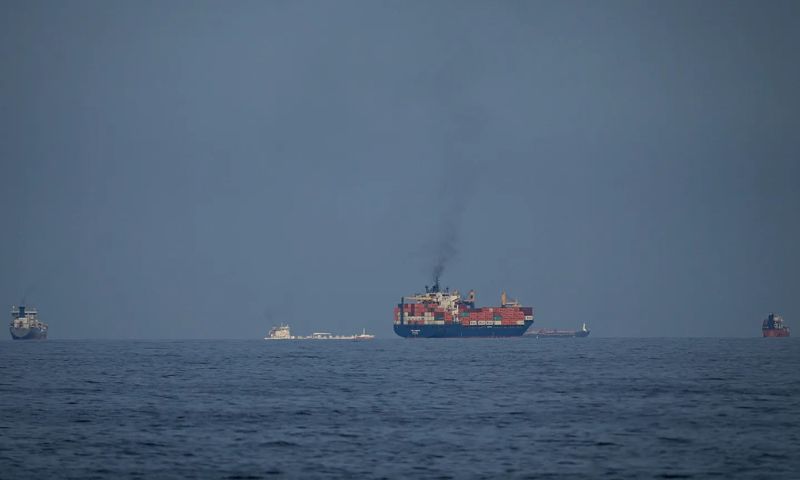
Tensions have centred on the Strait of Hormuz, through which roughly one-fifth of the world’s crude oil normally passes.
Iranian retaliatory attacks on vessels and shipping infrastructure have severely disrupted maritime traffic in the strategic waterway linking the Gulf to the Arabian Sea.
Trade Nation analyst David Morrison said energy markets had been shaken by attacks on shipping and missile strikes across the region.
“Energy markets have been rattled by news of Iranian attacks on shipping in the Arabian Gulf, along with missiles aimed at countries across the region,” Morrison said.
“The US’s inability to reopen the Strait of Hormuz and provide security for the shipping passing through suggests there are limits to their dominance,” he added.
The IEA said its strategic reserve release is equivalent to roughly 20 days of supplies that normally transit through the strait, which has been effectively shut down by attacks on ships.
US military ‘not ready’ to escort tankers
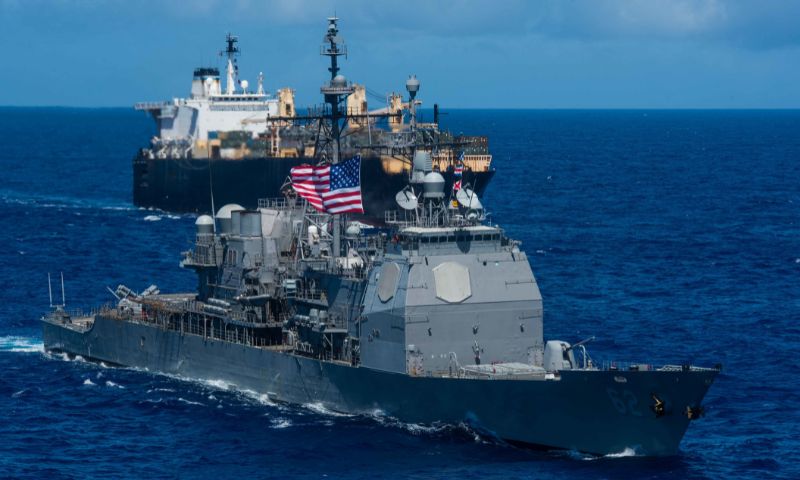
The United States military is not yet ready to escort oil tankers through the Strait of Hormuz, US Energy Secretary Chris Wright said on Thursday.
“It’ll happen relatively soon, but it can’t happen now. We’re simply not ready,” Wright told CNBC.
“All of our military assets right now are focused on destroying Iran’s offensive capabilities and the manufacturing industry that supplies their offensive capabilities,” he added.
Wright said it was “quite likely” that escort operations would begin by the end of the month.
The remarks followed confusion after Wright briefly posted on social media that US warships were already escorting tankers through the strait. The post was later deleted.
White House Press Secretary Karoline Leavitt subsequently clarified that the US Navy had not yet escorted any ship through the strategic passage.
Attacks on ships and energy infrastructure
Security risks in the Gulf have escalated sharply since the outbreak of war following joint US and Israeli air strikes on Iran on February 28.
Iran’s Islamic Revolutionary Guard Corps (IRGC) confirmed it had targeted vessels in the Strait of Hormuz after they ignored warnings.
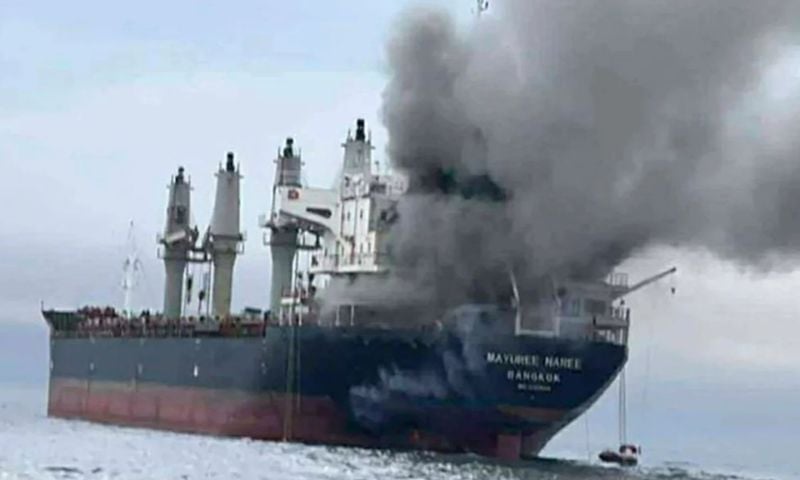
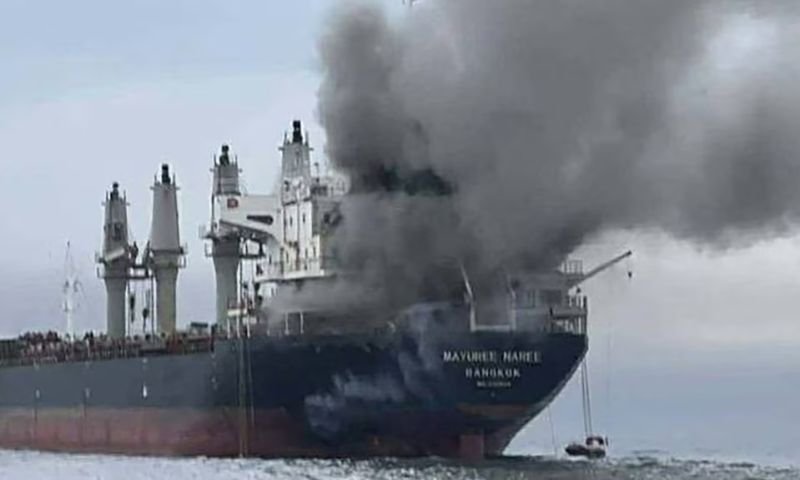
Among the most serious incidents was the attack on the Thai-flagged bulk carrier Mayuree Naree.
The vessel, operated by Thai shipping firm Precious Shipping, was hit by two projectiles while transiting the strait after departing Khalifa Port in the United Arab Emirates.
The strikes damaged the engine room and triggered a fire, according to the company.
“Three crew members are reported missing and believed to be trapped in the engine room,” the firm said in a statement.
Managing director Khalid Hashim told AFP that rescuers had not yet been able to board the vessel despite the fire being extinguished.
“Unfortunately, that remains the case,” Hashim said in an email.
Authorities said 20 crew members were rescued by the Omani navy, while three sailors remained missing.
Thailand’s foreign ministry said all 23 crew members were Thai nationals and confirmed that Bangkok had formally protested the attack.
Iran’s Revolutionary Guards also said they struck the Liberia-flagged container ship Express Rome after it ignored warnings.
In another incident, Iraqi officials said they had rescued 20 crew members of an oil tanker that came under attack in the country’s territorial waters.
Maritime agencies say at least 19 vessels have been damaged since the conflict escalated.
Attacks on energy infrastructure
The conflict has also spread to energy infrastructure across the Gulf.
Drones struck fuel tanks at Oman’s Salalah port, according to state media.
Saudi Arabia’s defence ministry said it intercepted seven drones heading toward the Shaybah oil field in the southeast of the country.
Meanwhile, the Ruwais refinery complex in the United Arab Emirates, the region’s largest single-site refinery, was shut down as a precaution after a drone attack triggered a fire at the industrial facility.
A worker at the complex told AFP he saw “bursts of fire rising from the complex, with loud sounds like explosions.”
Global markets under pressure

Rising oil prices have triggered volatility across global financial markets.
At around 1330 GMT, Brent crude was trading 8.7 per cent higher at $99.94 per barrel, while West Texas Intermediate rose 8.6 per cent to $94.77.
Wall Street’s main indices fell at the opening bell, with the Dow Jones Industrial Average down 1.1 per cent, while the S&P 500 and Nasdaq Composite also declined.
European markets traded lower, with London’s FTSE 100, Paris’s CAC 40, and Frankfurt’s DAX all posting losses.
Most Asian markets also closed in negative territory.
The US dollar strengthened against major currencies as investors sought safe-haven assets.
“The dollar has strengthened, driven by safe-haven demand, fears of inflation, and higher-for-longer interest rate expectations,” said Victoria Scholar, head of investment at Interactive Investor.
Inflation and economic risks

Economists warn that sustained high oil prices could intensify global inflation and slow economic growth.
“The longer the oil price remains elevated, the more damaging and long-lasting the inflation shock will be for the global economy,” said Kathleen Brooks, research director at trading group XTB.
Airlines have already begun adjusting operations as fuel costs climb.
New Zealand’s national airline announced plans to cancel 1,100 flights over the next two months, while Cathay Pacific said it would impose new jet fuel surcharges.
Air France-KLM has also announced higher ticket prices.
The conflict has also triggered disruptions beyond the energy sector.
Major international companies including Citi and Deloitte evacuated offices in Dubai’s financial centre, while consultancy PwC temporarily closed offices across Qatar, the United Arab Emirates and Kuwait.
Iranian officials have warned that the conflict could evolve into a prolonged confrontation.
Ali Fadavi, adviser to the commander-in-chief of the Revolutionary Guards, said the United States and Israel must consider the possibility of a long war of attrition.
“They must consider the possibility that they will be engaged in a long-term war of attrition that will destroy the entire American economy and the world economy,” Fadavi told state television.