
Key Points:
- Iran warns that US and Israeli economic centres and banks could be targeted
- Threat follows attack on an Iranian bank in Tehran
- Authorities urge civilians across the region to stay away from banks
- Analysts warn conflict may expand into financial and cyber domains
ISLAMABAD: Iran warned on Wednesday that economic centres and banks linked to the United States and Israel could become targets across the region after what it described as an attack on one of its financial institutions.
Observers warn that the Iran War is expanding on the economic front, with the global economy’s energy security already at risk after the Strait of Hormuz disruptions.
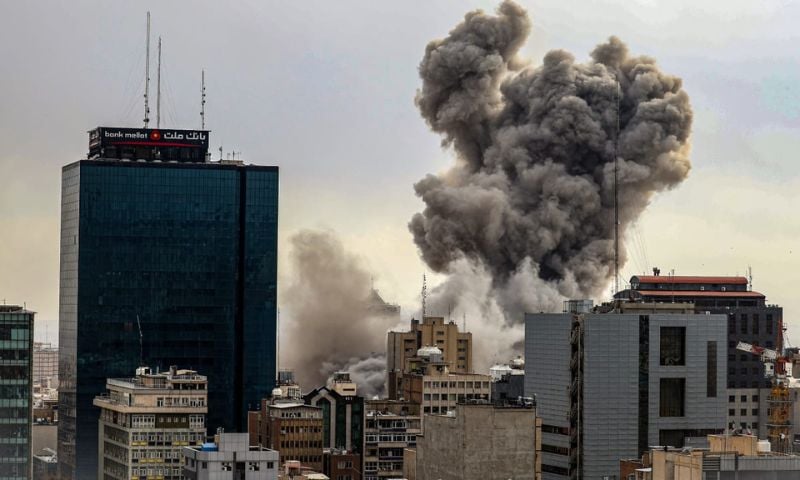
A spokesperson for Iran’s Khatam al‑Anbiya central military command said the strike on a bank in Tehran had crossed a “new line” in the war and left Iranian forces with what he described as the right to target financial infrastructure connected to Washington and Tel Aviv across the region.
“With this illegitimate and uncommon act, the enemy has forced our hand to target economic centres and banks belonging to the United States and the Zionist regime,” the spokesperson said in remarks carried by Iranian state media.
Iranian authorities also issued a public warning advising residents across the region to remain at least one kilometre away from banks.
It is a clear indication that financial institutions may now be on the expanding list of potential targets.
The warning came after overnight strikes reportedly hit a bank in Tehran that Iranian officials said was linked to the country’s financial network serving state institutions.
Iranian media reported casualties among bank employees, though independent confirmation of the toll remained unavailable.
The development marks a significant shift in the evolving US‑Israel‑Iran conflict, which had largely focused on military bases, missile facilities and energy infrastructure during the first phase of the confrontation.
Analysts say the latest warning suggests the war could increasingly spill into the economic domain, potentially affecting banking networks, corporate facilities and technology infrastructure associated with the United States and Israel across the Middle East.
Some reports also indicated that Iran’s Islamic Revolutionary Guard Corps has circulated lists of offices and facilities operated by major Western technology companies and financial institutions with links to Israeli military or security systems.
Financial hubs in the Gulf and wider region are closely monitoring the situation amid concerns that any disruption to banking infrastructure could deepen volatility.
It is alarming in the wake of shipping routes already disrupted, and the Strait of Hormuz disruption has sent a shock wave through the markets.
The conflict has already triggered sharp movements in oil prices and heightened concerns over the security of trade routes near the Strait of Hormuz, through which a significant share of global energy supplies passes.
Diplomatic efforts to halt the fighting have so far struggled to gain traction, with Washington insisting military operations will continue until strategic objectives against Iran’s missile and nuclear capabilities are achieved.
Iran, however, has signalled it is prepared to broaden the scope of retaliation beyond traditional military targets, raising the possibility that the conflict may increasingly affect financial systems and commercial infrastructure across the region.