Key points
- Pakistan warns UN that Afghanistan has become a safe haven for terrorist groups.
- Ambassador Asim Iftikhar Ahmad says Taliban failed to deliver on counterterrorism, human rights and inclusive governance.
- Pakistan reports a sharp surge in cross-border attacks planned from Afghan territory.
- Islamabad says it conducted targeted strikes on terrorist camps in February in self-defence.
- Pakistan urges the Taliban to take verifiable action against militant groups operating from Afghan soil.
- Pakistan reiterates support for continued engagement through the UN-led Doha Process.
NEW YORK: Pakistan has warned the United Nations Security Council that Afghanistan under the Taliban has become a sanctuary for multiple terrorist groups, posing serious threats to regional and international security.
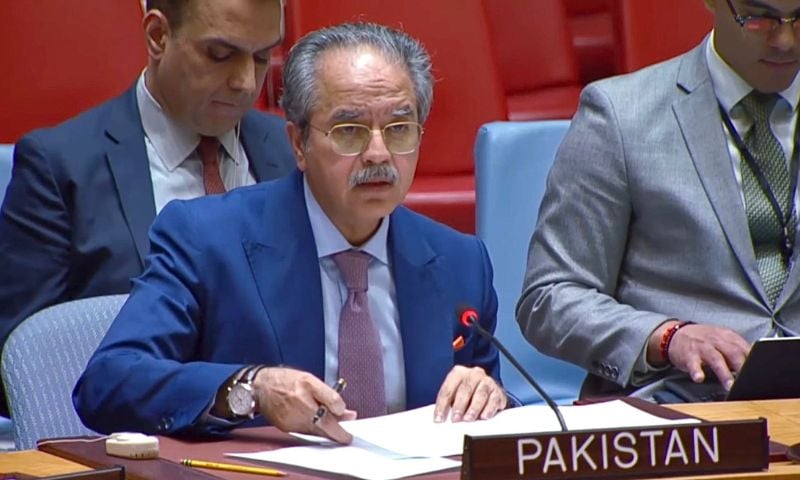
Addressing the Security Council meeting on the situation in Afghanistan on Monday, Pakistan’s Permanent Representative to the UN, Ambassador Asim Iftikhar Ahmad, said hopes that the Taliban would evolve into a responsible governing authority after returning to power more than four years ago have not materialized.
He said the international community had expected the Taliban to demonstrate progress on three key commitments—counterterrorism, protection of human rights, and inclusive governance—but these expectations remain unmet.
Ambassador Ahmad noted that Pakistan, as Afghanistan’s immediate neighbour, has consistently sought constructive engagement with the Taliban leadership. Islamabad facilitated diplomatic contacts, high-level visits, humanitarian support, and economic incentives aimed at promoting regional integration and stability in Afghanistan.
Despite these efforts, he said Afghanistan has increasingly become a safe haven for terrorist organizations, citing global assessments and UN monitoring reports.
According to Pakistan, groups including Tehreek-e-Taliban Pakistan (TTP), Baloch Liberation Army (BLA) and its Majeed Brigade, Daesh-Khorasan (ISIL-K), Al-Qaeda, and the East Turkestan Islamic Movement (ETIM) are operating from Afghan territory.
The ambassador said these organizations are using Afghan soil to launch cross-border attacks, infiltration operations, and suicide bombings targeting Pakistan. He also stated that elements within the Taliban administration are complicit in supporting such groups.
Pakistan, he said, has experienced a sharp rise in terrorist incidents planned from across the Afghan border. Over the past month alone, more than 175 Pakistanis were killed in several attacks, including three suicide bombings.
Warning that the threat extends beyond Pakistan, Ambassador Ahmad said terrorism emanating from Afghanistan could destabilize the broader region if left unchecked.
He said Pakistan had repeatedly sought diplomatic solutions and urged the Taliban leadership to take action against militant groups. Mediation efforts supported by countries such as Qatar, Türkiye and Saudi Arabia were also undertaken but did not yield meaningful results.
Following what he described as prolonged restraint, Pakistan conducted intelligence-based strikes on February 21–22, 2026 against seven terrorist camps belonging to the TTP and ISIL-K in border areas. He said the operations were precise and targeted only militant infrastructure.
According to the ambassador, the Taliban subsequently responded by opening fire on Pakistani border positions on February 26, prompting Pakistan to exercise its right to self-defence and retaliate against hostile targets linked to militant groups.
Pakistan’s actions, he said, were proportional and carefully planned to avoid civilian harm while targeting terrorist facilities.
Ambassador Ahmad also questioned the accuracy of some reports about civilian casualties in border clashes, suggesting that limited access for independent verification outside Kabul complicates assessments of incidents on the ground.
Beyond security concerns, he highlighted the worsening humanitarian and socio-economic conditions in Afghanistan, including restrictions on women and girls, declining foreign assistance, poverty, and a dysfunctional banking system.
He said the Taliban’s policies are exacerbating hardship for ordinary Afghans and undermining prospects for stability.
The Pakistani envoy also reminded the Council that Pakistan has hosted millions of Afghan refugees for more than four decades despite limited international support. He urged the international community to share responsibility and fulfill long-standing commitments regarding refugee resettlement and assistance.
Looking ahead, Ambassador Ahmad reaffirmed Pakistan’s support for continued diplomatic engagement through the UN-led Doha Process and its proposed “Mosaic approach” to address Afghanistan’s political, security, and economic challenges.
He emphasized that lasting peace in Afghanistan requires reciprocal cooperation from the Taliban authorities, particularly credible and irreversible measures against terrorist groups operating from Afghan territory.
“Pakistan seeks a peaceful, stable and prosperous Afghanistan,” he said, adding that Islamabad’s core demand remains unchanged: the Taliban must ensure Afghan soil is not used for terrorism against neighbouring countries.