Key Points
- Index drops more than 11,000 points in intraday trading
- Pakistan vulnerable to energy shocks as a major fuel-importing economy
- Trading volume exceeds 378 million shares during volatile session
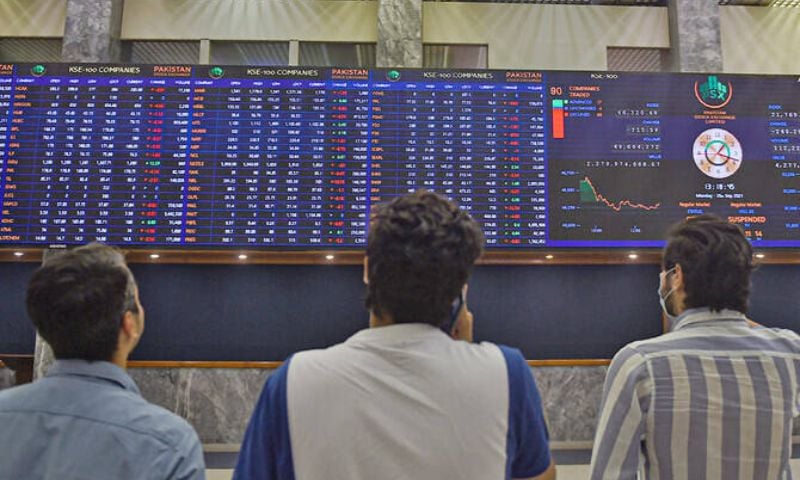
ISLAMABAD: Pakistan’s stock market plummeted sharply on Monday as escalating conflict in the Middle East and a consequent surge in global oil prices rattled investor confidence, triggering one of the steepest sell‑offs in recent months.
Before the outbreak of hostilities in the Middle East, the Pakistan Stock Exchange had shown resilience despite early-year volatility.
The benchmark KSE‑100 index had started 2026 with a decline of about 15.84 per cent from its 2025 closing highs.
Still, the local shares changing hands was supported by strong corporate earnings, inflows from domestic investors, and positive sentiment in blue chip stocks.
Analysts noted that the market was tracking steadily within a 52-week range of 101,598.91 to 191,032.73, reflecting healthy long-term performance despite short-term headwinds.
Investors were cautiously optimistic that corporate profitability and foreign investment inflows would help offset global uncertainties.
The benchmark KSE‑100 index, the main gauge of the Pakistan Stock Exchange, dropped 11,015.96 points, or 6.99 per cent, to 146,480.14 during afternoon trading.
The index earlier touched an intraday high of 150,174.09 before sliding to a low of 144,119.43 as selling intensified across the market.
Trading activity remained elevated, with total volume exceeding 378 million shares during the session, reflecting broad‑based selling as investors moved to reduce exposure amid rising geopolitical and economic uncertainty.
Market analysts said that fear of supply disruptions and higher energy costs prompted institutional and retail investors alike to adopt a risk‑off approach, selling off equities across all major sectors.
The market slump follows a previous close of 157,496.10 and represents one of the largest single‑day declines in recent trading, underscoring the sensitivity of emerging markets to global geopolitical shocks.
The sell-off was largely triggered by fears that the widening conflict in the Middle East could disrupt global energy supplies and drive oil prices significantly further higher.
Higher oil prices pose a particular risk for Pakistan, which relies heavily on imported crude oil and refined petroleum products to meet domestic energy demand.
A sustained rise in global energy prices can widen the country’s import bill, increase the trade deficit, and place renewed pressure on the balance of payments.
Analysts also note that higher energy costs are likely to exacerbate inflationary pressures, affecting both households and businesses.
These pressures can weaken corporate profitability and dampen investor sentiment in the equity market.
In addition, potential disruptions in shipping and trade routes add another layer of uncertainty for import-dependent economies like Pakistan.
The decline was broad-based, affecting major sectors including banking, cement, technology, and consumer-related stocks.
Other key indices at the Pakistan Stock Exchange, including the KSE‑30 and the All Share Index, also traded lower, indicating market-wide pressure.
Earlier in the session, the sharp fall triggered a temporary trading halt after the KSE‑30 index declined beyond the exchange’s threshold designed to curb excessive volatility.
Trading resumed after the cooling-off period, but selling pressure continued throughout the day.
Analysts said the halt underscored both the severity of investor concerns and the heightened sensitivity of the market to geopolitical shocks.
Despite the sharp drop, the benchmark KSE‑100 index remains about 28.04 per cent higher compared with the same period a year earlier, reflecting the strong rally Pakistani equities experienced during the previous year.
However, the index has declined about 15.84 per cent since the start of 2026, highlighting the impact of global market turbulence and geopolitical risks on investor sentiment.
Long-term investors remain cautious but hopeful that market fundamentals, including corporate earnings and remittances inflows, will provide some support as the crisis unfolds.
The unfolding market turmoil highlights the interconnected nature of global energy markets and emerging economies.
As oil prices spike and geopolitical risks persist, Pakistan’s financial markets may remain volatile, emphasising the importance of prudent fiscal management, effective monetary policy, and structural reforms to maintain investor confidence and economic stability.