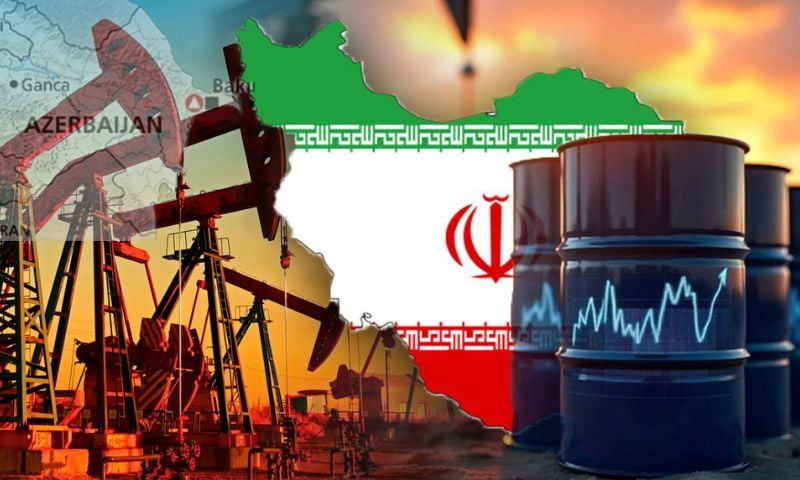
ISLAMABAD: Global financial markets were jolted this week as the widening conflict involving Iran, Israel and the United States sent oil prices sharply higher and triggered a sell‑off in equities, raising fears of a deepening crisis of energy and economy.
US benchmark West Texas Intermediate crude surged 8.5 per cent in a single session to settle at $81.01 per barrel, the largest one‑day gain since 2020.
Over the past five trading sessions, the benchmark has climbed roughly 25 per cent, reaching its highest level since July 2024.
The international benchmark Brent crude also jumped, rising above $85 per barrel and posting one of its biggest weekly increases in recent years as investors reacted to escalating military tensions across the Gulf region.
Energy traders say the spike reflects that the conflict has severely disrupted shipping through the Strait of Hormuz, a narrow waterway between Iran and Oman through which nearly one‑fifth of the world’s oil supply normally passes.
Reports of missile threats to commercial shipping and attacks on tankers have slowed maritime traffic in the Arabian Gulf, leaving hundreds of vessels waiting outside the strategic chokepoint and forcing some Asian refiners to search for alternative crude supplies.
The surge in oil prices has quickly rippled through financial markets from Tokyo to New York.
On Wall Street, the Dow Jones Industrial Average dropped 785 points, or 1.6 per cent, in one session. The S&P 500 fell 0.6 per cent, and the Nasdaq Composite slipped 0.3 per cent as investors shifted away from risk‑sensitive assets.
Economically sensitive sectors recorded the steepest losses. Shares of major industrial, banking and retail companies each fell more than 3.5 per cent during the sell‑off, reflecting investor concern that higher fuel costs could weaken economic growth.
Airline companies were among the worst affected as rising jet fuel prices threaten to erode profit margins.
An exchange‑traded fund tracking the airline industry fell about 4.5 per cent during the trading session.
European markets followed a similar pattern. Key indices in London, Paris and Frankfurt each fell around 1.5 to 1.6 per cent as investors reacted to the escalating geopolitical risk and rising energy prices.
Asian markets also experienced heightened volatility. South Korea’s Kospi index, after suffering a sharp plunge earlier in the week, rebounded by nearly 9.6 per cent the following day, highlighting the intensity of investor speculation amid the crisis.
Bond markets reflected growing concern about inflation. The yield on the benchmark 10‑year US Treasury note climbed to 4.145 per cent from 4.081 per cent a day earlier. It indicated expectations that central banks may find it difficult to cut interest rates if energy prices remain elevated.
Kevin Khang, senior global economist at Vanguard Group, warned that prolonged conflict could amplify economic risks.
“From a market psyche standpoint, the longer this lasts, the dimmer the prospect looks that it’s going to be resolved sustainably. The prospect of material economic impact starts rising,” he said.
Analysts say a sustained disruption to oil shipments through the Strait of Hormuz could push crude prices even higher, potentially approaching $100 per barrel if the conflict intensifies or shipping lines remain restricted.
Such a surge would likely increase fuel costs, transportation prices and manufacturing expenses worldwide, feeding inflation pressures and slowing economic activity across both advanced and emerging economies.
Investors have meanwhile shifted toward commodities and energy companies, which have been among the few sectors benefiting from the geopolitical turmoil.
Economists warn that if the conflict persists and energy supplies remain constrained, the world economy could face a combination of slower growth and rising inflation, a scenario often described as stagflation.