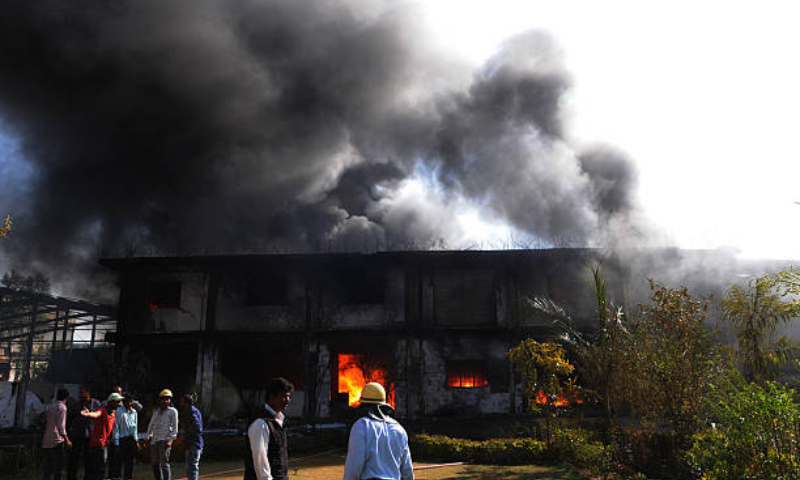
BHARUCH, Gujarat, India: At least 16 workers were injured after a massive fire broke out at a chemical factory in India’s Bharuch district of Gujarat on Thursday afternoon, officials said.
The blaze erupted around 1 pm at Metropolitan Eximchem Pvt Ltd, located in the Jhagadia area of the Gujarat Industrial Development Corporation (GIDC), according to Deputy Superintendent of Police Ajay Meena.
Sixteen workers sustained injuries in the incident. Thick plumes of smoke were seen rising from the facility, raising alarm in the surrounding industrial area.
Emergency services rushed to the scene and brought the fire under control after several hours.
All injured workers were transported to nearby medical facilities for treatment. Authorities have not yet released details regarding the severity of their injuries.
Following the incident, operations at the plant have been suspended. Officials have launched an investigation to determine the cause of the fire and assess the extent of the damage.
In high-temperature regions such as Gujarat, static electricity generated during routine industrial processes can trigger fires, especially in poorly ventilated environments.
Production pressures in certain sectors further encourage unsafe practices, with workers prioritising speed over compliance with safety protocols.
Systemic Failures
The high frequency of industrial fires across India is increasingly being linked to a combination of ageing infrastructure, weak regulatory enforcement, and human negligence, according to safety experts.
Incidents such as the recent blaze at a chemical plant in Gujarat in April 2026 have once again underscored the scale of the risk and the structural issues underpinning it.
Electrical Faults and Ageing Systems
Electrical failures remain the leading cause of industrial fires, accounting for nearly 40% of incidents. Faulty wiring, short circuits, and overloaded systems are widespread, particularly in older industrial units.
Many factories continue to run high-capacity machinery on decades-old electrical panels that were never designed to handle modern loads.
Experts also highlight poor maintenance practices, including the lack of regular thermographic inspections to detect overheating, allowing minor faults to escalate into major disasters.
Regulatory Gaps and Weak Oversight
Recent policy shifts aimed at improving the business climate have, critics argue, diluted safety enforcement.
Industry estimates suggest that up to 60–70% of small and medium enterprises either bypass proper fire safety audits or treat them as routine paperwork.
Improper handling and storage of flammable materials contribute to over 60% of industrial fire incidents.
Chemical mismanagement, particularly involving solvents and combustible dust, significantly heightens the risk.
Severe Infrastructure Shortages
Fire response infrastructure remains critically underdeveloped.
Reports indicate substantial shortages in fire stations, equipment, and trained personnel across the country.
In many industrial clusters, especially those with congested layouts and narrow access routes, delayed emergency response further exacerbates the damage and increases the risk to life.