



Key Points
- Pakistan documents over 660 reforms across more than 135 federal institutions in 2025
- The energy sector dominates with 118 reforms and Rs 1.225 trillion circular debt restructuring
- Nearly one-third of initiatives are digital, marking a transition from policy design to execution
- Report warns execution fatigue, coordination gaps remain key risks despite reform momentum
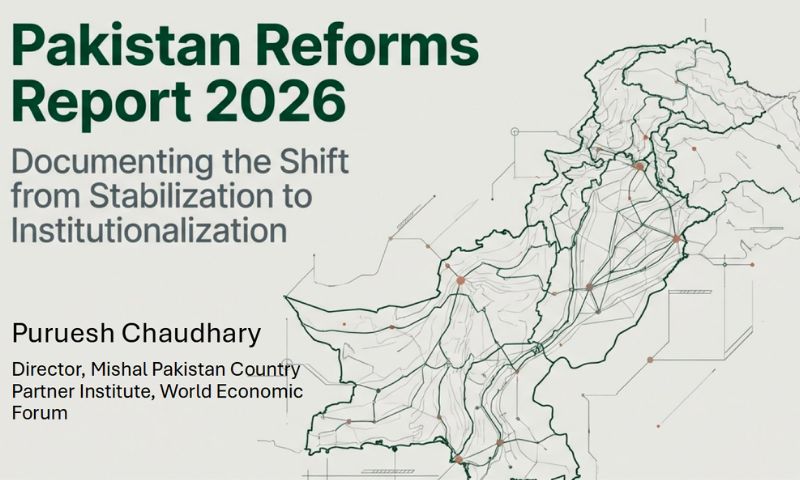
ISLAMABAD: Pakistan unveiled on Monday a comprehensive reform report of approximately 660 institutional changes implemented and documented during 2025, which officials described as evidence of a state increasingly driven by systems rather than personalities.
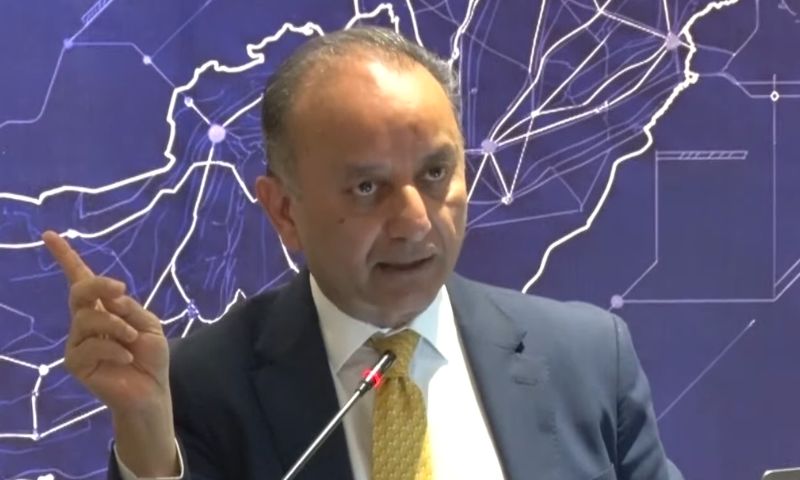
Launching the Pakistan Reforms Report 2026, Federal Minister for Climate Change and Environmental Co-ordination Musadik Malik said there would be “no compromise on transparency and evidence-based policymaking,” adding that credible, fact-based reform documentation strengthens public trust and signals institutional confidence.
The report portrays a reform ecosystem that is becoming “systemic, digital, governance-centric, and institution-driven, rather than episodic or personality-led.” It reflects what policymakers view as a structural transition in how the federal government designs and implements change.
Covering more than 135 federal entities, including 24 ministries and over 110 departments, regulators, and authorities, the latest edition marks a five-fold expansion from the previous year’s documentation of 120 reforms.
Officials said the sharp increase points not only to reform activity but also to the institutionalisation of reporting itself through standardised metrics, cross-sector comparability, and alignment with global development benchmarks.
Reform participation expanded beyond traditionally active economic ministries to include legal, regulatory, security, social protection, human rights, climate, and cultural institutions, indicating a broader whole-of-government approach.
Energy emerged as the largest reform arena with 118 initiatives, underscoring its central role in fiscal stability and economic recovery. The government reported Rs 1.225 trillion in circular debt restructuring arrangements and projected lifecycle savings of Rs 4.2 trillion from renegotiated independent power producer contracts, including Rs 1.4 trillion in direct savings.
Law and justice accounted for 96 reforms with a focus on the rule of law, enforcement, procurement transparency, and digital justice platforms. Digital governance followed with 74 initiatives, positioning technology as “the backbone of reform sustainability.”
Economic management and finance registered 68 reforms, spanning taxation, debt transparency, capital markets, and oversight of state-owned enterprises. However, the report identifies privatisation and enterprise restructuring as structurally important yet operationally constrained, a persistent bottleneck in the reform landscape.
A defining feature of the 2026 report is the shift from policy intent to operational execution. Approximately 30 to 35 per cent of reforms were digital, implemented through integrated portals, automated systems, and platform-based governance tools.
“Governance and institutional reforms, including new authorities, restructured mandates, coordination mechanisms, and regulatory frameworks, form the second-largest reform category,” the Report’s executive summary notes. Capacity building is now embedded within reform design rather than treated as a parallel activity, it added.
The reform agenda also signals a decisive move toward citizen-facing governance. An estimated 160 to 190 initiatives directly improved public access through digital service portals, grievance redress mechanisms, mobile applications, case-tracking systems, and electronic certification.
“The reform agenda demonstrates a clear transition toward user-experience-driven governance,” the report states. The report cites, for instance, billing transparency and consumer grievance systems in the power sector, digital law repositories in the justice system, and more predictable visa and consular services.
Implementation capacity expanded significantly during the year, involving between 12,000 and 15,000 trained or upskilled staff members, ranging from lower-scale employees to senior officers.
Flagship programmes included more than 12,600 technology skill certifications and over 7,000 government officers trained through internationally recognised career certificate programmes. Such reforms show a shift toward viewing human capital as a reform enabler rather than a peripheral input.
In development terms, reforms align with Sustainable Development Goal 16, which is “peace, justice, and strong institutions.”
The reform agenda has been mapped to roughly 180 to 210 initiatives, confirming a governance-first trajectory. Goals related to industry, innovation, infrastructure, and clean energy follow closely. However, climate-related reforms remain underrepresented relative to Pakistan’s vulnerability, indicating an area requiring future scaling.
Notably, the reform drive unfolded amid fiscal pressure, political polarisation, security challenges in Balochistan and Khyber Pakhtunkhwa, and a military escalation with India in May 2025 that temporarily diverted administrative capacity.
“Despite these pressures, reform momentum was largely sustained, highlighting institutional resilience rather than reform fragility,” the Report observes.
Compared with the inaugural edition, the report demonstrates greater implementation maturity, wider institutional participation, stronger digital orientation, and improved analytical usability. Reforms are increasingly described as systemic rather than episodic, reducing reliance on ad-hoc interventions and individual leadership.
Looking ahead, the document cautions that the principal risk lies “not in reform intent, but in execution fatigue, coordination gaps, and uneven institutional capacity.”
Conversely, the greatest opportunity lies in consolidating gains, scaling successful digital systems, and deepening people-centric service delivery.
“The Pakistan Reforms Report 2026 confirms that governance reform in Pakistan is no longer fragmented or purely declaratory,” the Report concludes, positioning the country’s trajectory as incremental and uneven yet structurally advancing, with governance institutions now forming the backbone of state reform.