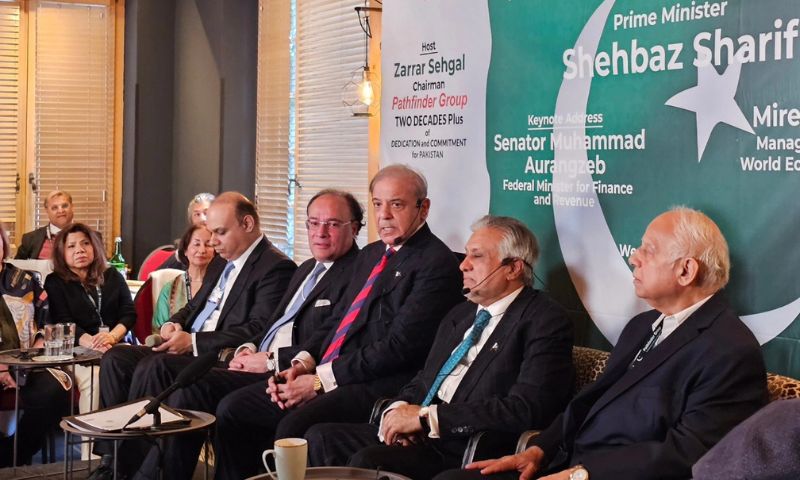
ISLAMABAD: Pakistan leveraged the World Economic Forum platform to showcase its reform agenda and attract fresh investment into the aviation sector, reinforcing key development partnerships and signalling renewed momentum in privatisation and broader economic reforms.
During the World Economic Forum (WEF) Annual Meeting in Davos, Pakistan’s Finance Minister Muhammad Aurangzeb held high-level meetings with global stakeholders, including UK-based global aviation services provider Menzies Aviation and the Asian Development Bank (ADB), to advance Pakistan’s aviation modernisation, privatisation agenda, and broader economic reforms.
Investment opportunities
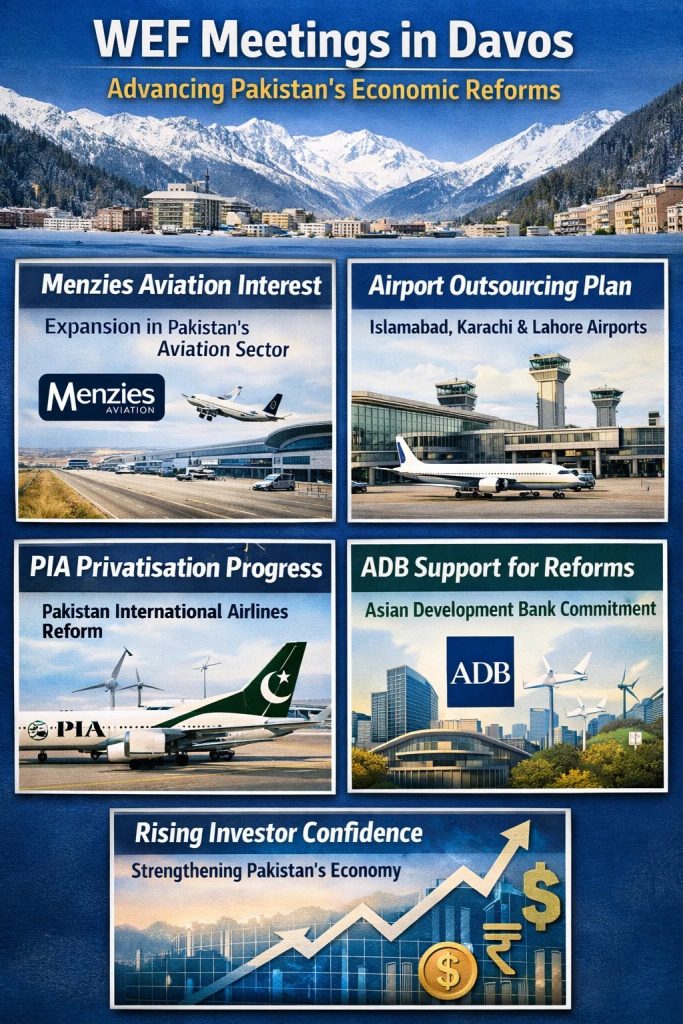
Discussions covered outsourcing operations at major airports in Islamabad, Karachi, and Lahore, progress on Pakistan International Airlines (PIA) privatisation, investment opportunities in aviation and logistics—particularly Sialkot—and continued ADB support for structural reforms, clean energy transition, and private sector–led growth, reflecting growing international confidence in Pakistan’s improving economic trajectory.
Pakistan’s aviation sector
UK-based aviation services provider Menzies Aviation expressed a strong interest in expanding its footprint in Pakistan’s aviation sector, underscoring international appetite for opportunities in the country’s transport and logistics industries.
The potential partnership is expected to bring global best practices to airport ground handling and passenger services, helping raise service quality and operational efficiency across major hubs.
Menzies Aviation is a leading global aviation services company providing essential services to airlines at over 350 airports in over 60 countries.
Outsource airport operations
During discussions, the government outlined plans to outsource operations at Islamabad, Karachi, and Lahore airports, a move aimed at modernising airport management, attracting private investment, and significantly improving the passenger experience at Pakistan’s key international gateways.
Officials also shared updates on the privatisation of Pakistan International Airlines (PIA), describing it as a central pillar of broader structural reforms.
The programme is intended to reduce the fiscal burden on the state, improve competitiveness, and introduce private-sector efficiency into the national carrier.
ADB reaffirms support for Pakistan’s reform agenda
The Asian Development Bank (ADB) has also reaffirmed its strong support for Pakistan’s reform agenda, backing efforts to advance economic transformation, accelerate the clean energy transition, and ensure long-term macroeconomic stability through sustained structural changes.
This came during a meeting between the finance minister and Masato Kanda, President of the Asian Development Bank, to review Pakistan’s ongoing economic reforms and discuss ways to further deepen the long-standing partnership between Pakistan and ADB.
Rising international confidence in Pakistan
Overall, Pakistan’s engagements at Davos highlighted rising international confidence in the country’s economic direction. Meetings with global investors and development partners reinforced Pakistan’s improving market outlook and strengthened its global investment profile, positioning the country to accelerate investment-led growth through deeper international partnerships.
IMF appreciates Pakistan’s reform efforts
IMF Managing Director Kristalina Georgieva has appreciated Pakistan’s reform efforts and emphasised the importance of maintaining reform momentum to ensure long-term economic resilience.
She laid this emphasis during her meeting with Prime Minister Shehbaz Sharif today in Davos, on the sidelines of the 56th Annual Meeting of the World Economic Forum.
The Prime Minister apprised the Managing Director of Pakistan’s improving macro-economic indicators, stabilisation efforts, and progress on structural reforms.
He underscored Pakistan’s commitment to fiscal discipline, revenue mobilisation, and sustainable growth.
Both sides exchanged views on the global economic outlook, challenges faced by emerging economies, and the importance of multilateral support in safeguarding economic stability.