
Key points
- Robots seen easing global labour shortages
- Automation to offset ageing populations
- Huang says robots will create jobs
LAS VEGAS, United States: Robots could help address global labour shortages, according to Nvidia CEO Jensen Huang, who described them as “AI immigrants” at CES 2026.
Huang said automation would complement human workers, creating jobs while offsetting the impact of aging populations and demographic decline across industries such as manufacturing, retail, and healthcare.
Addressing concerns about machines replacing human workers, the leader of the world’s dominant AI chip company took the opposite stance, reports AFP.
“Having robots will create jobs,” Huang told 200 journalists and analysts during a 90-minute session at a Las Vegas hotel on the sidelines of the CES technology show.
“We need more AI immigrants to help us on manufacturing floors and do work that maybe we’ve decided not to do anymore,” said Huang, whose off-the-cuff remarks have become a popular CES tradition.
The gathering runs through Friday, with some 130,000 attendees.
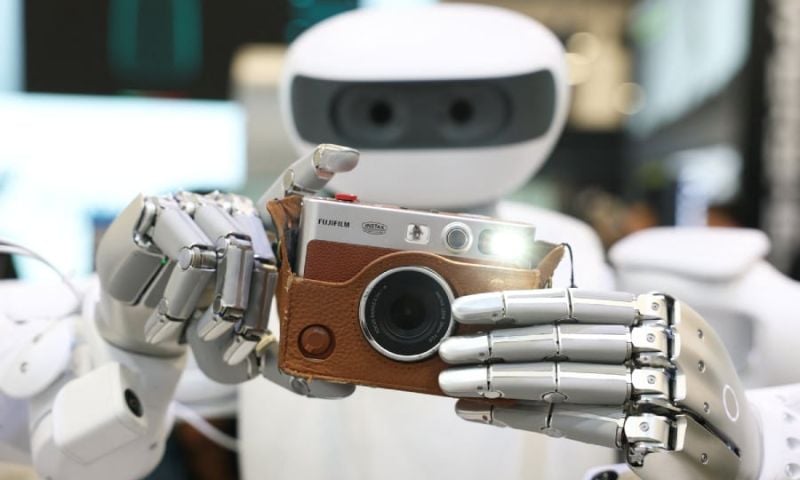
Like every year, robots are a major presence at CES, with companies hoping they will break into the mainstream as useful devices instead of novelties.
Robotics revolution
A “robotics revolution” will compensate for labour losses from aging populations and demographic decline while boosting the economy, Huang argued.
“When the economy grows, we hire more people,” he said, sporting his signature black leather jacket.
Huang, who leads the world’s most valuable company at roughly $3.5 trillion, estimated the worker shortage reaches “tens of millions,” not thousands, due to demographic shifts.
His comments align with other Silicon Valley leaders, particularly Tesla and SpaceX’s Elon Musk, who frequently cite population decline and workforce aging as reasons to embrace automation.
Nvidia is investing heavily in providing the foundational software that can make robots work across multiple industries, including manufacturing, retail, and healthcare.